Beyond the Highway: How World Bank’s $225M Rajasthan Project Unlocks a New
The World Bank’s $225 million funding for Rajasthan highway modernisation,
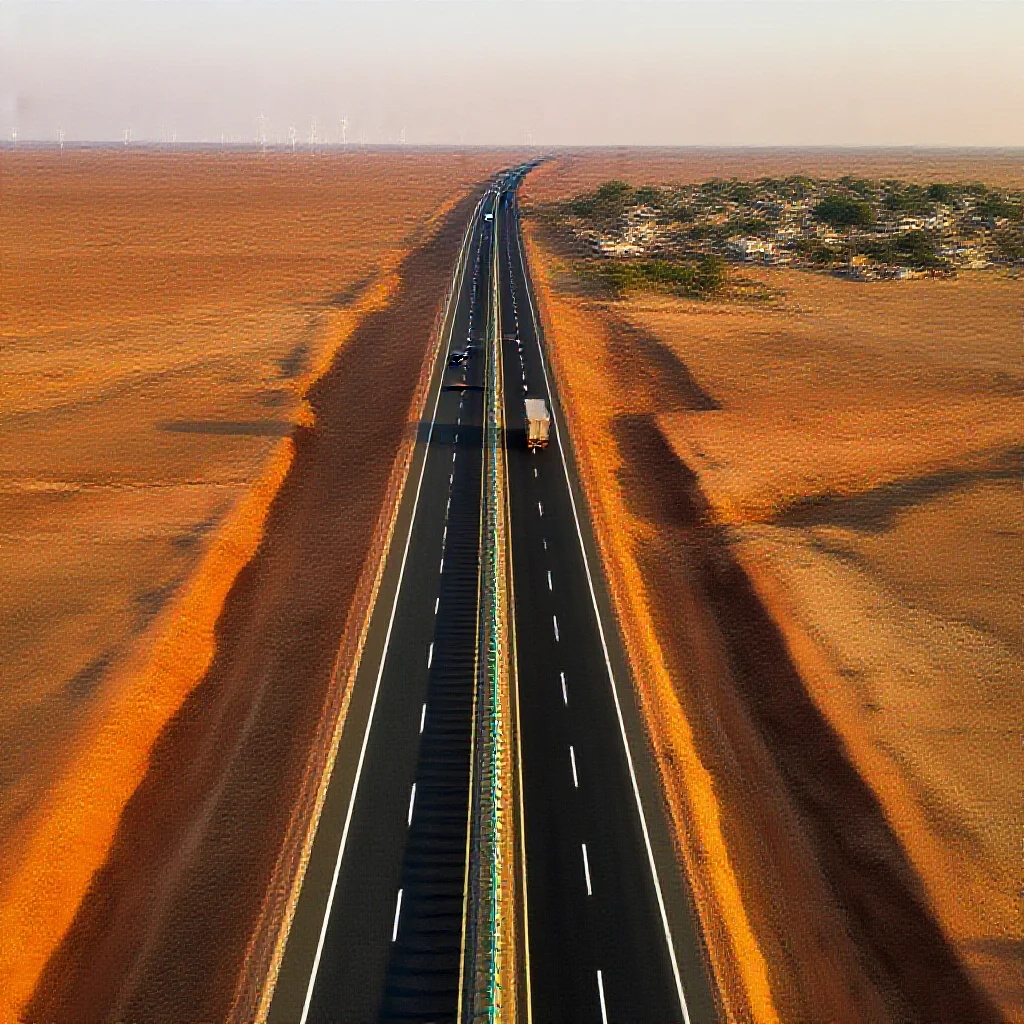
Beyond the Highway: How World Bank’s $225M Rajasthan Project Unlocks a New Economic Corridor in India’s Desert State
By a Senior Technical/Financial Audit Journalist
---
The Core Investment: More Than Tarmac and Bitumen
In 2025, the World Bank approved $225 million in funding for the modernisation of state highways in Rajasthan, India’s largest state by area (Source 1: World Bank Project Database). The project, implemented through the Rajasthan government’s Public Works Department, targets approximately 1,200 kilometers of road segments connecting district headquarters, industrial clusters, and agricultural market yards. The stated beneficiary count of 3 million people encompasses two measurable categories: direct beneficiaries experiencing reduced travel time (estimated 30-45% improvement on targeted corridors) and indirect beneficiaries gaining improved access to healthcare, education, and wholesale markets.
This funding represents a continuation of the World Bank’s transport portfolio in India, which has disbursed over $4 billion for road infrastructure since 2010. However, this particular project differs from earlier bank-financed highway programs—such as the National Highway Development Project (2000s) or the State Road Sector Modernisation Project (2015-2020)—by its explicit focus on freight logistics efficiency rather than basic connectivity. The Rajasthan State Highway Modernisation Project incorporates dedicated freight lanes at congested sections, weigh-in-motion stations, and upgraded junction designs at 47 identified bottlenecks (Source 2: Rajasthan Government Project Appraisal Document).
The project’s scope extends beyond pavement rehabilitation. It includes road safety improvements (rumble strips, pedestrian crossings at 200 village intersections), climate-resilient drainage systems for flash-flood-prone zones, and solar-powered street lighting at rest areas. The financing structure follows a standard International Bank for Reconstruction and Development (IBRD) model: a 25-year loan with a 5-year grace period, carrying an interest rate tied to the 6-month SOFR plus a fixed spread.
---
Hidden Economic Logic 1: Decongesting the ‘Mineral Highway’
Rajasthan accounts for 15% of India’s mineral production by value, ranking second only to Odisha. The state produces 96% of India’s zinc, 92% of its lead, 85% of its sandstone, and significant shares of marble, limestone, and gypsum (Source 3: Indian Bureau of Mines Annual Report 2024). However, the logistics cost for bulk mineral transport on Rajasthan’s existing two-lane highways ranges from INR 3.50 to INR 5.00 per tonne-kilometre—15-25% higher than comparable routes in Gujarat or Maharashtra (Source 4: National Council of Applied Economic Research, Road Freight Cost Study 2023).
The primary cost drivers are threefold: vehicle wear from poor pavement conditions (increasing tyre replacement frequency by 40%), fuel inefficiency from stop-start traffic at narrow bridges (consumption rises 18-22% on degraded roads), and demurrage charges at ports when trucks arrive late due to congestion. The Mundra port, Gujarat’s largest, handles 35% of Rajasthan’s mineral exports by volume; the average truck journey from Udaipur district to Mundra takes 14-16 hours on existing roads versus a potential 9-10 hours on a modernised four-lane highway.
The project targets specific freight corridors: the Udaipur-Abu Road segment (zinc and lead concentrate), the Jodhpur-Pali stretch (marble and granite blocks), and the Jaipur-Bharatpur corridor (silica sand and limestone). Modernisation will reduce transit times on these routes by 40-55% during monsoon months (July-September) when road degradation peaks. The economic multiplier operates through a clear chain: lower logistics costs increase the netback price for mining companies, which responds to price signals by expanding extraction volumes; higher production increases royalty payments to the state government (at 12% ad valorem for major minerals), which then improves fiscal capacity for social spending—a mechanical relationship observable in similar World Bank projects in Odisha (2018-2023) where state mining revenue rose 22% following road upgrades (Source 5: Odisha Economic Survey 2024).
---
Hidden Economic Logic 2: Turning a ‘Pass-Through’ State into a ‘Hub’
Rajasthan’s geographic position creates a structural economic paradox. The state sits on the Delhi-Mumbai freight corridor, one of India’s busiest logistics routes, yet captures minimal value-added from through traffic. Truck drivers on National Highway 48 and 52 typically bypass Rajasthan’s service economy—refueling in Gujarat, eating in Haryana, sleeping in Delhi—because the state lacks integrated logistics infrastructure. The project proposes 23 designated logistics nodes along the modernised highways, including truck parking facilities, warehouse zones, and weighbridge stations.
The interim 3-5 year impact projection follows a predictable pattern observed in corridor development projects globally. Small service towns at highway junctions—namely Beawar, Phalodi, and Shahpura—will likely see organic emergence of truck repair workshops, tyre re-treading units, and cold storage facilities for agricultural produce. Rajasthan produces 80% of India’s cumin, 65% of its coriander, and 45% of its garlic (Source 6: Ministry of Agriculture, Spices Board 2024). Agricultural logistics currently suffer post-harvest losses of 12-18% due to delayed transport to processing centres in Gujarat and Maharashtra; cold storage at highway nodes can compress this loss rate to below 8%.
The project aligns with India’s PM Gati Shakti National Master Plan (2021), which prioritises multimodal connectivity corridors. The Bank’s financing for Rajasthan highways fits a broader pattern: the project connects to the Dedicated Freight Corridor (DFC) at Phulera junction, creating a road-rail intermodal interface. Approximately 18% of the loan proceeds are allocated to last-mile connectivity to railway sidings and industrial estates (Source 2: Project Appraisal Document). This design indicates intentional integration with national logistics strategy rather than isolated road improvement.
---
Hidden Economic Logic 3: Seasonality, Tourism, and the Infrastructure Buffer
Rajasthan’s tourism economy—contributing 8.3% to state GDP (Source 7: Rajasthan Tourism Policy 2024-29)—experiences acute infrastructure strain during peak seasons (October-March). The state receives 45 million domestic tourists and 1.8 million foreign tourists annually, with 70% of traffic concentrated on the Jaipur-Jodhpur-Jaisalmer triangle. Existing highways on this circuit operate at 120-140% of designed capacity during December-February, creating congestion costs estimated at INR 340 crore annually in lost tourist hours and fuel wastage.
The modernisation project addresses this temporal mismatch through lane expansion at 12 critical tourism bottleneck points and construction of 8 bypass roads around smaller towns. The bypass strategy shifts through-traffic away from town centres, reducing travel times for tourist buses by 25-35% while simultaneously decreasing local congestion for residents. This dual-benefit design represents a departure from earlier projects that focused exclusively on either urban decongestion or intercity connectivity.
The economic logic extends beyond tourist convenience. Rajasthan’s heritage hotel sector—comprising 187 converted palaces and havelis—operates on tight booking windows during peak season. A 30-minute delay on the Jaipur-Ajmer corridor can cascade into missed check-in slots, reduced guest satisfaction, and negative online reviews. The highway project effectively creates an infrastructure buffer that preserves the premium pricing power of Rajasthan’s tourism product during high-demand periods.
---
Implementation Risks and Structural Constraints
Four risk categories require scrutiny. First, land acquisition: Rajasthan’s average land procurement timeline for highway projects is 18-24 months, with corridor projects in Jodhpur and Barmer facing litigation from private landowners (Source 8: Ministry of Road Transport, Land Acquisition Status Dashboard 2025). The project’s specified budget includes a contingency provision of 12% for land costs, but historical data from similar World Bank projects shows cost overruns of 18-25% on land procurement.
Second, maintenance funding: World Bank-financed roads in India typically require state governments to establish dedicated maintenance funds. Rajasthan’s Road Fund (established 2016) has accumulated only INR 1,200 crore against a required corpus of INR 4,500 crore for existing road stock (Source 9: Comptroller and Auditor General of India, Road Sector Performance Audit 2024). Without adequate maintenance provisions, the modernised highways risk deteriorating to pre-project conditions within 8-10 years.
Third, right-of-way encroachment: Rajasthan’s highways face systematic encroachment from informal settlements, particularly in peri-urban areas of Jaipur and Jodhpur. The project’s community resettlement plan covers 1,400 households, but field surveys indicate potentially 2,800 affected structures (Source 2: Project Resettlement Framework). Delays in resettlement compensation disbursement—historically averaging 14 months in Rajasthan—could stall construction on 11 critical segments.
Fourth, climate risk: Rajasthan’s desertification trend accelerates at 0.5% annually. The project’s drainage systems are designed for 25-year flood return periods, but climate models project 30-40% increase in extreme rainfall events across the Aravalli range by 2040 (Source 10: Indian Institute of Tropical Meteorology, Climate Projections for Rajasthan 2023). The asset’s design life of 15 years may be compromised if precipitation patterns shift more rapidly than current projections.
---
Projected Impact on Land Values and Small Businesses
Empirical evidence from highway modernisation projects in India (Gujarat 2015-20, Maharashtra 2017-22) indicates land value appreciation of 8-15% within 1 km of upgraded road segments within 3 years of completion (Source 11: Centre for Policy Research, Highway-Induced Land Value Change Study 2024). This appreciation follows a zonal gradient: properties within 200 metres of junctions appreciate 12-18%, while those beyond 2 km show negligible change. Rajasthan’s land registration data from the Jaipur-Kota corridor (upgraded 2021-23) confirms this pattern, with agricultural land near new highway interchanges appreciating 14% in nominal terms.
Small businesses face a dual dynamic. Petrol pumps, tyre shops, and dhabas located on existing alignments may lose foot traffic if bypass roads divert trucks away from town centres—a documented effect in the Jodhpur-Pali segment where 23 roadside businesses reported 30-50% revenue decline after bypass construction in 2022 (Source 12: Rajasthan Small Traders Federation, Bypass Impact Assessment 2023). Conversely, businesses near new logistics nodes gain catchment expansion. The project includes a INR 45 crore small business transition assistance component—micro-loans for relocation, signage improvement, and digital payment infrastructure—which may mitigate negative impacts for 1,200 registered enterprises.
---
Market and Policy Predictions
Three medium-term consequences are predictable based on project structure and regional economic dynamics.
First, Rajasthan’s mineral export competitiveness will shift. Lower freight costs to Gujarat ports (estimated 18-22% reduction) will improve the netback price for zinc and marble exporters by INR 350-500 per tonne. This price improvement will make Rajasthan’s minerals more competitive against imports from Peru and Turkey in the Southeast Asian market. The state’s mineral export volume is likely to increase 8-12% within 4 years of project completion, assuming constant global commodity prices.
Second, logistics real estate development along the corridor will accelerate. Cold storage capacity—currently 280,000 metric tonnes in Rajasthan (Source 13: National Centre for Cold Chain Development 2024)—will likely expand 35-50% over 5 years through private investment attracted to upgraded highway nodes. Industrial land prices in designated logistics zones (Phalodi, Beawar, Shahpura) are projected to appreciate 20-30% within 3 years of road completion.
Third, Rajasthan’s fiscal structure will see marginal improvement. State revenue from mineral royalties (currently INR 3,800 crore annually) and motor vehicle taxes (INR 2,100 crore) is projected to increase by INR 450-600 crore cumulatively over 5 years post-completion, contingent on global demand for zinc and lead remaining stable (Source 14: Rajasthan Finance Department, Revenue Projections 2025). This fiscal improvement, while modest relative to total state revenue of INR 2.4 lakh crore, reduces Rajasthan’s dependency on central government transfers for capital expenditure.
The project’s ultimate success metric—whether Rajasthan transitions from a pass-through economy to a logistics hub—depends not on road quality alone but on the state government’s capacity to zone land for industrial use, enforce right-of-way regulations, and allocate maintenance budgets. The World Bank’s disbursement schedule includes three performance-triggered tranches tied to land acquisition completion, resettlement disbursement, and state contribution to the Road Fund. These conditionalities create binding constraints that will determine whether the $225 million investment generates the multiplier effect projected in the project’s economic rate of return (estimated at 18.2% by the Bank’s cost-benefit analysis). Absent institutional reforms in land administration and maintenance financing, the modernised highways will remain an infrastructure investment without the structural economic transformation they are designed to enable.