Beyond the Headline: How the West Asia Crisis is Rewriting Global Growth and
S&P Global's forecast of slowing global growth to 3.2% by 2026, linked to
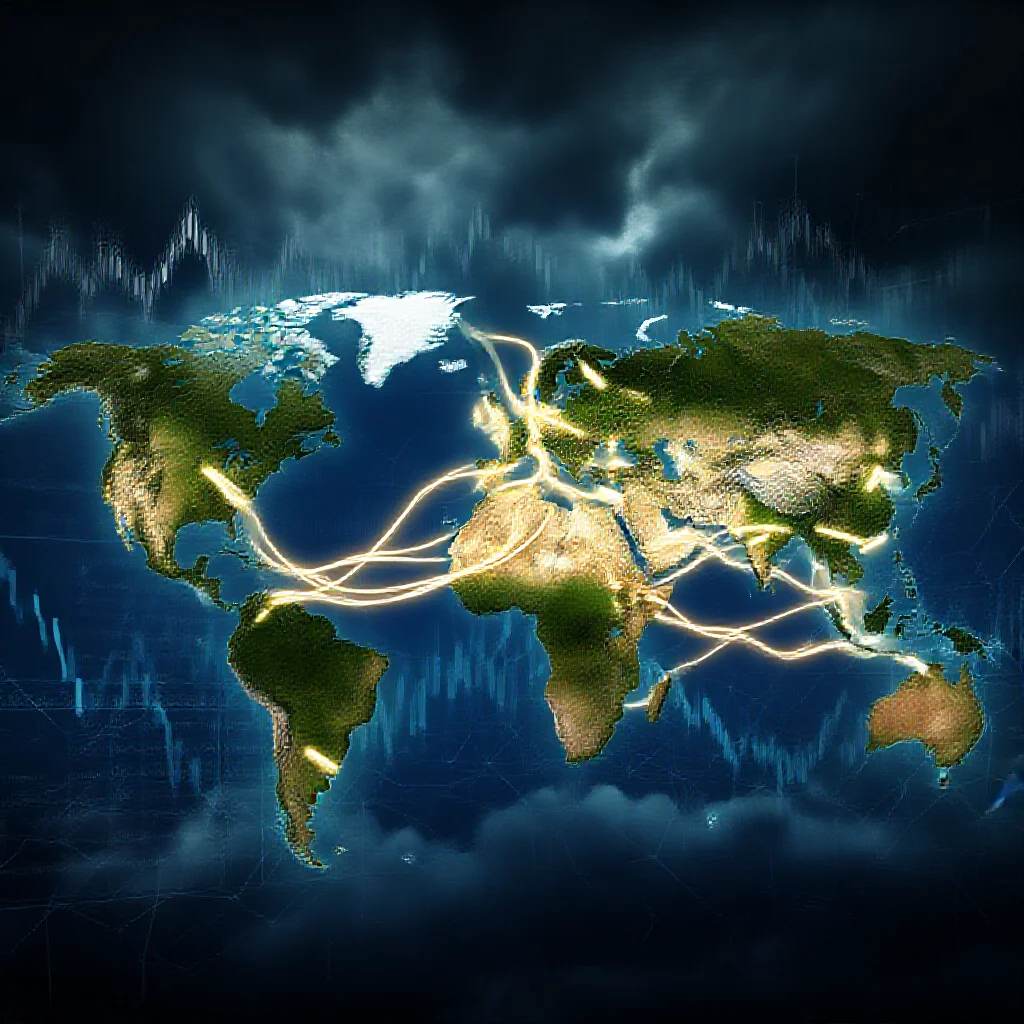
Beyond the Headline: How the West Asia Crisis is Rewriting Global Growth and Energy Security
A recent forecast by S&P Global projects a deceleration in worldwide economic expansion, with growth expected to slow to 3.2% by 2026 (Source 1: [S&P Global Forecast]). The analysis attributes this downward revision not to typical cyclical factors but to the ongoing crisis in West Asia, which it identifies as the catalyst for the largest energy shock on record. This assessment moves beyond transient market volatility to signal a deeper, structural inflection point for the global economy. The immediate price fluctuations in hydrocarbon markets are merely the surface manifestation of a more profound recalibration, forcing a fundamental re-evaluation of long-held principles governing energy security, supply chain design, and economic resilience.
The Forecast as a Symptom: Decoding S&P Global's Warning
The 3.2% growth figure for 2026 represents a notable deviation from the post-pandemic recovery trajectory. Its significance lies not merely in the numerical value but in the explicit causality drawn by the analysis. S&P Global’s attribution of the slowdown directly to the West Asia crisis marks a pivotal shift in macroeconomic risk assessment. It moves the geopolitical instability of a key energy-producing region from a contingent variable in economic models to a central, deterministic driver of global output. The credibility of this projection is anchored in the institution's methodological rigor, which integrates real-time market data, trade flow disruptions, and investment sentiment into its modeling. This forecast functions as a leading indicator of the tangible economic cost associated with severe geopolitical fragmentation and the breakdown of long-standing commercial dependencies.
Unpacking the 'Largest Energy Shock': More Than Just Oil Prices
Characterizing the situation as the "largest energy shock on record" encompasses dimensions beyond headline crude oil prices. The shock is a compound event comprising extreme price volatility, physical supply route insecurity, and the accelerated drawdown of strategic petroleum reserves. Critical maritime chokepoints have become zones of heightened risk, forcing costly rerouting and elevating global shipping insurance premiums. The disruption extends downstream, severely impacting the production of ammonia-based fertilizers and petrochemical feedstocks, thereby transmitting cost pressures to the agricultural and manufacturing sectors globally. Economies with high energy import dependency face immediate strain, but the exposure is broader; energy-intensive industries worldwide, from metals refining to data center operations, confront a structural increase in their core cost base, affecting competitiveness and investment decisions.
The Hidden Economic Logic: From Efficiency to Resilience
The core macroeconomic impact of this shock is the forced pivot in foundational economic philosophy. The dominant paradigm of globalized, just-in-time supply chains optimized for cost efficiency is being systematically challenged. The crisis acts as a catalyst, compelling nations and corporations to prioritize security of supply and operational resilience. This shift manifests in strategies such as "friend-shoring" of critical industries, strategic stockpiling of essential commodities, and investment in redundant infrastructure and diversified supplier networks. These actions, while rational for individual actors, carry a collective economic cost. They represent a massive, unplanned capital allocation away from productive growth-oriented investment and towards defensive, systemic risk mitigation. The projected growth slowdown to 3.2% can be interpreted, in part, as the direct fiscal and operational expense of this global resilience-building exercise.
Deep Entry Point: The Long-Term Reconfiguration of Underlying Supply Chains
A critical, often overlooked consequence is the cascading effect of energy insecurity into material science and foundational manufacturing processes. The search for non-oil-based polymers and chemicals gains urgent commercial impetus, potentially altering the cost curves for bio-based or recycled materials. Energy-intensive primary industries, such as glass, ceramic, or aluminum production, may face accelerated geographic relocation closer to secure, affordable power sources, regardless of labor cost differentials. This triggers a second-order reconfiguration of supporting supply chains. Furthermore, a "green acceleration paradox" emerges: while the shock may incentivize faster renewable energy adoption for long-term security, it simultaneously risks locking in interim investments in liquefied natural gas (LNG) infrastructure and other fossil-based assets to ensure short-to-medium-term stability. The investment landscape is thus bifurcating, with capital flowing simultaneously towards energy independence projects—including next-generation nuclear, hydrogen, and grid modernization—and towards securing transitional fossil fuel supplies.
Neutral Market and Industry Predictions
Based on the structural shifts identified, several neutral predictions can be deduced. The premium for long-term energy supply contracts with politically stable partners will increase significantly. Capital expenditure in logistics and industrial sectors will increasingly favor projects that enhance redundancy and route diversification over those that solely maximize throughput. Corporate risk management frameworks will formally elevate geopolitical supply chain risk to a tier-one concern, on par with financial and operational risk, influencing board-level strategy. In financial markets, the volatility risk premium embedded in assets tied to global trade routes and energy transportation will remain elevated. The recalibration towards resilience implies a period of higher baseline costs for energy and goods, which will be factored into long-term interest rates and corporate earnings models, creating a sustained, if modest, drag on aggregate global growth potential.