Beyond the 15% Drop: How Geopolitical Shockwaves Are Rewiring Tiruppur''s
A reported 15% drop in garment export orders from Tiruppur, India's knitwear
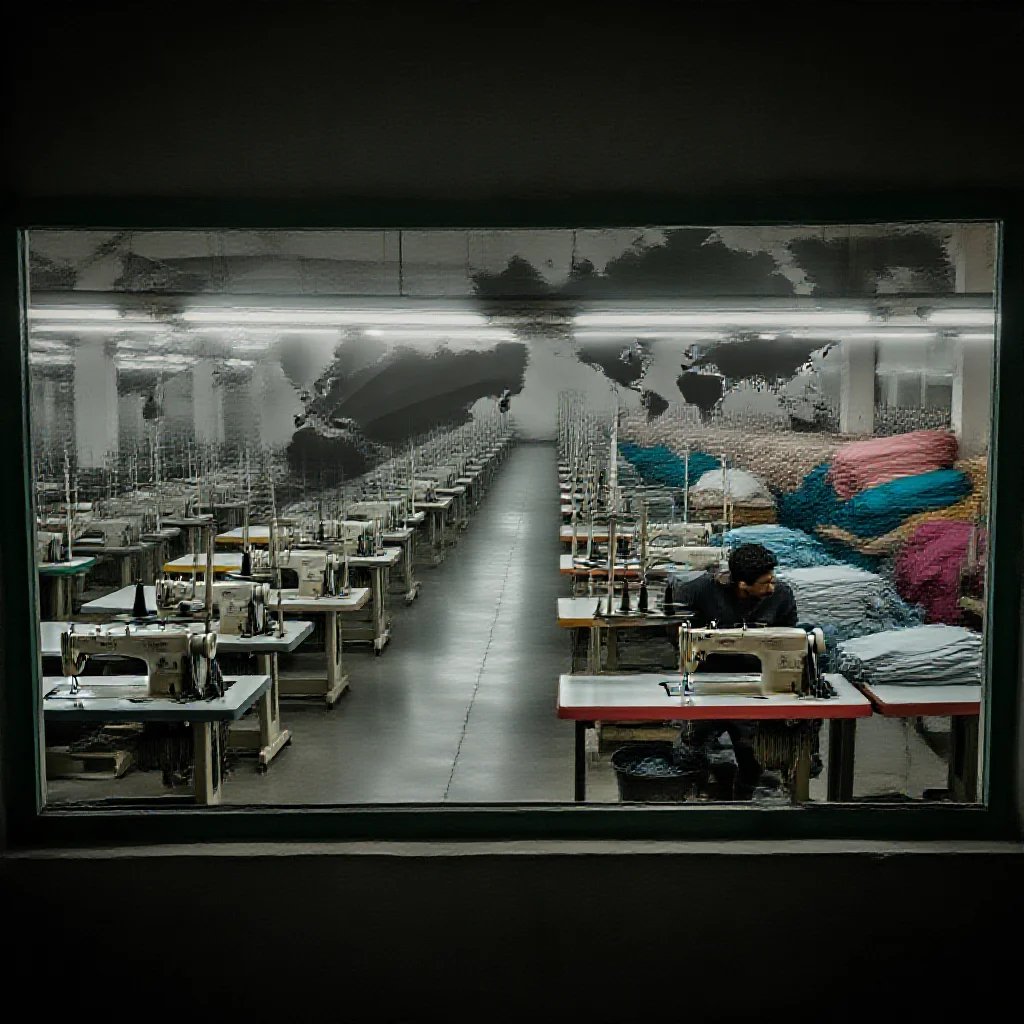
Beyond the 15% Drop: How Geopolitical Shockwaves Are Rewiring Tiruppur's Garment Supply Chain
A reported 15% decline in garment export orders from Tiruppur, India’s knitwear capital, is a surface-level indicator of deeper systemic stress. (Source 1: [Primary Data]) While attributed to weakened demand from the United States and European Union, this contraction is not a routine cyclical downturn. It represents a symptom of structural recalibrations within global apparel sourcing, accelerated by geopolitical instability. The conflict involving Iran acts as a catalytic trigger, exposing embedded vulnerabilities in a supply chain optimized for efficiency over resilience.
The Surface Symptom: Decoding the 15% Order Drop in Tiruppur
The 15% figure signifies a leading indicator of supply chain reassessment rather than merely a lagging effect of consumer pullback. Analysis of trade data patterns indicates this drop exceeds typical seasonal adjustments or demand softening linked to inflation. The distinction is critical: a cyclical consumer pullback suggests a temporary inventory correction, while a structural buyer reassessment implies a strategic shift in procurement geography and risk tolerance. Initial verification of this trend requires cross-referencing with broader export data from India’s Ministry of Commerce and industry bulletins from the Tiruppur Exporters’ Association to confirm its deviation from historical performance baselines. The immediate attribution to "weakened demand" from the US and EU is accurate but insufficient as a terminal explanation.
The Geopolitical Trigger: How Conflict Redraws Sourcing Maps
Geopolitical conflict, specifically involving Iran, functions as a catalyst for supply chain reconfiguration. The mechanism extends beyond direct disruption to shipping lanes. It increases energy price volatility, elevates war risk insurance premiums for cargo, and introduces unpredictable delays. These factors collectively degrade the cost and reliability advantages of established sourcing corridors. For global apparel brands, this environment accelerates a pre-existing "de-risking" imperative. Sourcing strategies are being recalibrated to reduce dependence on regions perceived as vulnerable to logistical or political volatility. Evidence for this shift is found in advisory reports from global logistics firms like Maersk and DHL, which detail adjustments to key trade lanes and contingency planning. Multinational apparel conglomerates have concurrently issued statements emphasizing supply chain resilience and diversification, signaling a move from concentrated, cost-optimal sourcing to a more distributed model.
The Hidden Fracture: Stress-Testing the Fast-Fashion Ecosystem
The geopolitical shock conducts stress directly to the most vulnerable node: the Micro, Small, and Medium Enterprise (MSME)-dominated ecosystem of Tiruppur. The cluster’s economic model is predicated on executing low-margin, high-volume orders for Western fast-fashion retailers operating on "just-in-time" principles. This model collapses when confronted with a geopolitical "just-in-case" imperative, where buyers pause or diversify orders to mitigate risk. The immediate consequence is order volatility. The secondary, more profound consequence is a working capital and credit crisis for the vast network of sub-contractors and specialized units. When large orders are cancelled or delayed, payments freeze, causing a ripple effect that threatens the solvency of smaller operators. This micro-level financial distress is often absent from macro-level export reports but determines the long-term health of the industrial cluster.
The Long-Term Recalibration: Crisis as an Inflection Point
The current downturn presents Tiruppur’s MSMEs with a non-optional inflection point. The trajectory bifurcates into consolidation or transformation. One path leads to a deeper erosion of market share, as buyers permanently reallocate orders to alternative geographies or to suppliers within larger, more financially resilient integrated groups. The alternative path involves a painful but necessary transition. This would require moving beyond basic assembly to greater value addition through design integration, technical textiles, and smaller-batch agility. It would also necessitate formalization and financial strengthening of MSMEs to withstand future shocks. The outcome depends on the strategic response from both industry stakeholders and policy frameworks. The crisis, therefore, is less about a temporary 15% drop and more about the permanent rewiring of global apparel sourcing logic, where resilience is increasingly valued alongside cost and speed.
Neutral Market and Industry Predictions
Future trends will likely manifest along two axes. First, buyer behavior will solidify around multi-country sourcing strategies, reducing any single region’s share of a brand’s total procurement. Second, within India, a consolidation wave may occur in hubs like Tiruppur, with larger, more capitalized entities gaining market share due to their superior risk absorption capacity. Investment in supply chain digitization and product diversification will become critical differentiators for survival. The demand for basic knitwear will persist, but the competitive landscape will be redefined by factors of reliability, compliance, and strategic partnership, moving the needle from transactional purchasing to collaborative supply chain design. The geopolitical shock has initiated a system-wide test, the results of which will delineate the next decade’s industrial map for garment manufacturing.