South Asia Trade and Investment Cooperation: Unlocking the Hidden Potential
Despite geographic proximity and cultural ties, South Asia remains one of
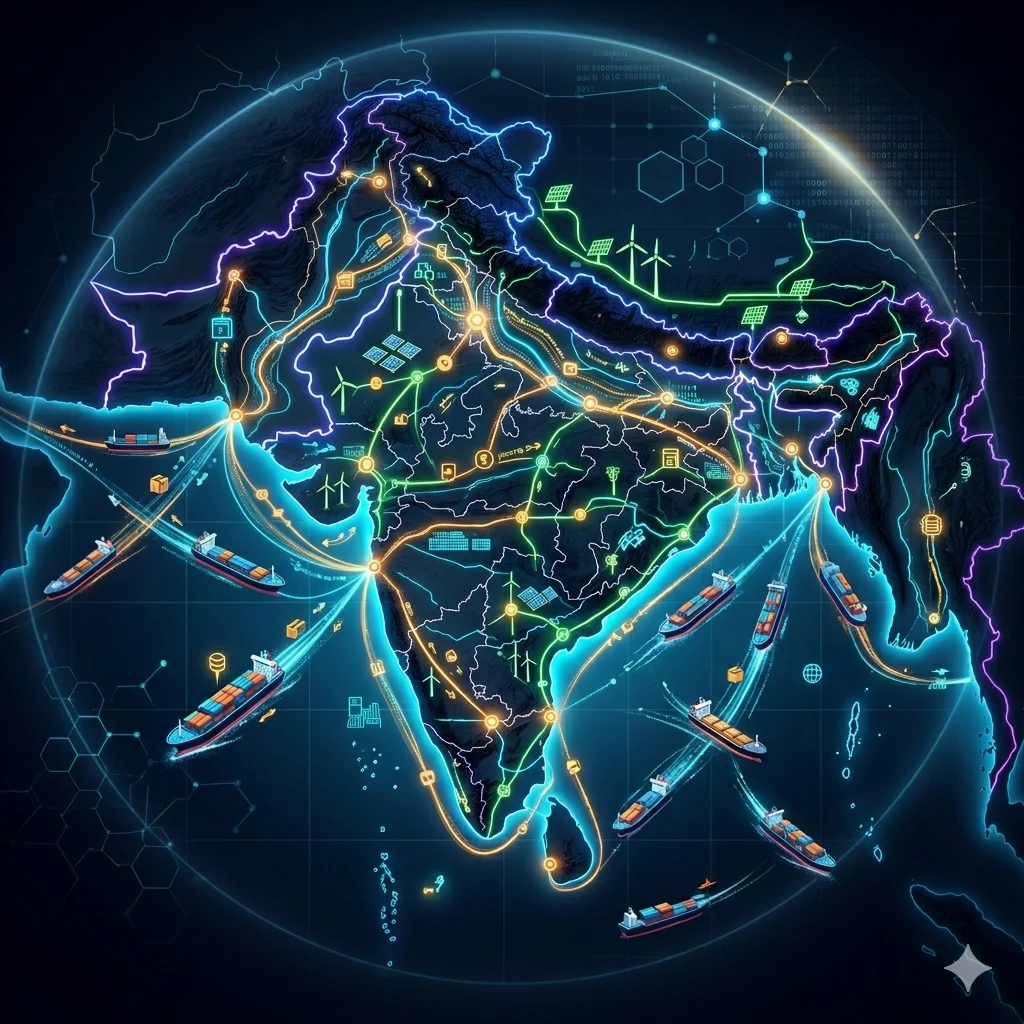
South Asia Trade and Investment Cooperation: Unlocking the Hidden Potential of Regional Supply Chains
Despite sharing borders, cultures, and centuries of intertwined history, South Asia remains one of the least economically integrated regions on the planet. Intra-regional trade accounts for less than 5% of total trade, a fraction of the 60% seen in the European Union or the 25% in ASEAN—even as the region’s combined GDP surpasses $4 trillion. This persistent “connectivity deficit” is not a simple story of missed opportunities; it is a structural paradox rooted in political friction, regulatory fragmentation, and infrastructure gaps. Yet beneath the surface, a deeper economic logic points toward a transformative potential: South Asia could emerge as a resilient global supply chain hub, driven by complementary advantages in textiles, IT services, energy, and digital infrastructure. This article conducts a slow-analysis deep audit—drawing on data from the World Bank, the Asian Development Bank (ADB), and SAARC—to examine the investment trends, hidden synergies, and long-term pipelines that are quietly reshaping the region’s economic landscape.
The South Asian Paradox: Proximity Without Integration
Geographic adjacency is not automatically a trade accelerant. In South Asia, it has been a persistent underperformer. The World Bank’s South Asia Regional Integration Report notes that intra-regional trade in goods and services hovers around 5%, while South Asia’s trade with the rest of the world is strong—exports to East Asia and Europe together account for nearly half of the total. The region’s internal barriers are multi-layered: historical political tensions between India and Pakistan, non-tariff barriers (NTBs) such as complex customs procedures, restrictive visa regimes, and inadequate transport corridors have kept supply chains fragmented.
[IMAGE: Infographic comparing intra-regional trade percentages across global regions (EU, ASEAN, SAARC)—SAARC bar showing 5% vs. EU at 60% and ASEAN at 25%.]
The hidden logic is that South Asia’s comparative advantages are highly complementary. India possesses abundant cotton, synthetic fibers, and a massive IT services ecosystem. Bangladesh is the world’s second-largest ready-made garment exporter, with a labor force skilled in large-scale apparel assembly. Pakistan grows high-quality cotton and has a robust textile spinning sector. Sri Lanka excels in high-end apparel and value-added finishing. Nepal and Bhutan generate surplus hydroelectricity. Yet these pieces rarely connect in a streamlined cross-border supply chain. Fragmented regulatory regimes prevent arbitrage—a garment maker in Dhaka cannot easily source Indian fabric without paying heavy tariffs and navigating weeks of customs delays. The result: lost efficiency, higher costs, and a collective failure to attract global buyers seeking integrated sourcing.
Why Slow Analysis? Deconstructing the Investment Architecture
News cycles fixate on tariff announcements or bilateral trade spats, but the real story of South Asian economic integration unfolds over decades, not days. A slow-analysis approach—one that looks beyond quarterly trade figures—reveals a structural transformation happening beneath the headlines. The region’s investment cooperation is not measured by today’s intra-regional trade volumes but by a long-term pipeline of cross-border projects in energy, transport, and digital infrastructure.
Key data points from credible sources underscore this shift. The ADB’s South Asia Subregional Economic Cooperation (SASEC) program, launched in 2001, has funded over 60 projects worth more than $17 billion, focusing on transport connectivity, energy trade, and customs modernization. The World Bank’s Regional Integration Report identifies that removing all tariff and NTBs in South Asia could boost intra-regional trade by 60% and double regional GDP per capita over a decade. SAARC, despite its limited mandate due to political gridlock, provided the platform for the South Asian Free Trade Area (SAFTA)—though its impact has been muted by sensitive lists and non-tariff measures.
[IMAGE: Timeline of major South Asian integration milestones: SAFTA (2006), BBIN Motor Vehicle Agreement (2015), SASEC project milestones, India-Nepal-Bhutan energy agreements.]
The slow analysis reveals an important insight: the bottlenecks are not primarily about tariffs (which have fallen under SAFTA) but about non-tariff barriers, infrastructure, and policy coordination. The real investment opportunity lies in aligning these behind-the-border measures. For instance, the BBIN (Bangladesh, Bhutan, India, Nepal) Motor Vehicle Agreement, though not yet fully operational, represents a breakthrough in allowing trucks to cross borders seamlessly—something that could cut transport costs by 30-40%. Similarly, Nepal and Bangladesh are advancing a cross-border electricity transmission line, part of a broader vision for a South Asian energy grid.
The Hidden Economic Logic: A Unified Supply Chain for Textiles and IT
The most compelling case for regional investment cooperation is the textile and apparel sector, which accounts for over 40% of South Asia’s total exports. Bangladesh’s $45-billion ready-made garment industry, India’s cotton and synthetic fiber production (India is the world’s largest cotton producer), Pakistan’s spinning and weaving capabilities, Sri Lanka’s high-end garment finishing, and Nepal’s nascent knitwear sector form a natural vertical supply chain. Yet they operate in silos, each competing for international orders rather than pooling resources.
[IMAGE: Flowchart showing potential textile supply chain integration: raw materials (India) → spinning/weaving (Pakistan) → garment assembly (Bangladesh) → finishing (Sri Lanka) → export ports.]
Consider the economics: a Bangladeshi garment factory currently imports 85% of its fabric from China, even though India produces similar fabric at competitive prices. Why? Because trade barriers, cumbersome customs procedures, and lack of transport connectivity make it easier to buy from farther away. The World Bank estimates that a 1% reduction in South Asia’s trade costs could increase intra-regional trade by $1.5 billion. If South Asian nations align investment policies—such as establishing single-window clearance for textile inputs, harmonizing customs classifications, and creating special economic zones along borders—they could challenge China’s dominance in global textiles and become a nearshoring alternative for global brands.
The same logic applies to IT services. India’s $250-billion technology sector, Bangladesh’s growing pool of 600,000 IT professionals, Sri Lanka’s BPO and software development hubs, and Nepal’s digital talent could form a regional digital services hub. Shared data centers, cross-border cloud infrastructure, and unified cybersecurity standards would allow firms to deliver services seamlessly across borders. The ADB’s SASEC Digital Connectivity Framework is already piloting high-speed fiber optic links between India, Nepal, and Bangladesh, laying the groundwork for a regional digital economy.
Infrastructure as the Glue: Energy, Transport, and Digital Corridors
Infrastructure is the foundational layer that can unlock the hidden potential of South Asian supply chains. Cross-border electricity trade is one of the most promising areas. India has already operationalized power transmission links with Nepal, Bhutan, and Bangladesh. Nepal and Bhutan together have a hydroelectric potential exceeding 80,000 MW, while India and Bangladesh face growing peak-demand deficits. The India-Nepal cross-border transmission line under the SASEC program has enabled Nepal to export up to 500 MW of hydro power to India, with plans to expand to 5,000 MW by 2030. Bangladesh is constructing a submarine power cable connection with Sri Lanka, and energy analysts have proposed a regional “South Asia Energy Market” similar to the EU’s internal electricity market.
[IMAGE: Map of South Asia showing existing and planned cross-border energy transmission lines, including India-Nepal-Bhutan hydro corridors, Bangladesh-India grid interconnection, and proposed Sri Lanka-India undersea cable.]
Transport corridors remain the weakest link. The Kolkata-Dhaka-Guwahati road corridor, once a major trade artery, is bottlenecked by poor road conditions, multiple customs checkpoints, and inconsistent axle-load restrictions. The multimodal connectivity projects under SASEC—including the modernization of the Chittagong port in Bangladesh, the development of dry ports in Nepal, and the expansion of the Kolkata and Mongla ports—hold promise but require investment in the tens of billions. The World Bank’s South Asia Regional Integration Report calls for a “regional transport master plan” that would prioritize six high-impact corridors linking India, Bangladesh, Nepal, Bhutan, and Myanmar.
Digital corridors are equally critical. The proposed SAARC Data Highway—a fiber optic ring connecting all eight member states—remains stalled due to political differences, but bilateral and subregional projects are progressing. India’s National Knowledge Network already provides high-speed connectivity to Nepal and Bhutan. Bangladesh has linked its submarine cable landing station to India’s terrestrial backbone. A fully digital South Asia could enable e-commerce, digital payments, and cross-border telemedicine and education services, creating new markets beyond physical goods.
The Geopolitical Reality and the Way Forward
No analysis of South Asian integration can ignore the geopolitical friction that has hampered progress. The rivalry between India and Pakistan has paralyzed SAARC, with summits suspended since 2014. Yet subregional frameworks like the BBIN initiative and SASEC have proven more nimble, allowing deeper cooperation among willing partners. China’s Belt and Road Initiative, through the China-Pakistan Economic Corridor (CPEC) and its investments in Sri Lanka, Bangladesh, and Nepal, has also altered the strategic calculus—prompting India to accelerate its own connectivity projects in the neighborhood.
The slow analysis suggests that the most realistic path forward is not a grand, all-encompassing treaty but a series of pragmatic, sector-specific agreements. The India-Bangladesh energy cooperation, the BBIN Motor Vehicle Agreement (once fully ratified and implemented), and the digital connectivity pilots offer tangible evidence that progress is possible when economic logic prevails over political symbolism. For global investors and supply chain managers, the key takeaway is that South Asia’s integration story is not a static picture of low trade volumes—it is a dynamic, long-term pipeline of investment in energy, transport, and digital infrastructure that could reshape the region’s role in global supply chains.
The region’s hidden economic logic—complementary labor, raw materials, IT services, and energy—has always existed. What has been missing is the institutional glue and physical infrastructure to connect the pieces. With each new power line laid, each customs procedure harmonized, each digital fiber strand buried, the potential inches closer to reality. For those paying attention to the slow, structural shifts beneath the headlines, South Asia may well offer the next great story in regional investment cooperation.