Beyond the Hype: Unlocking South Asia''s FDI Potential Through Business Climate
While South Asia boasts high growth and increasing Foreign Direct Investment
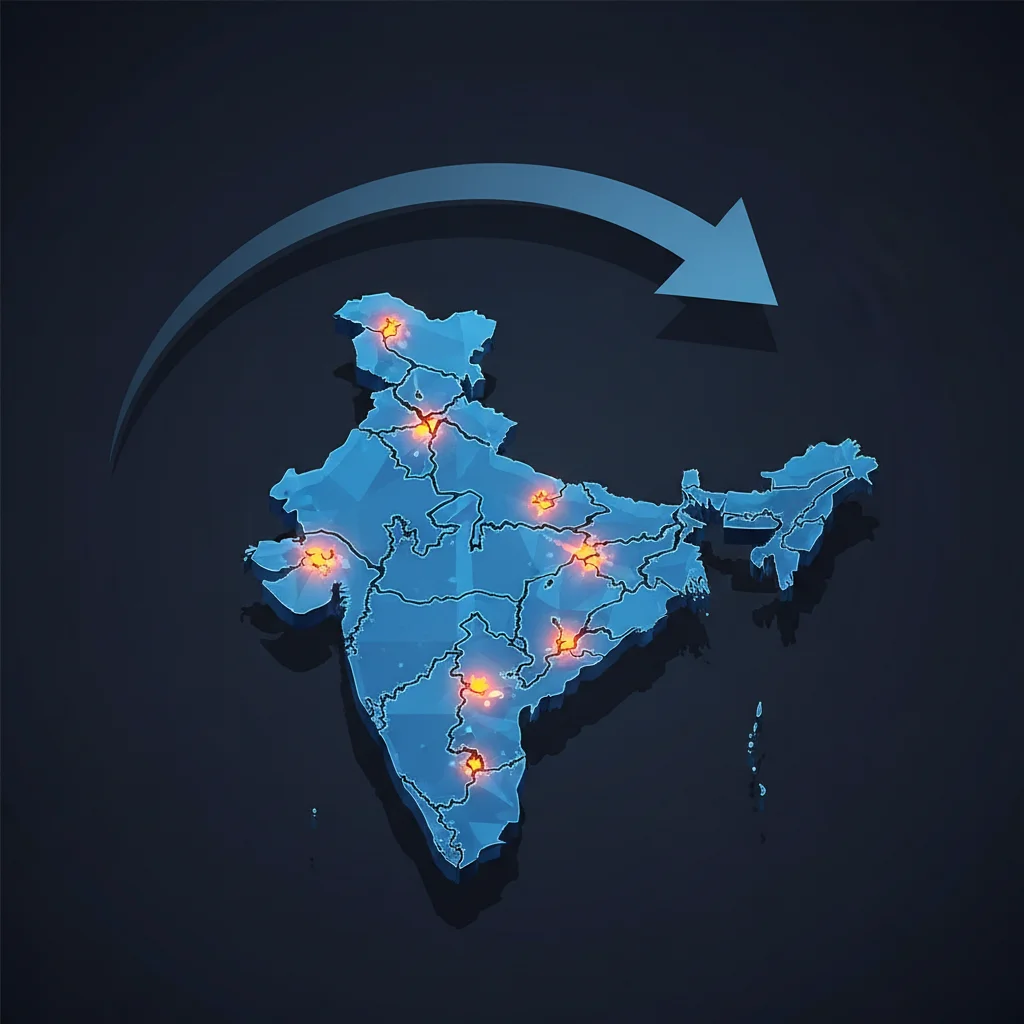
Beyond the Hype: Unlocking South Asia's FDI Potential Through Business Climate Reform
By a Senior Technical/Financial Audit Journalist
Introduction: The South Asian Paradox
South Asia has positioned itself as one of the world's fastest-growing economic regions. Between 2000 and 2007, the region recorded average GDP growth rates exceeding 6% annually, a trajectory that invited considerable optimism from global investors. Yet beneath this macroeconomic sheen lies a persistent anomaly: despite rising Foreign Direct Investment (FDI) inflows, South Asia remains a marginal destination in the global capital allocation landscape.
According to the Asian Development Bank's third issue of the South Asia Economic Report (SAER), published in February 2008, the region's FDI inflows—while increasing in absolute terms—remain "low compared to other developing regions and countries of Asia" (Source: ADB SAER Issue 3, February 2008). This disconnect between growth performance and capital attraction constitutes what can be termed the South Asian Paradox.
The region has liberalized its policy frameworks. Tariffs have been reduced, investment approval processes streamlined, and sectoral caps raised or eliminated. Yet the capital continues to flow disproportionately toward East and Southeast Asia—toward Vietnam, Thailand, Indonesia, and China. Why?
The ADB report provides a sharp, unambiguous diagnostic: "The region's main obstacle in attracting FDI is its poor business climate." This is not a peripheral observation but the central finding of a comprehensive analytical exercise. The "poor business climate" is not a single variable but a compound friction—a tax on investment that operates at multiple levels: infrastructural, regulatory, institutional, and human-capital related. South Asia's challenge is not one of potential; it is one of execution.
[Image suggestion: A bar chart comparing FDI inflows (USD billions) into South Asia versus select Southeast Asian economies (Vietnam, Thailand, Indonesia) for 2005-2007, visually establishing the relative underperformance of South Asia.]
---
Section 1: The Hidden Bottleneck – The "Business Climate" Tax
The concept of "business climate" in the ADB's analytical framework extends far beyond conventional corruption indices or ease-of-doing-business rankings. The report identifies a multi-layered friction that systematically reduces the return on invested capital across the region.
The Regulatory Labyrinth
Policy liberalization at the macro level has not translated into operational ease at the micro level. Foreign investors entering South Asian markets confront a dense thicket of procedural requirements: business registration delays, customs clearance bottlenecks, land acquisition disputes, and inconsistent tax enforcement. These are not isolated irritants; they function as an invisible tax that accumulates across the investment lifecycle.
The ADB report notes that while "the region has made efforts to liberalize its policies," the gap between policy intent and implementation reality remains substantial. For example, customs clearance in South Asian ports can take three to five times longer than in Singapore or Malaysia. Each day of delay represents capital immobilization—a cost that compounds rapidly for manufacturing and logistics-intensive investments.
Infrastructure as a Binding Constraint
The region's infrastructure deficit operates as a direct deterrent to high-value FDI. Power outages, inadequate transportation networks, and unreliable logistics increase operational costs and reduce production reliability. Unlike fiscal incentives—which can be adjusted through legislation—infrastructure quality requires sustained capital expenditure and institutional capacity that many South Asian economies have historically underinvested in.
The ADB report emphasizes that infrastructure development is not merely a complementary factor but a "key element required for further promotion of FDI." Manufacturing investors, in particular, require predictable electricity supply, efficient port connectivity, and reliable road networks to maintain just-in-time production schedules. When these are absent, even generous tax holidays cannot compensate.
The Investor Perception Gap
Interestingly, the ADB report identifies a paradox within the perception data: "Foreign investors' perception of the region is becoming progressively more positive." This suggests that the gap between opportunity recognition and actual capital deployment is widening—the region is seen as having potential but is not yet delivering the operational conditions to realize it.
This perception-action gap is dangerous. It creates a situation where South Asia is included in strategic discussions about "China Plus One" diversification but routinely deprioritized during actual capital allocation decisions. The region receives the "look" but not the "book."
[Image suggestion: A flowchart or maze graphic representing regulatory complexity, with dead-end nodes labeled "Customs Delays," "Land Rights Disputes," "Power Outages," and "Labor Law Compliance."]
---
Section 2: Beyond Macro – Why SMEs and Workforce Quality Matter for FDI
Macroeconomic stability and policy liberalization are necessary but insufficient conditions for deep FDI penetration. The ADB report identifies two additional structural factors that fundamentally determine a region's capacity to attract and retain high-value foreign capital: the strength of its small and medium-sized enterprise (SME) ecosystem and the quality of its workforce.
SME Development as a Supply Chain Imperative
Multinational corporations (MNCs) do not operate in a vacuum. Complex manufacturing operations require a dense network of local suppliers capable of meeting international quality standards, delivery timelines, and cost parameters. The ADB report explicitly calls for "accelerated development of small and medium-sized enterprises" as a prerequisite for deeper FDI integration.
The logic is straightforward: when an electronics manufacturer or automotive assembler evaluates a potential investment location, it assesses not only labor costs and tax regimes but also the availability of component suppliers, maintenance service providers, logistics operators, and quality-certification facilities. A weak SME base means MNCs must either import components (incurring higher logistics costs and foreign exchange risks) or vertically integrate excessively (increasing capital intensity and reducing flexibility).
South Asia's SME sector, across most countries in the region, suffers from limited access to formal credit, inadequate technology adoption, and insufficient quality certification. This creates a structural bottleneck: foreign investors see the region's labor cost advantages but cannot operationalize them because the local supply chain infrastructure is underdeveloped.
Workforce Quality as a Determinant of Investment Complexity
The ADB report identifies "improvement in the quality of local workers" as another critical factor. This goes beyond basic literacy rates to encompass technical skills, productivity norms, and labor market flexibility.
South Asia possesses a demographic dividend—a young, growing workforce. However, the quality of this workforce varies significantly across and within countries. The region's educational systems have historically emphasized theoretical knowledge over vocational and technical skills. As a result, investors seeking to establish advanced manufacturing or services operations encounter skill mismatches that require extensive (and costly) on-the-job training.
The ADB's emphasis on workforce quality is particularly relevant for the "moving up the value chain" strategy that many South Asian economies pursue. Basic assembly operations can succeed with low-skilled labor, but higher-value FDI—in electronics, pharmaceuticals, automotive components, and business process outsourcing—requires a workforce with intermediate technical competencies. Without this, the region risks being locked into low-wage, low-productivity investment profiles.
---
Section 3: Regional Cooperation – The Missing Multiplier
The ADB report places significant emphasis on "enhancement of regional cooperation" as a necessary condition for FDI promotion. This recommendation is not merely diplomatic rhetoric; it reflects a structural reality about how global investors evaluate production locations.
The Fragmentation Penalty
South Asia is one of the world's least economically integrated regions. Intra-regional trade accounts for less than 5% of total trade, compared to approximately 25% in Southeast Asia. This fragmentation imposes a direct cost on potential investors. A supply chain that would ideally span multiple countries—for example, raw materials from India, processing in Bangladesh, and assembly in Sri Lanka—faces tariff barriers, non-tariff barriers, customs delays, and regulatory incompatibilities at every border crossing.
The ADB's call for regional cooperation addresses this fragmentation head-on. When investors evaluate a region's attractiveness, they assess not only individual country conditions but also the ability to move goods, services, and capital across borders efficiently. A fragmented region appears as a collection of small markets rather than an integrated economic space of 1.5 billion consumers.
Infrastructure Connectivity as a Regional Public Good
Regional cooperation extends to infrastructure. Cross-border power grids, transportation corridors, and digital connectivity can transform South Asia's investment proposition. The ADB report's emphasis on infrastructure development implicitly recognizes that many infrastructure investments have regional spillover effects that individual countries underprovide.
For example, improved road connectivity between northeast India and Bangladesh can reduce logistics costs for manufacturers in both countries. Regional energy trading can stabilize power supplies across borders, addressing one of the most commonly cited investor concerns. These outcomes, however, require coordinated institutional mechanisms that the region has historically lacked.
The Competitive Dynamics
There is also a competitive dimension. When South Asian countries compete against each other for FDI—through tax incentives, regulatory concessions, or subsidy packages—they collectively reduce their bargaining power and investment returns. Regional cooperation that establishes common investment standards, labor regulations, and environmental requirements can prevent this "race to the bottom" while presenting a unified market to global investors.
---
Section 4: The Path Forward – From Liberalization to Transformation
The ADB report concludes with a policy agenda that extends well beyond conventional liberalization measures. Seven interdependent elements are identified as necessary for "further promotion of FDI in South Asia":
- Macroeconomic and political stability – The foundation upon which all other elements rest.
- Appropriate policy and regulatory frameworks – Moving from liberalization to consistent, transparent enforcement.
- Infrastructure development – Addressing the physical constraints that increase operational costs.
- Accelerated development of SMEs – Building the supply chain ecosystem that enables complex manufacturing.
- Improvement in the quality of local workers – Bridging the skills gap through vocational and technical education.
- Enhancement of regional cooperation – Creating the integrated economic space that amplifies individual country advantages.
- Sustained improvement in the business climate – The overarching systemic condition.
The Sequencing Challenge
The critical question is not whether these elements are important but how they should be sequenced and prioritized. Infrastructure investment requires fiscal capacity that is constrained in many South Asian economies. Workforce improvement requires educational reforms that take years to materialize. Regional cooperation requires political will that has historically been in short supply.
The ADB report does not provide a simple blueprint, but its diagnostic suggests a clear logic: the business climate is the binding constraint. Without addressing this, other reforms will yield diminishing returns. A country can liberalize its investment regime, but if regulatory enforcement is arbitrary and infrastructure is unreliable, the liberalization will not translate into actual capital flows.
Supply Chain Shifts and the Window of Opportunity
The report was published in 2008, before the global financial crisis and the subsequent acceleration of supply chain diversification that has come to be known as the "China Plus One" strategy. This shift presents a structural opportunity for South Asia. As global manufacturers seek to reduce concentration risk by establishing alternative production hubs, the region's large labor force, growing domestic markets, and strategic location between East Asia and the Middle East become increasingly valuable.
However, the same factors that the ADB identified in 2008 remain relevant in the current context. If South Asia cannot address its business climate deficiencies—the regulatory friction, infrastructure gaps, SME weaknesses, and workforce quality issues—the supply chain shift will bypass the region entirely. Southeast Asia, particularly Vietnam, Cambodia, and Indonesia, is actively positioning itself to capture these flows.
---
Conclusion: The Verdict on South Asia's FDI Potential
The ADB's 2008 assessment of South Asia's FDI landscape provides a diagnostic that remains remarkably current. The region's fundamental challenge is not a lack of opportunity, nor a failure to recognize the importance of foreign investment. It is a persistent underinvestment in the institutional, infrastructural, and human-capital foundations that determine the real cost of doing business.
The "poor business climate" that the ADB identifies is not a fixed condition. It is the cumulative result of policy choices, implementation deficits, and institutional weaknesses that can be addressed through sustained, coordinated reform. The region has demonstrated its capacity for high growth. It has demonstrated its capacity for policy liberalization. What it has not yet demonstrated is a capacity for the kind of systemic, micro-level transformation that converts potential into realized capital flows.
For South Asia to fully capitalize on the ongoing global supply chain reconfiguration, it must move beyond macroeconomic cheerleading and confront the operational frictions that deter long-term, high-value investment. The path forward requires not piecemeal reform but a synchronized overhaul of infrastructure, SME ecosystems, workforce development, and regional cooperation mechanisms.
The window of opportunity is open. Whether South Asia can walk through it depends on whether its policymakers can translate analysis into action—and whether the region can finally unlock its demonstrated potential through the unglamorous, patient work of business climate reform.
---
Disclaimer: This analysis is based on publicly available data and the Asian Development Bank's "Foreign Direct Investment in South Asia" report (South Asia Economic Report Issue 3, February 2008, ISSN: 1995-560X). The views expressed are analytical deductions based on the source material and do not represent any institution's current official position.