Pax Silica: Decoding the US-India Semiconductor Alliance and Its Global Supply
The US-India agreement to deepen cooperation under the Pax Silica initiative
Pax Silica: Decoding the US-India Semiconductor Alliance and Its Global Supply Chain Impact
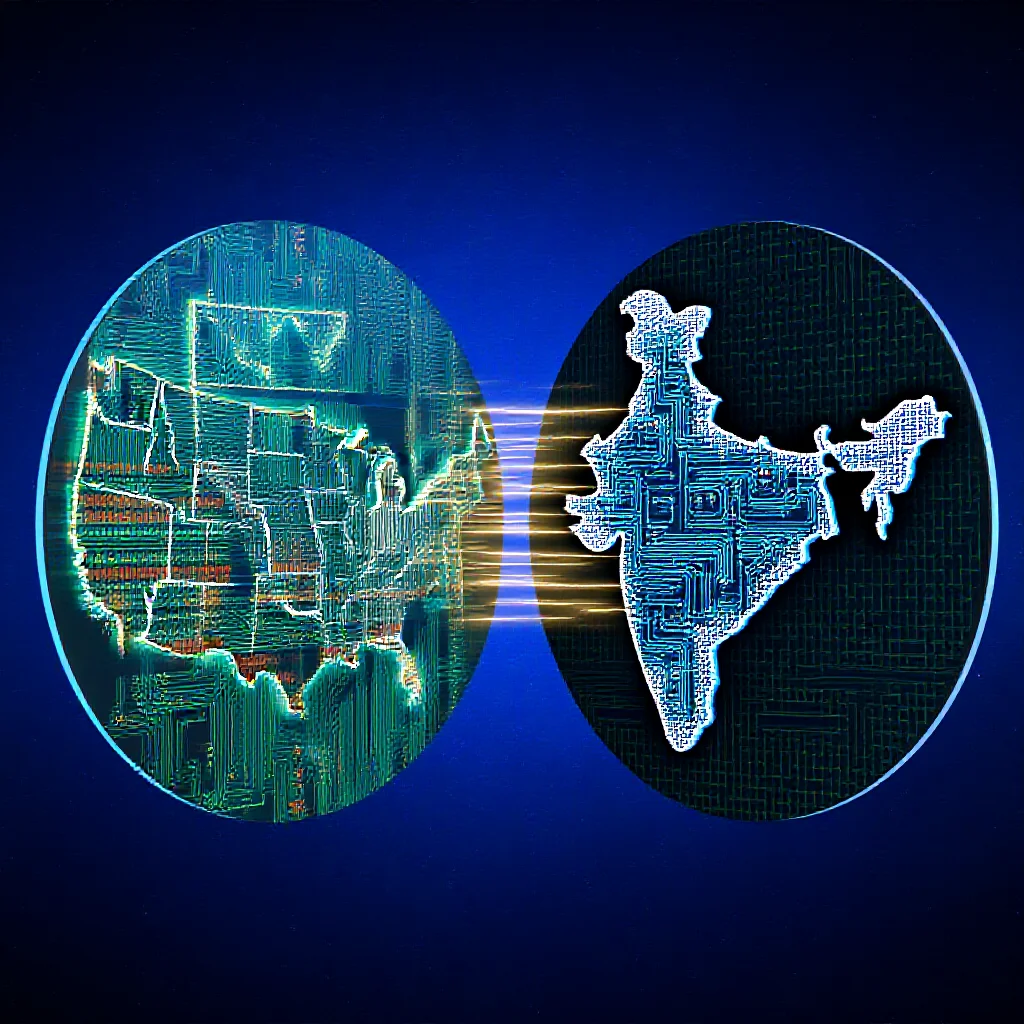
The United States and India have formalized an agreement to deepen cooperation under the Pax Silica initiative, a framework explicitly aimed at joint development of the semiconductor supply chain. This bilateral accord represents a strategic realignment beyond simple trade, signaling a concerted effort to reconfigure the foundational infrastructure of the global technology sector.
Beyond the Headline: The Strategic Calculus of Pax Silica
The Pax Silica agreement is a geopolitical and economic maneuver rooted in a fundamental shift in global supply chain philosophy. The prevailing "just-in-time" efficiency model has been supplanted by a "just-in-case" imperative for resilience, driven by pandemic-era disruptions and sustained geopolitical friction. The initiative's strategic objective is the establishment of a trusted, democratic alternative to the current manufacturing cluster heavily concentrated in East Asia. Over 90% of the world's most advanced semiconductors (below 10nm) are currently manufactured in Taiwan and South Korea, a concentration identified as a critical vulnerability in multiple assessments (Source 1: Semiconductor Industry Association reports on global fab capacity). Statements from the US Department of Commerce have consistently emphasized reducing single-point-of-failure risks in foundational technologies, providing the policy backdrop for this partnership.
Deconstructing the Partnership: Complementary Strengths and Asymmetries
The alliance leverages distinct and complementary national advantages. The United States contributes capital, frontier research and development, foundational intellectual property (IP), and immense demand from its technology and defense industrial bases. India offers a vast and growing pipeline of engineering talent, a sizable domestic market, active production-linked incentive (PLI) schemes to subsidize manufacturing, and its geopolitical posture as a neutral manufacturing base acceptable to multiple global blocs.
The critical asymmetry lies in manufacturing capability. India has established strength in semiconductor design and research, housing major design centers for global firms. However, its position in advanced fabrication is nascent. The nation's "Semicon India" program, with a financial outlay of approximately $10 billion, aims to catalyze domestic manufacturing (Source 2: Government of India budgetary documents). Scaling frontier fabrication, however, requires overcoming monumental challenges: establishing consistent utility infrastructure, securing ultra-pure chemical and material supply chains, and developing a highly specialized technician workforce. Comparative analysis from industry research firms like TechInsights indicates India currently holds less than 1% of global semiconductor fabrication capacity, highlighting the scale of the ambition.
The Long-Term Ripple Effect: Reshaping the Global Tech Order
The long-term impact of Pax Silica extends beyond building individual fabrication plants. Its most significant outcome could be the catalysis of an integrated "Silicon Corridor." This corridor would see US-designed chips fabricated in American facilities for leading-edge nodes, with downstream processes like assembly, testing, marking, and packaging (ATMP) and mature-node production (28nm and above) increasingly located in India. This division of labor aligns with comparative advantages and economic incentives.
Successful collaboration would trigger secondary diversification. The underlying supply chains for substrates, ultra-pure process gases, and specialty chemicals—currently dominated by suppliers in specific regions—would see demand-pull diversification to support the new manufacturing node. Furthermore, it necessitates a revolution in the talent pipeline, projecting a significant increase in joint curriculum development, credentialing programs, and skilled worker exchanges between the two nations.
A consequential risk is the acceleration of "friend-shoring" fragmentation. While building resilient, trusted networks, initiatives like Pax Silica may inadvertently harden the bifurcation of global technology standards and supply chains into competing geopolitical blocs. This could increase systemic costs and reduce interoperability over the long term.
Neutral Assessment: Tangible Challenges and Transformative Potential
The transformative potential of the US-India semiconductor alliance is significant. It represents a structural attempt to inject redundancy and optionality into a hyper-concentrated global system. Success would mean the emergence of a major new, trusted node in the global technology infrastructure, with profound implications for the economic and strategic autonomy of both democracies.
The tangible challenges, however, are formidable. They include the high capital intensity and long ROI horizons of semiconductor fabs, India's ongoing need to prove consistent operational reliability for nanometer-scale manufacturing, and intense global competition for a limited pool of equipment and construction expertise. Market trajectory predictions suggest that while near-term (3-5 year) impacts will be focused on talent development, supply chain agreements, and ground-breaking for initial facilities, the decisive test of the Pax Silica framework's success will be the sustained, commercially viable production of advanced semiconductors in India within the next decade. The initiative's legacy will be determined by its ability to transition from geopolitical agreement to economically sustainable industrial reality.