India''s Weekly EXIM Tracking System: A Real-Time Data Revolution for Trade
The Indian government, led by the Department of Commerce, is developing a
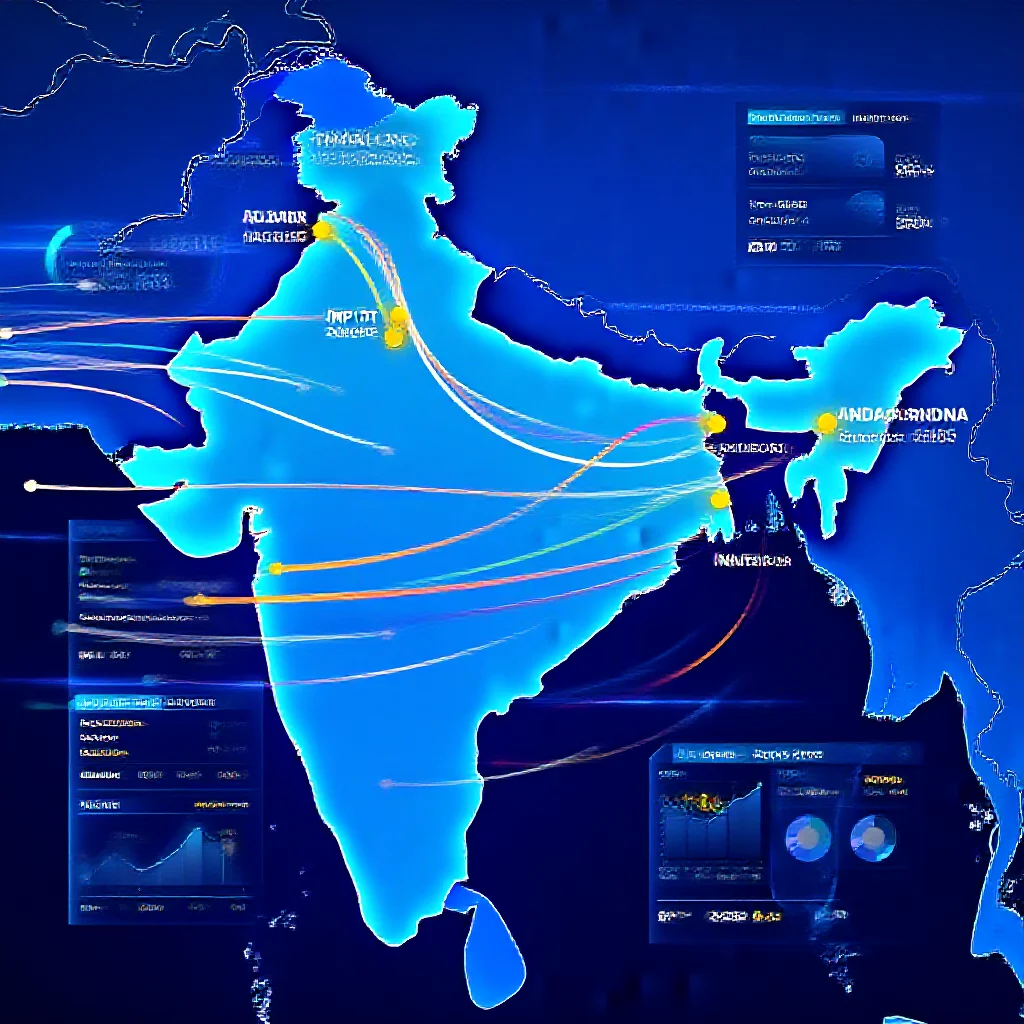
India's Weekly EXIM Tracking System: A Real-Time Data Revolution for Trade Policy
Summary: The Department of Commerce is spearheading the development of a pioneering weekly system to monitor export-import trends. This initiative seeks to fuse real-time information from customs, ports, and other agencies into a unified dashboard, marking a strategic shift from reactive to proactive economic governance.
Beyond Monthly Lags: The Urgent Need for Speed in Trade Data
The traditional framework for trade policy in India has operated on a foundation of monthly data, published with a lag of several weeks. This creates a significant "data gap" where policymakers navigate volatile global conditions—such as sudden commodity price spikes, regional port disruptions, or shifting geopolitical demand—with outdated information. The new weekly tracking system is engineered to collapse this temporal disconnect.
The economic logic is rooted in velocity. In contemporary supply chains, a disruption manifests in real-time, but policy responses have been constrained by informational latency. For instance, a sudden bottleneck at a major port or a surge in specific import volumes only becomes apparent in official policy circles after the monthly data release, potentially delaying mitigation efforts by weeks. The weekly system aims to transform this dynamic, providing a near-continuous feed of trade activity. (Source 1: [Government Announcement on Weekly EXIM System])
Architecture of Agility: How the System Integrates the Trade Nervous System
The technical ambition of this project extends far beyond generating a new report. Its core challenge and primary innovation lie in the integration of disparate, siloed data streams into a coherent, weekly feed. This requires the interoperability of systems belonging to Customs (via ICEGATE), various port authorities, shipping lines, and other logistical and regulatory agencies.
This integration represents a silent governance revolution. Each agency traditionally operates with its own data protocols, update cycles, and access permissions. Creating a unified dashboard necessitates solving complex issues of data standardization, secure sharing frameworks, and processing pipelines. The success of the system hinges not merely on software but on overcoming administrative and technical hurdles to forge a connected "trade nervous system." The initiative is, therefore, a concrete test case for the government's broader digital infrastructure and data governance capabilities.
From Dashboard to Decision: The Real Impact on Supply Chains and Policy
The transition from monthly to weekly data is not a incremental change but a paradigm shift in potential application. The most immediate impact is in supply chain resilience. A consistent weekly drop in imports of critical components, such as semiconductors or auto parts, could trigger early-warning alerts to relevant ministries and industry bodies, enabling pre-emptive action before production lines stall.
For policy tools, the implications are profound. Mechanisms like Production-Linked Incentive (PLI) schemes, export tariffs, or logistics support programs could be fine-tuned with unprecedented agility. Instead of quarterly or annual reviews based on historical data, adjustments could be informed by near-real-time trends, allowing for more dynamic and responsive economic management. The long-term strategic vision likely involves layering predictive analytics onto this monitoring foundation, moving from observing trade flows to forecasting them.
The Inevitable Challenges: Data Quality, Interpretation, and Overreaction Risks
The implementation of a high-frequency data system introduces its own set of challenges. The primary concern is data quality and noise. Weekly data is inherently more volatile than monthly aggregates, subject to temporary distortions from shipping schedules, holidays, or single large consignments. A critical risk is policy overreaction to what may be statistical noise rather than a sustained trend.
Furthermore, the utility of the data is contingent on sophisticated interpretation. Policymakers and analysts will require new frameworks to distinguish signal from noise in weekly time series. There is also the operational challenge of maintaining the integrity and security of a complex, real-time data pipeline involving multiple stakeholders. The system's ultimate value will be determined not by its launch but by the development of robust analytical protocols to translate raw data flows into stable, actionable intelligence.
Neutral Market and Industry Predictions
The development of a weekly EXIM tracking system is predicted to have several downstream effects. In the financial sector, analysts and institutional investors are likely to develop proprietary models to parse the weekly data for early indicators of corporate earnings, currency demand, and sectoral health, potentially increasing short-term market volatility around data releases.
For logistics and shipping companies, the system may lead to increased pressure for digital compliance and real-time data sharing with authorities. Technology firms specializing in data analytics, cloud infrastructure, and dashboard visualization are poised to see expanded opportunities in the government contracting space.
The most significant prediction, however, is structural: if successfully implemented, this system will irrevocably raise the expected speed of economic policy response in India. It establishes a new benchmark for data-driven governance, where the ability to act on weekly insights may become a standard component of trade and industrial policy formulation. The transition period will involve a learning curve for all stakeholders, but the direction points toward a more granular and temporally sensitive model of economic administration.