Beyond FTAs: India''s Strategic Pivot to ''Market Access'' Deals with 20 Nations
India is shifting its trade diplomacy from comprehensive Free Trade Agreements
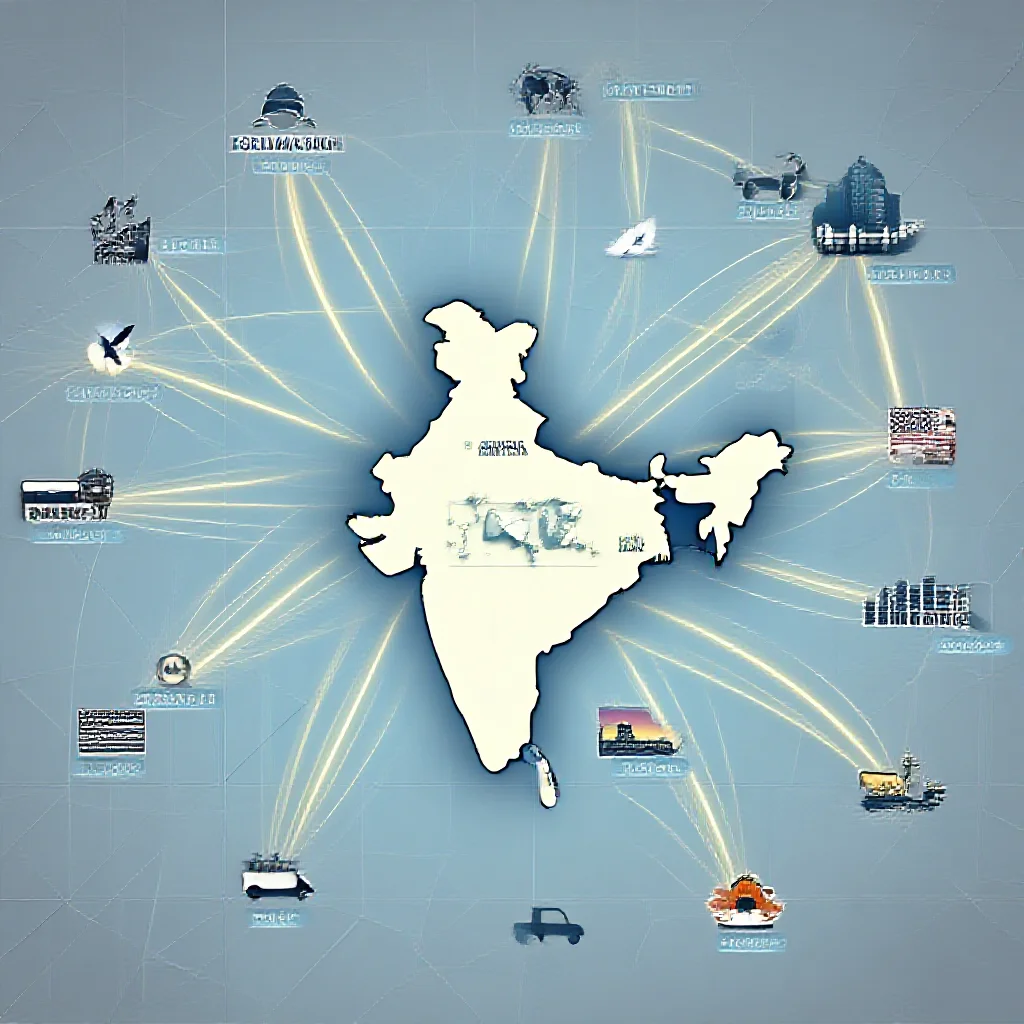
Beyond FTAs: India's Strategic Pivot to 'Market Access' Deals with 20 Nations
Introduction: The 'Access-First' Doctrine in Indian Trade Policy
India is recalibrating its international trade diplomacy. According to a report from The Economic Times, the government is planning to pursue open market access agreements with 20 additional countries, shifting focus from comprehensive Free Trade Agreements (FTAs) (Source 1: [Primary Data]). This represents a fundamental evolution in approach. A comprehensive FTA typically involves deep integration, covering not just tariff reductions but also complex chapters on intellectual property, investment, services, and sustainable development. A Market Access Agreement, by contrast, is a more targeted instrument, primarily concerned with facilitating the flow of goods—and sometimes specific services—by addressing tariffs, quotas, and customs procedures. The strategic thesis is clear: this is not a retreat from global engagement but a pragmatic refinement designed to secure faster, more targeted commercial gains with lower negotiation friction.
Decoding the Strategy: The Hidden Economic Logic
The core economic logic of this pivot is rooted in efficiency and sectoral prioritization. The primary axis of this strategy is the acceleration of export growth in India's competitive sectors—such as pharmaceuticals, information technology services, textiles, and select agricultural products—by removing immediate barriers in key markets. This "plug-and-play" approach allows Indian exporters to integrate into existing global supply chains without the protracted negotiations required to harmonize domestic regulations on investment or government procurement.
A critical component is risk mitigation. Comprehensive FTA negotiations have repeatedly stalled for India over contentious issues like data localization, digital trade, and environmental standards. By circumventing these sensitive chapters, the market access model reduces the political and economic concessions required, increasing the probability of successful conclusion and implementation. The strategy prioritizes immediate, tangible export outcomes over the long-term, and often contentious, goal of deep economic integration.
Dual-Track Analysis: A 'Slow Analysis' of a Strategic Shift
This policy shift qualifies as a subject for "slow analysis." It signals a structural, long-term change in India's trade policy architecture rather than a reactionary, one-off event. The sourcing of this information from The Economic Times, a publication with established credibility in business and policy reporting, adds a layer of verification to the strategic intent (Source 1: [Primary Data]).
This evolution connects directly to broader global macroeconomic trends. The "China Plus One" supply chain diversification strategy, accelerated by post-pandemic reassessments of geopolitical risk, has increased the demand for agile and reliable manufacturing and services alternatives. India's new approach provides a flexible tool to capitalize on this sentiment, offering partner countries easier access to Indian goods without demanding reciprocal, sweeping changes to their own domestic economic policies.
The Deep Entry Point: Reshaping Supply Chain Geography
The profound insight of this strategy lies beyond simple tariff reduction. Its true impact may be in reshaping supply chain geography through the granular details of trade facilitation. The core of these pacts will likely emphasize predictable and streamlined "rules of origin" and customs procedures. For multinational corporations designing resilient supply networks, these are critical operational factors often more significant than marginal tariff differences.
The long-term implication is the potential creation of a web of preferential, low-friction pathways for Indian exports. This could incrementally position India as an attractive nodal hub for specific manufacturing sectors, such as auto components or generic drugs, within a decentralized global network. The unseen strategic goal is to build, piece by piece, a trade architecture that systematically favors India's export strengths, potentially allowing it to integrate into global commerce through multiple bilateral channels rather than relying on membership in larger, and often more demanding, regional blocs.
The Target Matrix: Who Are the Likely 20?
While the specific list of target nations remains undisclosed, logical deduction points to probable candidates based on complementary economic structures and strategic interest. Likely targets fall into several categories:
- Resource-Rich Nations: Countries in Latin America (e.g., Chile, Peru) and Africa (e.g., Mozambique, Tanzania) with demand for finished goods and processed materials in exchange for raw commodities.
- Developing Economies with Growing Demand: Nations in Southeast Asia and Central Asia where Indian pharmaceuticals, consumer goods, and mid-level engineering products hold competitive advantage.
- Strategic Partners in the CIS Region: Countries like Uzbekistan or Kazakhstan, where India seeks to deepen economic ties as part of a broader geopolitical and connectivity strategy.
- FTA-Stalled Partners: Nations where comprehensive FTA talks have proven difficult, allowing for a "mini-deal" on goods as a constructive intermediate step.
The selection will be driven by a clear calculus: identifying markets where Indian exports face disproportionate barriers and where a focused agreement can deliver measurable growth without triggering domestic political resistance in either country.
Conclusion: Implications and Neutral Forecast
The pivot to market access agreements represents a calculated de-risking of India's trade policy. In the near to medium term, this approach is likely to yield an increase in the number of signed trade pacts and a corresponding, measurable uptick in merchandise exports to the targeted countries. Sector-specific industries, particularly those aligned with the government's production-linked incentive (PLI) schemes, stand to benefit most directly from reduced friction.
The long-term forecast is more complex. While this strategy may successfully embed India deeper into certain supply chains, it forgoes the broader economic efficiency gains and foreign direct investment attraction often associated with comprehensive FTAs. The future trajectory will depend on whether this "access-first" model is an end in itself or a stepping stone. It may prove to be a foundational phase, building confidence and export capacity, before eventually engaging in deeper integration with select strategic partners. Alternatively, it may solidify as India's preferred modality for trade diplomacy, reflecting a permanent preference for sovereignty and tactical commercial gains over multilateral institutional entanglement. The market will monitor the implementation and results of the first few such agreements for signals of the strategy's enduring shape.