Beyond Duty Relief: The Strategic Rebalancing of India''s SEZ Policy and Its
Recent requests by India's SEZ industry body for extended duty relief and
Beyond Duty Relief: The Strategic Rebalancing of India's SEZ Policy and Its Supply Chain Implications
An analysis of recent industry proposals reveals a pivotal moment for Special Economic Zones, driven by global realignment and domestic industrial strategy.
---
Introduction: Decoding the SEZ Industry's Wishlist
Recent formal proposals from India's Special Economic Zone (SEZ) industry body to the Commerce and Industry Ministry represent a significant policy intervention. The requests are twofold: a three-year extension of the duty relief period for SEZ units and an increase in the permissible limit for domestic sales of goods manufactured within SEZs. (Source 1: [Primary Data])
These are not isolated demands for concession. They are symptomatic of deeper structural shifts in global trade and domestic industrial policy. The core argument emerging from these proposals is a strategic push to pivot SEZs from their traditional role as insulated export enclaves toward becoming dual-purpose engines. The intended evolution is toward entities that simultaneously bolster global competitiveness while deepening India's domestic supply chain resilience.
The Hidden Economic Logic: Why Now?
The timing of these requests is not coincidental but is rooted in two concurrent macroeconomic realities. First, the post-pandemic reconfiguration of global supply chains, accelerated by geopolitical tensions and the widespread adoption of "China+1" diversification strategies, has placed Indian manufacturing under a spotlight of both pressure and opportunity. Global firms seeking alternative production bases are evaluating ecosystems like SEZs, but demand greater flexibility and resilience from their partners.
Second, India's own policy landscape has shifted. The aggressive promotion of Production Linked Incentive (PLI) schemes across sectors aims to foster import substitution and build domestic champion industries. This creates a new, high-quality demand pool within India itself. For SEZ units, often equipped with advanced technology and processes geared for export markets, the domestic arena now presents a viable secondary revenue stream. The unstated economic logic is clear: enhancing the viability of SEZ units by granting them a larger, more stable domestic revenue base acts as a buffer against global demand volatility, making long-term investments in SEZs more sustainable.
The Deep Audit: Long-Term Impact on India's Industrial Ecosystem
The potential long-term implications of such a policy shift are multidimensional and require careful audit.
Potential Positive Spillovers: If implemented with calibrated safeguards, allowing higher-quality SEZ production into the domestic market could elevate standards and efficiency in the broader manufacturing sector. Domestic firms competing with or supplying to SEZ units would be incentivized to improve quality and cost-effectiveness, creating a positive ripple effect through the industrial ecosystem.
Risks and Trade-offs: The principal risk is that of "policy arbitrage" and market distortion. SEZ units operate under a distinct fiscal and regulatory regime compared to Domestic Tariff Area (DTA) enterprises. A significant, unrestricted flow of SEZ goods into the domestic market could disadvantage DTA manufacturers who bear full tax and duty burdens, potentially stifling the very domestic industry the PLI schemes aim to nurture. The policy design must, therefore, meticulously balance access with fair competition.
The Infrastructure Question: A successful integration of SEZs into domestic value chains is contingent on physical and logistical connectivity. The current infrastructure, often optimized for port-oriented export logistics, may require upgrades to efficiently channel SEZ output to domestic consumption and production centers.
The Policy Tightrope: Verification and Government Calculus
The government's evaluation of these proposals will involve a complex verification of competing economic interests. The Commerce and Industry Ministry must calculate the net benefit against a matrix of objectives: boosting merchandise exports, attracting foreign direct investment into SEZs, supporting the "China+1" opportunity, and protecting the integrity of the domestic tariff wall and the nascent industries fostered by PLI schemes.
The decision matrix will likely hinge on the design of conditionalities. An extension of duty relief may be evaluated against job creation and export performance metrics. An increase in domestic sales limits would almost certainly be accompanied by stringent value-addition norms and the levy of duties equivalent to those on imported finished goods to ensure a level playing field, as per existing SEZ Act provisions. The government's calculus will weigh the strategic advantage of creating more robust, hybrid SEZ units against the fiscal cost and potential market disruption.
Conclusion: Toward Integrated Economic Nodes
The SEZ industry's requests highlight an inevitable evolution. The model of the SEZ as a walled garden, solely for export, is being challenged by a new world order that blurs the lines between global and domestic supply chains. The future of SEZs in India may not lie in choosing between export orientation and domestic integration, but in strategically enabling both.
The most probable outcome is a phased, sectorally differentiated policy adjustment. The government may opt for pilot measures or targeted relaxations for sectors critical to supply chain resilience, such as electronics, pharmaceuticals, or renewable energy components. This would allow for real-time impact assessment before a broader rollout.
The ultimate indicator of success will be whether SEZs transform from isolated export hubs into integrated, high-efficiency nodes that strengthen India's position in global value chains while simultaneously acting as catalysts for upgrading the nation's entire industrial base. The current proposals are the opening argument in that significant rebalancing act.
---
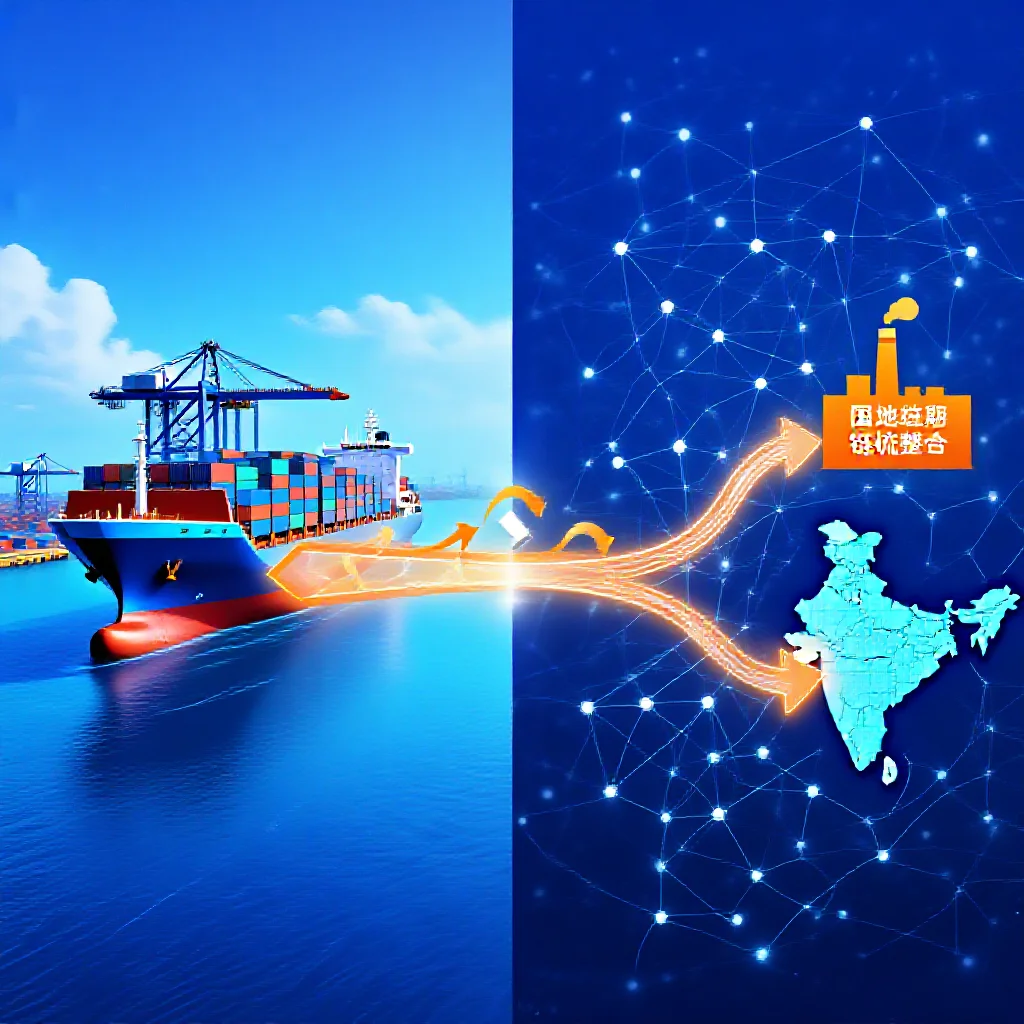
Cover Image Prompt: A dynamic, split-image visual metaphor. On the left, a sleek, modern container ship being loaded at a bustling port, representing global exports. On the right, a network of glowing lines and nodes connecting a factory to a map of India, representing domestic supply chain integration. The two halves are subtly connected by a bridge or flowing arrows, symbolizing the proposed policy shift. Professional, clean, futuristic aesthetic with a blue and orange color scheme.