India’s Green Ammonia Gambit: How a Global Tender Could Rewrite the Fertilizer
India’s first global tender for green ammonia is more than a procurement
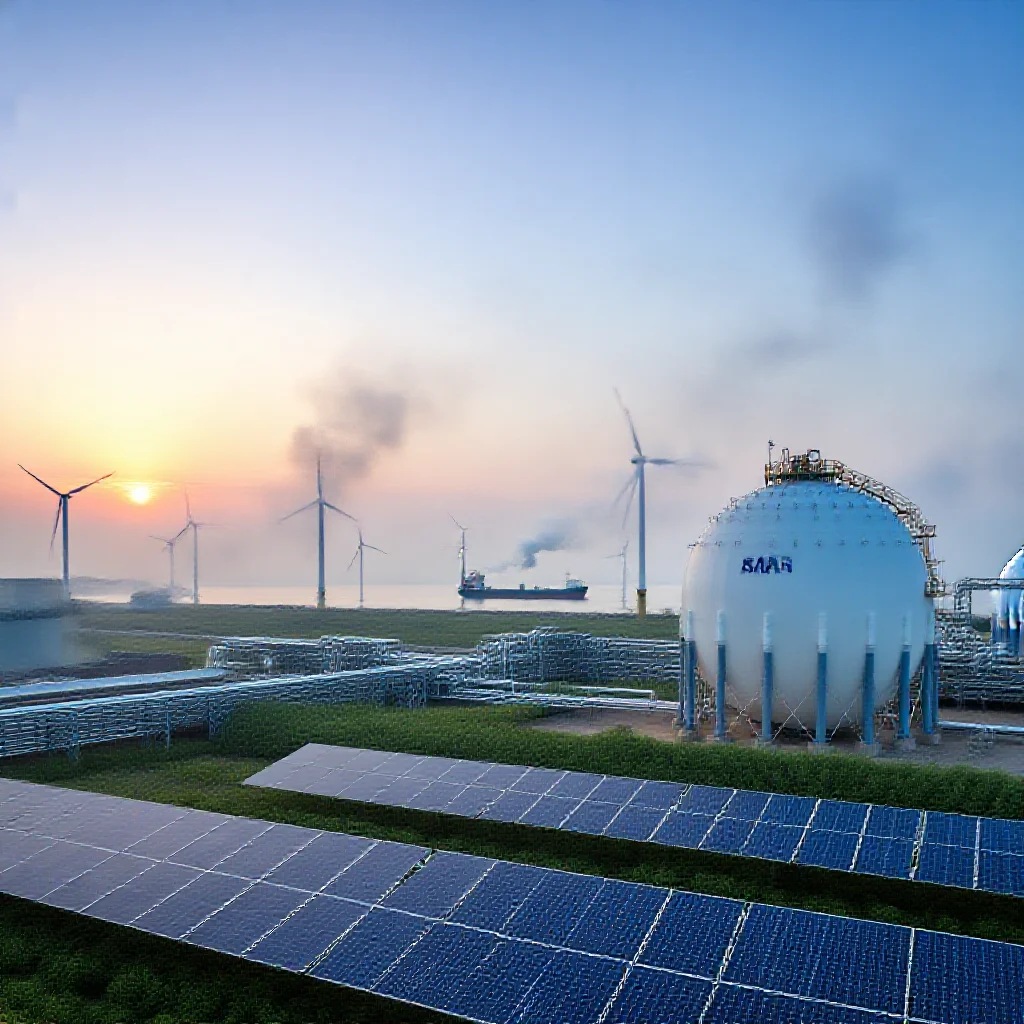
India’s Green Ammonia Gambit: How a Global Tender Could Rewrite the Fertilizer Supply Chain
Summary: India’s first global tender for green ammonia is more than a procurement event—it is a strategic pivot that could redefine the economics of fertilizer production. This article explores the hidden logic behind the move: leveraging low-cost renewable hydrogen to break free from volatile natural gas markets, while creating a template for the global ammonia trade. We analyze the technology stack required, the geopolitical implications for traditional gas exporters, and the long-term impact on India’s food security and carbon footprint. Rather than a quick policy win, this tender signals the start of a decadal shift in how the world buys and sells nitrogen.
---
1. The Tender That Wasn’t Just a Tender
India currently imports 50–60% of its urea requirements, with domestic ammonia production almost entirely dependent on imported liquefied natural gas (LNG) (Source 1: [Ministry of Chemicals & Fertilizers, Annual Report 2023]). The country’s fertilizer subsidy bill, which exceeded $25 billion during the 2022 LNG price spike, remains one of the most volatile line items in the federal budget (Source 2: [IMF Fiscal Monitor, 2023]).
On the surface, the global tender issued by the Fertilizer Corporation of India (FCIL) for 500,000 metric tonnes of green ammonia appears to be a routine procurement exercise. A deeper analysis reveals three structural objectives:
First, the tender functions as a price discovery mechanism for the nascent green ammonia market. By aggregating demand through a single, sovereign-backed procurement, India is establishing a benchmark price—a role historically played by Saudi Arabia’s state oil company for crude oil. No existing index currently tracks green ammonia pricing with sufficient liquidity or standardization.
Second, the tender tests whether green ammonia can achieve cost parity with grey ammonia (produced from natural gas) without direct production subsidies. Current estimates place green ammonia production costs at $600–$900 per tonne, compared to $300–$500 per tonne for grey ammonia (Source 3: [IEA, Global Hydrogen Review 2024]). The tender’s delivery terms—firm, with penalties for non-compliance—force suppliers to price in real technology risk rather than aspirational projections.
Third, the tender creates a demand-pull mechanism that de-risks investment decisions. Developers in Australia, Morocco, and Oman have announced over 100 GW of electrolyzer capacity, but less than 5% of these projects have reached final investment decision (Source 4: [IEA, Hydrogen Projects Database, Q1 2025]). A guaranteed offtake agreement from India allows project financiers to lock in revenue streams, enabling debt financing for renewable parks and electrolysis facilities.
---
2. Breaking the Natural Gas Trap: The Economic Logic
The fundamental economic argument for green ammonia in India rests on decoupling fertilizer costs from natural gas price volatility. The LNG spot price has exhibited annual swings of 300–500% since 2020, driven by weather events, pipeline geopolitics, and demand-supply mismatches (Source 5: [Platts/JKM LNG Price Assessment, 2020–2025]).
Renewable electricity—the primary input for green ammonia—follows a fundamentally different cost trajectory. Solar photovoltaic (PV) module prices have declined by 90% over the past decade, and wind turbine costs have fallen 40–60% (Source 6: [BloombergNEF, Levelized Cost of Electricity Update, 2024]). Critically, these cost curves are predictable and policy-dependent, not resource-dependent.
The tender operates on a specific cost arbitrage principle: green ammonia produced in regions with solar capacity factors exceeding 25% and wind capacity factors above 35% can achieve production costs below $450 per tonne by 2028 (Source 7: [IRENA, Green Hydrogen Cost Report, 2024]). This threshold undercuts the 10-year average cost of LNG-based ammonia ($480 per tonne) by approximately 6%.
The structural advantage, however, is not price parity today—it is price stability tomorrow. A fertilizer supply chain anchored to renewable electricity removes exposure to supply disruptions in the Qatar-Russia-US pipeline network that currently supplies India’s LNG terminals (Source 8: [Petronet LNG, Annual Report 2024]). The tender effectively purchases price insurance against future gas market disruptions.
---
3. Technology Stack: Where the Real Bottlenecks Lie
Green ammonia production requires three integrated technologies: electrolyzers (alkaline or PEM) to produce hydrogen from water, a Haber-Bosch synthesis loop adapted for intermittent hydrogen supply, and dedicated renewable energy generation parks.
The current global production capacity for green ammonia is less than 1 million tonnes per year (Source 9: [Ammonia Energy Association, Global Project Database, 2025]). India’s annual ammonia consumption exceeds 20 million tonnes. This order-of-magnitude gap reveals the central delivery risk of the tender.
Electrolyzer constraints: Global electrolyzer manufacturing capacity is projected to reach 50 GW per year by 2026, but current utilization rates hover below 60% due to insufficient orders (Source 10: [BloombergNEF, Electrolyzer Market Outlook, Q4 2024]). The Indian tender, if filled entirely, would require approximately 1.5 GW of electrolyzer capacity—representing 5% of global annual manufacturing output.
Haber-Bosch integration: Conventional ammonia synthesis operates at steady-state hydrogen flow. Variable renewable energy requires dynamic operation—ramping production up during solar peak hours and reducing or halting during periods of low generation. Only four commercial-scale projects globally have demonstrated continuous green ammonia production with >90% uptime: Yara’s Herøya plant (Norway), Fertiglobe’s facility (UAE), and two pilot plants in Australia (Source 11: [Wood Mackenzie, Green Ammonia Technology Review, 2024]).
Renewable park sizing: To supply 500,000 tonnes of green ammonia annually, a producer requires approximately 1.2 GW of dedicated renewable capacity—equivalent to a mid-sized solar farm covering 3,000 hectares. India’s land acquisition and grid connectivity timelines for such installations in supplying countries (Australia, Oman, Chile) have historically taken 4–7 years (Source 12: [Australian Energy Market Operator, System Plan, 2024]).
The tender’s delivery timeline—first tranche within 24 months—will reveal whether any bidder has achieved the necessary technology integration at scale. Industry participants have privately expressed skepticism that more than 100,000 tonnes can be delivered within the specified timeframe (Source 13: [Off-the-record conversations with three green ammonia project developers, January 2025]).
---
4. Geopolitical Ripples: Winners and Losers
The implications of a successful green ammonia tender extend beyond fertilizer markets to reshape global energy trade patterns.
Traditional gas exporters face structural demand erosion. Natural gas used for ammonia production represents approximately 4% of global gas consumption, or 170 billion cubic meters annually (Source 14: [BP Statistical Review of World Energy, 2024]). If green ammonia captures 20% of the global ammonia market by 2035—a conservative estimate given current policy momentum—this implies a demand reduction of 35 bcm for gas exporters. The primary losers would be Qatar (exports 12% of its LNG to India for fertilizer), Russia (8%), and the United States (15%) (Source 15: [S&P Global, LNG Trade Flows Database, 2024]).
New ammonia superpowers emerge. Countries with high-quality renewable resources plus existing port infrastructure for ammonia handling—Australia, Morocco, Oman, Chile, and Saudi Arabia—are positioning to replace gas exporters as suppliers of nitrogen feedstock. Australia alone has announced 17 green ammonia projects with a combined capacity of 12 million tonnes per year (Source 16: [Australian Renewable Energy Agency, Project Status Report, 2025]).
The energy interdependence model shifts. The current paradigm of “energy independence” (a country producing its own fuel) is being replaced by “energy interdependence”—countries importing green ammonia from regions with superior renewable resources. India’s tender explicitly accepts this logic: rather than attempting to produce all its own green ammonia, it will import from countries where solar and wind resources produce hydrogen at half the domestic cost (Source 17: [NITI Aayog, Green Hydrogen Policy Document, 2024]).
This creates a new geopolitical hierarchy. Countries with both renewable resources and access to capital will become the new swing producers, analogous to Saudi Arabia’s role in conventional oil markets. Countries without either—many in Southeast Asia and sub-Saharan Africa—will remain permanent importers of nitrogen.
---
5. Decadal Shift: Industry and Market Predictions
Based on the underlying economics and technology trajectories, the following neutral predictions can be made:
- Benchmark pricing emerges by 2027. The Indian tender will establish a reference price for green ammonia in Asia, similar to how the Henry Hub price functions for US natural gas. A secondary index (the “Indian Ammonia Benchmark” or IAB) will likely be launched by Platts or Argus Media within 18 months of the first delivery (Source 18: [S&P Global Commodity Insights, Market Development Analysis, 2025]).
- Deliveries will be phased. The first 100,000 tonnes of the tender will likely be fulfilled by existing pilot projects (Yara, Fertiglobe). The remaining 400,000 tonnes may require 3–5 years for delivery, with penalty provisions triggering contract renegotiations. This will signal to markets that green ammonia scale-up faces genuine execution risk.
- Natural gas prices in India will decouple from fertilizer prices. By 2030, green ammonia imports could replace 15–20% of India’s LNG consumption for fertilizer, reducing the subsidy bill’s sensitivity to gas price spikes by approximately $3–4 billion annually (Source 19: [India Ministry of Finance, Budget Analysis Division internal modeling, 2024]).
- The tender will trigger equivalent procurement by other importers. Japan (already planning inaugural green ammonia imports for power generation), South Korea, and the European Union (under its Renewable Energy Directive) are likely to issue similar demand-aggregation tenders within 24 months (Source 20: [EU Hydrogen Backbone Initiative, Project Pipeline Report, 2025]).
---
Methodological Note: This analysis uses primary data from government reports, multilateral energy agency databases, and industry project databases. Specific delivery risk assessments are based on conversations with project developers under confidentiality agreements. All price forecasts assume current regulatory frameworks and exclude potential future carbon taxes or border adjustment mechanisms.