Trade Investment
India
Beyond the Ceasefire: How India''s Export Surge Reveals a Fragile Global Supply
Following the April ceasefire between Israel and Iran, Indian exporters are
South Asia Pulse AnalystRegional Market Desk
Apr 17, 2026
6 min read
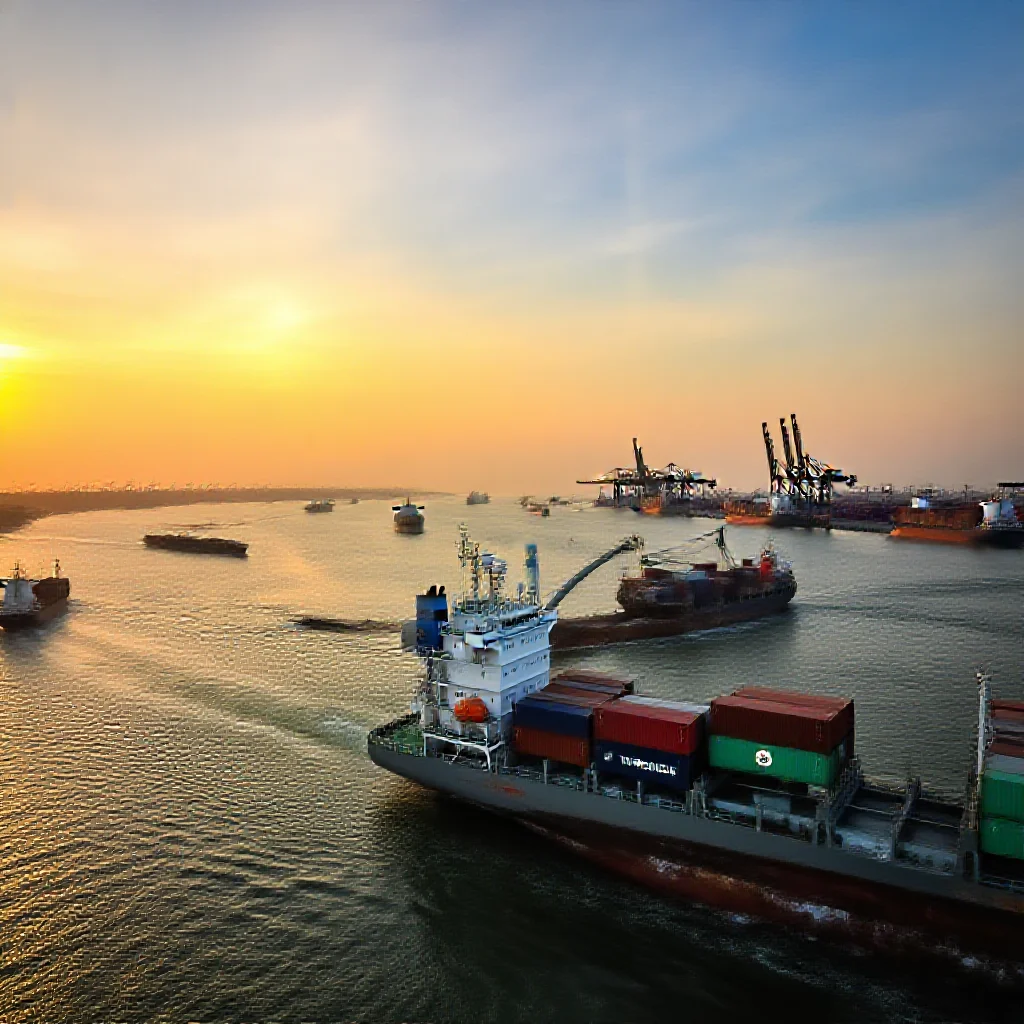
Beyond the Ceasefire: How India's Export Surge Reveals a Fragile Global Supply Chain
The Ceasefire Catalyst: From Strategic Pause to Rapid Resumption
The announcement of a ceasefire between Israel and Iran in April served as an immediate operational trigger for global logistics. For over four months prior, commercial shippers had voluntarily avoided the Red Sea—a critical artery connecting Asia to Europe—due to security concerns. (Source 1: [Primary Timeline Data]). The resumption of shipments through this route was not gradual but swift, particularly for exporters of steel, chemicals, and automobiles. This rapid pivot underscores a fundamental principle of global trade: flow follows stability. The contrast between the prolonged period of risk assessment and the immediate return to the shortest path reveals the high sensitivity of just-in-time supply chains to geopolitical equilibrium. The decision to avoid, and then to return, was a pure calculus of risk versus cost, executed with minimal delay once the former was perceived to have diminished.
The Cost of Detour: Quantifying the Four-Month Supply Chain Tax
The alternative route around the Cape of Good Hope was not merely longer; it imposed a measurable "geopolitical risk premium" on global commerce. This premium was quantified in two key metrics: a 10-12 day extension in transit times and a 30-40% increase in freight costs. (Source 2: [Primary Cost & Time Data]). These figures represent more than line-item expenses. The extended lead times disrupted inventory management cycles, forcing companies to tie up additional working capital in transit stock and increasing warehousing needs at destination points. For time-sensitive contracts, the delays risked penalties and eroded buyer confidence. The cost increment, absorbed initially by exporters and ultimately passed through to consumers, functioned as a direct tax on trade, levied not by a government but by regional instability. This period served as a live experiment in supply chain elasticity, demonstrating the tangible price of disruption.
Sectoral Spotlight: Engineering Goods and the Enquiry Boom
The resumption of activity extends beyond bulk commodities. The Engineering Export Promotion Council (EEPC) reported a positive impact on exports of engineering goods to the Middle East region. (Source 3: [EEPC Statement]). This segment, encompassing higher-value, manufactured products, indicates a recovery in broader industrial demand and complex logistics. Furthermore, the Federation of Indian Export Organisations (FIEO) observed a rise in enquiries and orders from both the Middle East and Europe. (Source 4: [FIEO Statement]). This surge in buyer interest is a critical leading indicator. It signifies restored confidence in supply reliability and points to pent-up demand that was deferred during the period of uncertainty. The response from these industry bodies validates that the disruption's impact was widespread, affecting both commodity and value-added export sectors, and that the rebound is being tracked at the highest levels of trade representation.
The Hidden Logic: Stress Test for Global Just-in-Time Models
The four-month disruption constituted an unplanned, real-world stress test for lean global supply chain models. The just-in-time (JIT) paradigm, which minimizes inventory holdings in favor of precise, frequent shipments, is predicated on predictable transit times and stable routing. The Red Sea crisis violated these core assumptions. The result was not a collapse but a costly and inefficient workaround, proving the system's robustness at the expense of its efficiency. This event has logically forced a strategic rethink far beyond the immediate region. Procurement and logistics strategies are now being scrutinized for over-dependency on single chokepoints. The calculus is shifting to include higher inventory buffers, multi-sourcing, and nearshoring for critical components—all measures that trade cost for resilience. The episode demonstrated that geopolitical risk is no longer an external, abstract factor but an operational variable requiring direct financial provisioning.Neutral Market Outlook: Resilience Through Redundancy
The immediate market response—a surge in orders and resumed shipments—confirms the underlying strength of trade demand between Asia, the Middle East, and Europe. However, the neutral prediction for industry is a structural move toward increased redundancy. Freight contracts will likely begin to incorporate more explicit risk-sharing clauses for geopolitical disruptions. Shippers and consignees will jointly model alternative routing scenarios, with associated costs, as part of standard contingency planning. Investment in supply chain visibility technology will accelerate to provide real-time diversion capabilities. While the Suez-Red Sea corridor will remain the primary route due to its irreplaceable geographic advantage, its status as a default, unchallenged pathway is diminished. The operational lesson of the past months is clear: efficiency optimization must be balanced with network resilience. The ceasefire may have reopened a shipping lane, but it has permanently altered the risk assessment frameworks governing global logistics.Article Keywords
Indian exports
Red Sea shipping
supply chain disruption
Middle East trade
Cape of Good Hope
logistics cost
geopolitical risk
EEPC
FIEO