India''s Battery Storage Conundrum: MOOWR Scheme Review and the Quest for
The Indian Finance Ministry's impending review of customs warehousing (MOOWR)
India's Battery Storage Conundrum: MOOWR Scheme Review and the Quest for Energy Security
The Policy Crossroads: MOOWR Under Scrutiny
The Indian Finance Ministry has initiated a review of customs warehousing benefits for imported battery storage systems under the Manufacture and Other Operations in Warehouse Regulations (MOOWR) scheme. (Source 1: [Primary Data]) This planned inter-ministerial discussion, involving the power and renewable energy ministries, represents a critical regulatory recalibration. The MOOWR scheme was originally designed to act as a fiscal catalyst, allowing manufacturers and project developers to import capital goods and inputs without immediate payment of customs duties, thereby easing working capital constraints. Its application to battery storage systems was a logical extension to support energy infrastructure deployment. The current review, however, signals a recognition of emergent friction. The core tension under examination is whether a scheme intended to boost infrastructure creation is inadvertently creating market distortions within a sector deemed strategic for national energy security.
!Infographic showing the basic flow of the MOOWR scheme for imported goods.

Decoding the 'Uneven Playing Field': Industry Concerns vs. Strategic Imports
The review is a direct response to concerns raised by unspecified industry groups regarding an "uneven playing field." (Source 1: [Primary Data]) Logical deduction points to a divergence of interests between two key segments: domestic battery cell and module manufacturers, and project developers or system integrators. For domestic manufacturers, particularly those investing under the Production-Linked Incentive (PLI) scheme for Advanced Chemistry Cell (ACC) battery storage, the MOOWR scheme could disadvantage their locally produced goods if project developers find it more economical to import complete systems or major sub-assemblies duty-deferred.
The government's parallel examination of "potential misuse and policy gaps" (Source 1: [Primary Data]) suggests scenarios where the warehousing benefit might be leveraged for purposes beyond its intent. This could include the stockpiling of imported systems without substantial value-addition or their eventual diversion into the domestic market, circumventing normal duty channels and undermining the value proposition of domestic manufacturing. This concern exists within the global context of supply chain dominance. China currently controls a significant portion of the global lithium-ion battery cell manufacturing capacity. For India, strategic imports in the short-to-medium term are a pragmatic necessity to meet immediate deployment targets while domestic capacity scales up.
Inter-Ministerial Tug-of-War: Energy Goals vs. Fiscal Prudence
The consultation process reveals a multi-dimensional policy calculus. The Finance Ministry's primary vectors are revenue integrity and the prevention of regulatory arbitrage. In contrast, the Power and New & Renewable Energy ministries are driven by the imperatives of grid stability and the rapid integration of renewable energy. Battery storage systems are not merely commodities but critical grid assets essential for managing the intermittency of solar and wind power, enabling higher renewable penetration and reducing reliance on fossil-fuel-based peaking power.
The verification point lies in India's official energy storage targets. The national goal is to achieve 500 GW of non-fossil fuel energy capacity by 2030, a target that is functionally constrained without significant grid-scale storage. (Source 2: [Government Policy Document]) From an energy security perspective, the debate centers on whether warehousing imported systems represents a supply chain risk, increasing import dependency, or a tactical necessity to accelerate deployment and achieve near-term capacity and grid stability objectives. The final decision, as stated, will be one that aligns with India's broader energy security goals. (Source 1: [Primary Data])
Beyond the Immediate Review: Long-Term Supply Chain Implications
The outcome of this review will establish a precedent for policy handling of other critical clean technology components, such as electrolyzers for green hydrogen or specific electric vehicle sub-systems. The decision will signal how the government intends to navigate the "PLI Paradox": the co-existence of strong fiscal incentives for domestic manufacturing alongside duty facilitation for imports. A logical resolution may involve a phased, technology-specific policy framework that provides a clear glide path from import support to domestic procurement.
Scenario planning based on the review's potential outcomes reveals distinct pathways:
* Status Quo: Would signal a priority on rapid deployment in the short term, potentially at the cost of slower uptake for domestically manufactured cells.
* Stricter Eligibility: Could involve limiting MOOWR benefits to storage projects above a certain capacity, or to imports of raw materials and machinery for domestic battery pack assembly, rather than finished systems.
* Sunset Clause: Introducing a time-bound expiration for the benefit would provide project developers with a clear transition window while giving domestic manufacturers a predictable timeline for market capture.
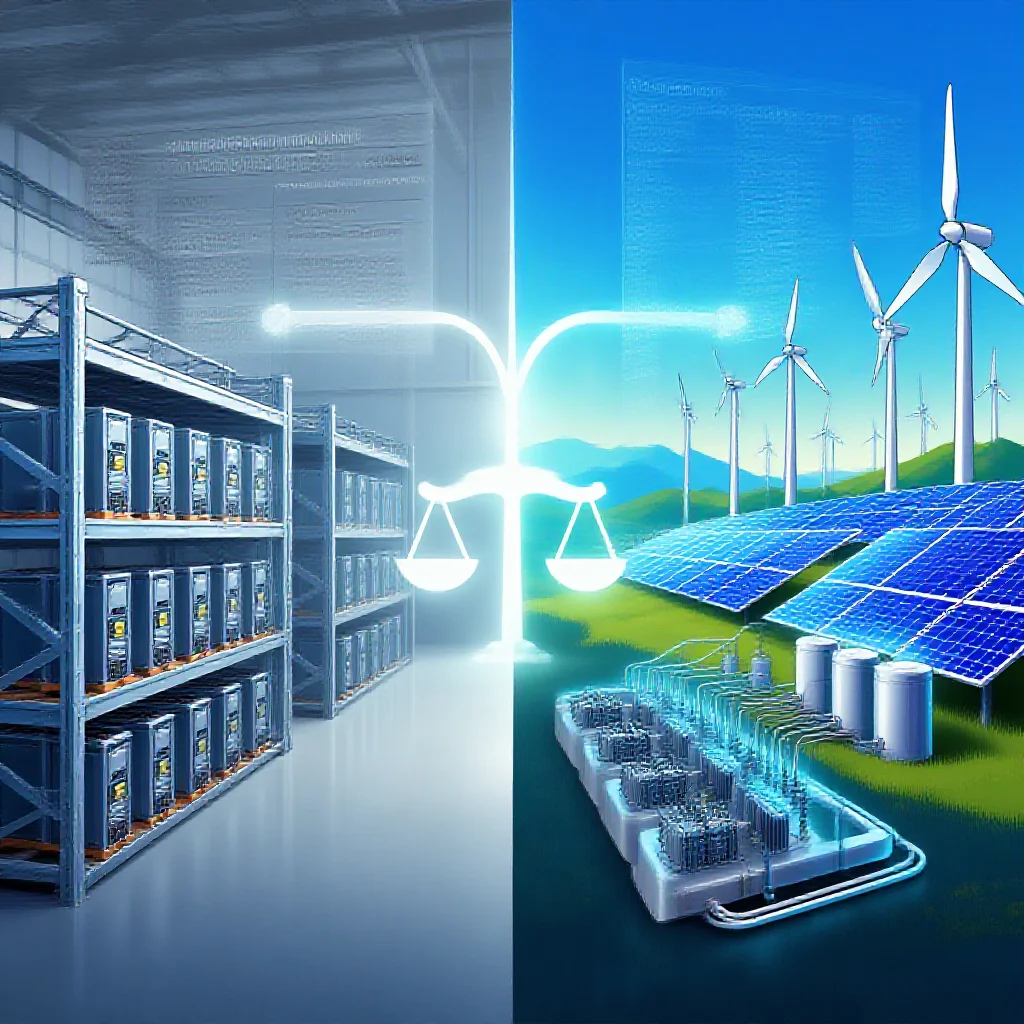
The government's verdict will ultimately reflect its calculated balance between two competing models of energy security: one predicated on rapid technology deployment using global supply chains, and another built on fostering resilient, domestic manufacturing ecosystems. The weight assigned to each will define India's strategic approach to its clean energy transition for the remainder of the decade.