Beyond the FTA: How Denmark''s New India Chamber Reveals a Strategic Pivot
The launch of the Denmark-India Chamber of Commerce in March 2025 is more
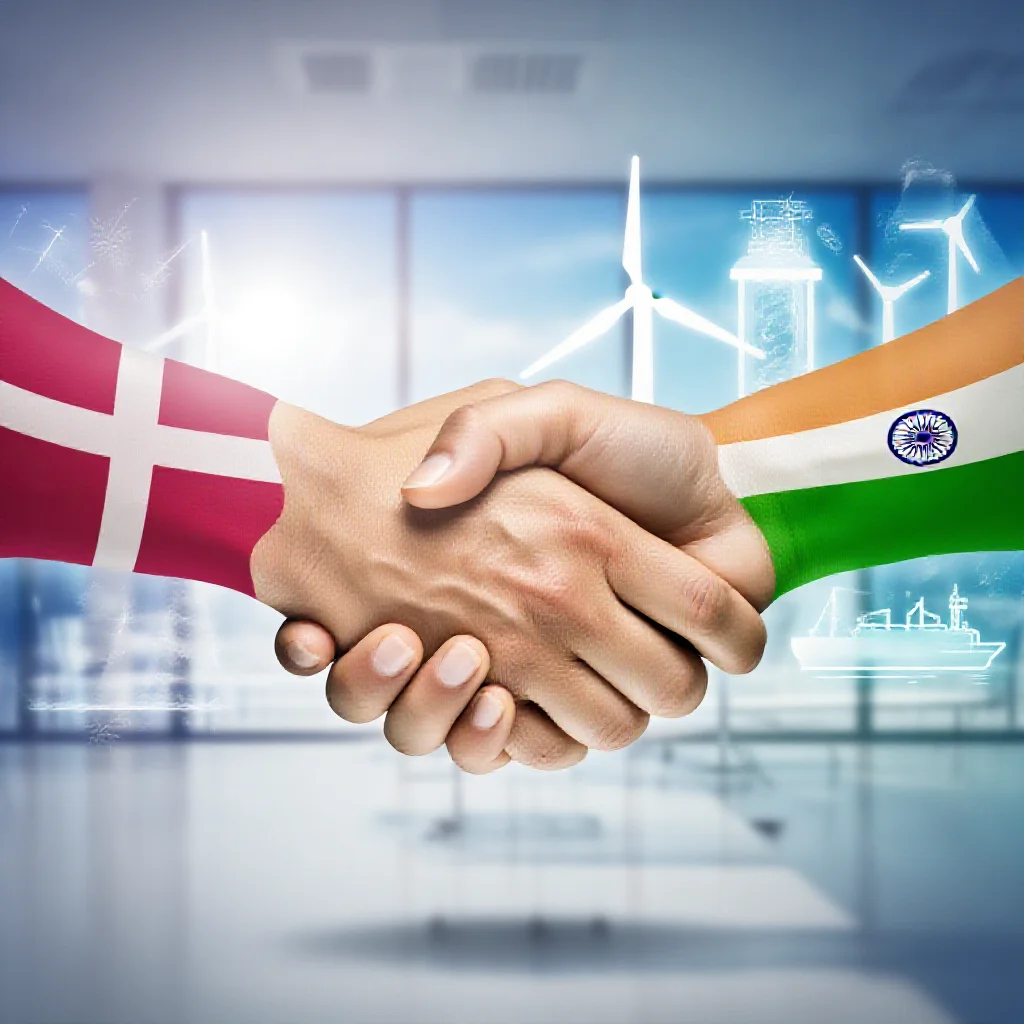
Beyond the FTA: How Denmark's New India Chamber Reveals a Strategic Pivot in Green Tech Trade
Introduction: A Chamber Born from Strategic Patience
On March 21, 2025, the Denmark-India Chamber of Commerce was officially launched in Copenhagen. (Source 1: [Primary Data]) This event occurred against a persistent backdrop: the ongoing and protracted negotiations for a comprehensive India-European Union Free Trade Agreement (FTA). The chamber’s establishment, with the Confederation of Danish Industry (DI) as a founding partner, is framed by its organizers as a facilitative body. Morten Bæk, Director at DI, stated, "The new chamber will be a one-stop shop for Danish companies looking to do business in India and for Indian companies looking to do business in Denmark." (Source 2: [Primary Quote])
A deeper analysis suggests this is more than administrative facilitation. It represents a calculated bilateral workaround to multilateral gridlock. The chamber’s sectoral focus and timing indicate a strategic move by Danish industry and policymakers to secure a first-mover advantage in specific, high-value segments of India’s economy, effectively sidestepping the slower FTA process. As India’s Ambassador to Denmark, Freddy Svane, noted, the launch is "a testament to the growing importance of the India-Denmark relationship," underscoring its political and economic significance. (Source 3: [Primary Quote])
Decoding the Sectoral Focus: Targeting India's Green Transformation Gaps
The chamber’s declared focus on renewable energy, water technology, shipping, and food processing is not a random selection of Danish strengths. It is a targeted map aligning with critical gaps in India’s national development agenda. India’s National Infrastructure Pipeline and its ambitious sustainability goals, including 500 GW of renewable energy capacity by 2030 and massive urban water management challenges, create a multi-billion-euro demand for proven technological solutions.
Denmark is positioning its cleantech and maritime expertise not merely as product exports, but as integrated systemic solutions for India’s green transformation. This focused approach aims to leverage a relatively modest existing trade base. In 2023, Denmark’s exports to India were valued at approximately €1.5 billion, while India’s exports to Denmark stood at €1.1 billion. (Source 4: [Primary Data]) The chamber’s strategy is designed to exponentially grow these figures by concentrating on sectors where Danish technological leadership meets India’s most pressing infrastructural needs.
The FTA End-Around: Bilateral Agility vs. Multilateral Gridlock
The chamber model presents a stark contrast to the FTA negotiation process. While EU-India FTA talks involve complex, state-level compromises on tariffs, intellectual property, and regulatory standards, the chamber operates on a principle of bilateral agility. It is an industry-driven initiative, as evidenced by the central role of the Confederation of Danish Industry. (Source 5: [Primary Data])
This approach creates de facto trade facilitation through trusted business networks, knowledge sharing, and matchmaking services. The logical deduction is that such networks build the commercial confidence and operational frameworks that can later be formalized and expanded under any eventual EU-India FTA. By acting now, Denmark secures a head start for its companies, embedding Danish standards and technologies into India’s growth trajectory before competitors can establish equivalent footholds through broader trade agreements.
Deep Dive: The Long-Term Supply Chain and Investment Implications
The chamber’s most significant potential impact lies beyond two-way trade flows. It is a platform for facilitating the co-creation of green supply chains. The long-term implication is the fusion of Danish frontier technology with Indian manufacturing scale and project execution capabilities. This synergy could create competitive hybrid entities capable of serving not only the Indian market but also exporting integrated solutions to third markets in Asia, Africa, and beyond.
This dynamic presents a dual-sided analysis. On one side, it risks creating pathways for technology dependency. On the other, it offers a model for strategic partnership and capacity co-development, moving beyond a simple vendor-buyer relationship. The chamber’s structure enables Danish firms to navigate India’s regulatory landscape more effectively, thereby de-risking the substantial investments required in sectors like offshore wind and circular water management. This lowers the barrier for capital-intensive, long-term projects that are essential for India’s decarbonization.
Conclusion: A Bellwether for the Future of Strategic Trade
The launch of the Denmark-India Chamber of Commerce is a bellwether for evolving global trade patterns. It demonstrates how middle-power nations with concentrated technological expertise are pursuing bilateral, sector-specific alliances to navigate an era of strategic decoupling and green industrialization. This model of targeted commercial diplomacy may be replicated by other specialized economies seeking to secure supply chain influence and market access independently of larger, slower-moving multilateral blocs.
The chamber’s success will be measured by its ability to translate facilitated connections into tangible joint ventures, technology transfer agreements, and co-developed infrastructure projects. Its existence signals a pragmatic recognition that in the current geopolitical climate, agile, industry-led partnerships can often achieve strategic commercial objectives faster than traditional diplomatic trade frameworks. The trajectory of this initiative will provide critical data on the efficacy of such focused bilateral instruments in shaping the future of global green technology markets.