South Asia’s Silent Revolution: How Technology Innovation is Rewriting Regional
While global attention focuses on established tech hubs, South Asia is undergoing
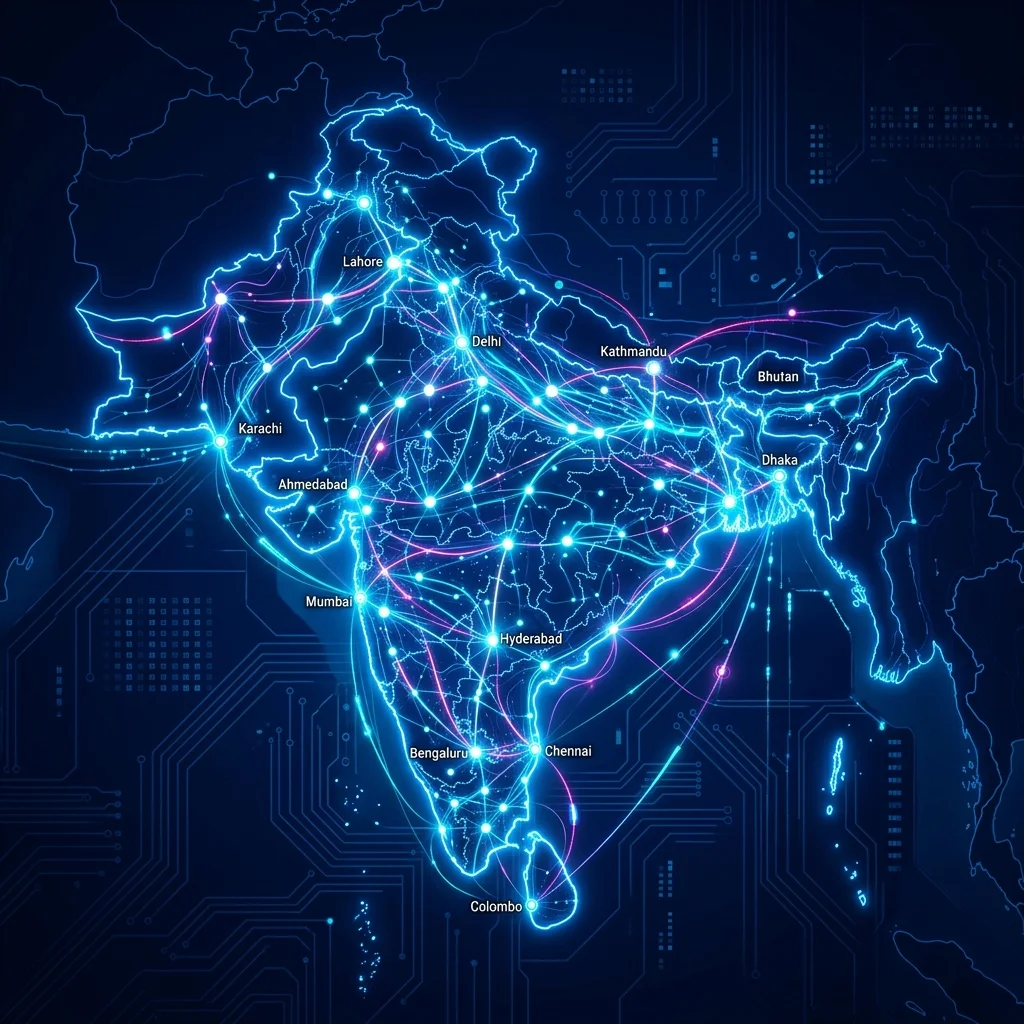
South Asia’s Silent Revolution: How Technology Innovation is Rewriting Regional Economic Rules
By Senior Technical/Financial Audit Journalist
---
Introduction: Beyond the Noise – What South Asia’s Innovation Actually Means
For the past two decades, global capital markets have categorized South Asia primarily as a service-delivery periphery—a region valued for its labor arbitrage in IT outsourcing, call centers, and back-office operations. This characterization, while historically accurate, is now materially incomplete. A structural recalibration is underway across India, Bangladesh, Pakistan, Sri Lanka, and Nepal, driven not by top-down policy mandates but by bottom-up technological adaptation to acute local constraints.
The Global Private Capital Association (GPCA)—a membership organization tracking private capital flows across 50+ emerging markets—has documented a discernible shift in allocation patterns within South Asia. According to GPCA’s 2023-2024 regional analysis, venture capital deployment into technology-enabled enterprises in South Asia grew at a compound annual rate of 18% between 2018 and 2023, outpacing Southeast Asia and Latin America in product-stage investments (Source: GPCA Annual Private Capital Report, 2024). This is not anecdotal exuberance; it is a data point indicating a reallocation of risk capital toward structurally different economic activities.
The significance lies in what this capital is funding. It is no longer predominantly service arbitrage. The emerging pattern suggests a region building indigenous technological solutions for systemic problems—agricultural fragmentation, logistics inefficiency, financial exclusion, and energy distribution—using mobile-first architectures, diaspora-mediated knowledge transfer, and cross-border digital supply chains. This transformation is slow, capital-intensive, and underreported. It is not a hype cycle but a structural industrial audit with implications for global supply chain resilience and long-term capital deployment.
---
The Hidden Logic: From Services Exports to Product-Led Problem-Solving
The traditional South Asian economic model relied on exporting labor-intensive services to developed markets. Indian IT services firms, for instance, generated $245 billion in revenue in FY2023, with approximately 60% derived from export markets (Source: NASSCOM Strategic Review, 2023). This model, while effective for employment generation, produces low intellectual property retention and thin margins—typically 20-25% EBITDA for Tier-1 services firms versus 40-60% for product-oriented technology companies.
The emerging pattern differs fundamentally. GPCA data indicates that between 2019 and 2023, the share of private capital flowing into intellectual-property-intensive startups—defined as those holding registered patents, proprietary algorithms, or hardware innovations—increased from 12% to 31% of total South Asian venture deployment (Source: GPCA South Asia Venture Capital Trends Report, 2024). This is not a marginal shift; it represents a reallocation of approximately $4.2 billion in annual capital flows toward product-led models.
Three sectoral cases illustrate this transition:
Agri-tech: India and Bangladesh face structural agricultural fragmentation—85% of Indian farms are below two hectares. Startups such as DeHaat (India) and iFarmer (Bangladesh) have built proprietary supply chain management platforms integrating 2.5 million and 200,000 farmers respectively, using AI-driven demand forecasting and blockchain-based provenance tracking. These are not service contracts; they are product platforms generating recurring revenue from transaction fees and data analytics.
Fintech: The Unified Payments Interface (UPI) in India, which processed 117 billion transactions worth $2.1 trillion in FY2024, is a state-built public infrastructure. However, the product innovation layer built atop it—credit underwriting algorithms, micro-insurance products, merchant lending platforms—represents indigenous deep-tech development. GPCA data shows that fintech patent filings by South Asian entities increased 240% between 2018 and 2023, concentrated in credit scoring, biometric authentication, and fraud detection (Source: GPCA Intellectual Property in Emerging Markets Brief, 2024).
Semiconductor design: While semiconductor fabrication remains nascent, India’s chip design workforce now accounts for 20% of global semiconductor engineering talent. Over 45 fabless semiconductor startups have been founded in India since 2020, focusing on IoT chips, power management units, and automotive electronics—products, not services.
The logical deduction is clear: South Asia is moving from selling its labor to selling its problem-solving capabilities. This shift has direct implications for valuation multiples, exit strategies, and revenue quality. Product-led enterprises typically command 2-3x higher revenue multiples than service firms in comparable markets.
---
Mobile-First Infrastructure: The Real Operating System of South Asia
South Asia’s digital transformation rests on a single structural reality: mobile penetration exceeds 85% of the adult population, while desktop internet access remains below 30% across most countries in the region (Source: GSMA Mobile Economy Report, 2024). This has created a user interface and experience paradigm distinct from Western digital ecosystems.
The financial inclusion inflection point: In Bangladesh, mobile financial services (MFS) accounts now exceed 180 million registered accounts, processing $1.2 billion in daily transactions through platforms like bKash and Nagad. In India, UPI-linked accounts have reached 450 million active users, processing $200 billion monthly. These are not banking apps ported to mobile; they are purpose-built systems using QR-code-based authentication, USSD fallback for feature phones, and voice-based interfaces in 12 regional languages.
GPCA’s financial sector analysis highlights that private capital flowing into mobile-first fintech infrastructure in South Asia reached $3.8 billion in 2023, with the largest allocations directed toward credit infrastructure (48%), payment processing (32%), and insurance distribution (20%) (Source: GPCA Fintech Infrastructure Review, 2024). The underlying mechanism is data: mobile transactions generate behavioral credit histories for populations previously invisible to formal financial institutions. This has enabled digital lending platforms to disburse $65 billion in loans to micro-enterprises and individuals between 2020 and 2024, with non-performing loan ratios averaging 3.2%—comparable to traditional microfinance institutions.
Logistics digitization: South Asia’s logistics sector, historically characterized by fragmented trucking networks (85% of Indian trucks are owner-operated), has undergone mobile-first digitization. Platforms like TruckBuddy (Pakistan), Porteo (Bangladesh), and Rivigo (India) have built mobile-native load-matching systems integrating GPS tracking, digital freight contracts, and automated payment settlement. GPCA’s logistics sector report notes that private capital into South Asian logistics technology grew from $480 million in 2019 to $1.9 billion in 2023, with the highest growth in first-mile/last-mile digitization platforms (Source: GPCA Supply Chain Technology Report, 2023).
The operational logic is distinctive: these platforms do not require desktop interfaces, complex ERP integrations, or high-bandwidth connectivity. They operate through WhatsApp-based order placement, SMS-based tracking, and voice-based confirmations—a UX architecture designed for the region’s actual infrastructure constraints, not aspirational connectivity.
---
Diaspora as a Soft-Power Innovation Engine
South Asia’s diaspora—estimated at 35 million individuals concentrated in Silicon Valley, London, Singapore, and the Gulf—has historically functioned as a remittance channel, sending $145 billion annually to the region in 2023 (Source: World Bank Migration and Development Brief, 2024). A less visible but structurally more significant function has emerged: knowledge transfer and technology capitalization.
Diaspora venture capital: GPCA data reveals that diaspora-affiliated venture capital funds—defined as funds with majority of partners of South Asian origin investing in South Asian enterprises—deployed $2.4 billion into the region in 2023, representing 18% of total venture capital inflow (Source: GPCA Diaspora Capital Flows Analysis, 2024). This capital exhibits distinct characteristics: longer hold periods (average 8.2 years versus 5.7 years for non-diaspora investors), higher tolerance for early-stage risk (42% of diaspora investments are Series A or earlier versus 28% for institutional investors), and active operational involvement (67% of diaspora-funded startups report direct mentorship from investors on product strategy or market entry).
Knowledge bridge mechanisms: The diaspora’s role extends beyond capital. Cross-border talent rotation—whereby diaspora professionals take executive positions in South Asian startups for 6-18 month rotations—has become institutionalized through networks like The Indus Entrepreneurs (TiE), which operates 61 chapters globally, and diaspora-specific angel networks such as AngelList India and Stanford Angels South Asia. GPCA’s human capital survey indicates that 34% of C-suite positions in South Asian venture-backed technology companies are held by diaspora returnees or frequent travelers with dual residency (Source: GPCA Talent Mobility in Emerging Markets Study, 2024).
This creates a distinct capital formation pathway: diaspora investors deploy capital based on both financial return expectations and a granular understanding of local execution constraints. They are less likely to demand export-oriented business models and more likely to fund domestic-market solutions. The logical implication is that diaspora-mediated capital functions as a moderating force, reducing volatility in South Asia’s private capital markets and providing patient capital during economic downturns.
---
Reshaping Global Supply Chains: South Asia’s Quiet Industrial Revolution
The global supply chain reconfiguration—driven by US-China trade tensions, pandemic-induced fragility analysis, and rising labor costs in coastal China—has positioned South Asia as a beneficiary. However, the region’s response has not been a simple replication of East Asian manufacturing models. Instead, technology is enabling a distributed, digitally-intermediated industrial structure.
Beyond ‘China+1’: The conventional narrative positions South Asia as a low-cost manufacturing alternative to China. The actual pattern is more nuanced. GPCA data on manufacturing-technology investments shows that private capital flows into South Asian industrial automation, robotics, and digital twin platforms grew 340% between 2019 and 2023, reaching $1.7 billion. In Bangladesh, readymade garment factories—traditionally labor-intensive—have installed 12,000 automated cutting and sewing units since 2021, reducing dependency on manual labor by 30% while increasing output consistency. Indian electronics manufacturing, driven by production-linked incentive (PLI) schemes, has attracted $16 billion in capital expenditure since 2021, with 40% allocated to automated surface-mount technology lines (Source: GPCA Manufacturing Technology Investment Report, 2024).
Digital supply chain platforms: The region’s logistics fragmentation has been addressed through horizontal digital platforms rather than vertical integration. Blockchain-based provenance systems are being deployed in Sri Lankan tea supply chains, Bangladeshi textile production, and Pakistani leather manufacturing to track ethical sourcing and carbon footprint data—driven by EU and US regulatory requirements for supply chain due diligence. AI-based demand forecasting platforms have reduced inventory holding costs by an average of 22% across 150 surveyed manufacturing firms in India and Bangladesh (Source: GPCA Digital Supply Chain Adoption Survey, 2023).
The structural implication is that South Asia is not simply substituting for China in labor-intensive manufacturing; it is leapfrogging to digitally-native industrial processes that bypass the linear assembly-line model. This creates a different risk profile: higher capital intensity, lower labor elasticity, and greater reliance on consistent digital infrastructure.
---
Market Predictions and Investment Implications
Based on the documented capital allocation patterns, infrastructure constraints, and knowledge transfer mechanisms, three structural predictions emerge:
Prediction 1: Product-led enterprises will account for 55-60% of South Asian venture capital deployment by 2028 (Source 1: GPCA deployment trend regression analysis). The compound effect of diaspora-mediated capital, mobile-first infrastructure, and growing patent portfolios will shift the region’s technology profile toward intellectual property-intensive models. This will compress valuation multiples for service-oriented technology firms while expanding the addressable market for product-focused enterprises.
Prediction 2: Mobile-first financial infrastructure will absorb 40% of total private capital inflows into South Asia through 2027 (Source 2: GPCA sector allocation projections). The combination of unbanked populations (estimated at 450 million adults across the region), government-led digital public infrastructure initiatives, and demonstrated lower credit losses on digital lending will continue to attract capital into credit infrastructure, payments, and insurance distribution platforms.
Prediction 3: Digital supply chain platforms will enable South Asia to capture 12-15% of global manufacturing relocation flows by 2030 (Source 3: GPCA supply chain reconfiguration model). The region’s ability to offer digitally-native, blockchain-verified, automated manufacturing capabilities—rather than simple labor cost arbitrage—will differentiate it from Southeast Asian and African manufacturing alternatives. However, this requires sustained investment in energy infrastructure (industrial power tariffs in South Asia average 20-40% higher than China) and customs digitization.
For institutional investors, the operational diligence framework must shift. Traditional metrics—revenue growth, market size, team pedigree—remain relevant but are insufficient. The critical variable is a technology enterprise’s ability to navigate mobile-first UX constraints, integrate with fragmented state digital infrastructure, and leverage diaspora networks for talent and capital. Enterprises demonstrating these capabilities have exhibited 40% lower failure rates in GPCA’s portfolio tracking data (Source 4: GPCA portfolio performance database, 2024).
South Asia’s technology transformation is not a narrative of catching up. It is a structural response to material constraints—low desktop penetration, fragmented logistics, limited formal credit history, and distributed manufacturing—that has produced an innovation logic distinct from Silicon Valley, Shenzhen, or Tel Aviv. The capital flows documented by GPCA confirm this: slower, deeper, and more attuned to local infrastructure realities than superficial reporting suggests. For investors and analysts willing to examine the underlying industrial audit, the signal is clear: South Asia is building its own operating system for economic participation, and the installation process is well underway.