South Asia''s Emerging Tech Hubs in 2025: Talent, Infrastructure, and the
This article goes beyond a simple ranking to uncover the economic and technological
South Asia's Emerging Tech Hubs in 2025: Talent, Infrastructure, and the Hidden Supply Chain Logic
Introduction: Beyond the List – The New Geography of Tech Talent
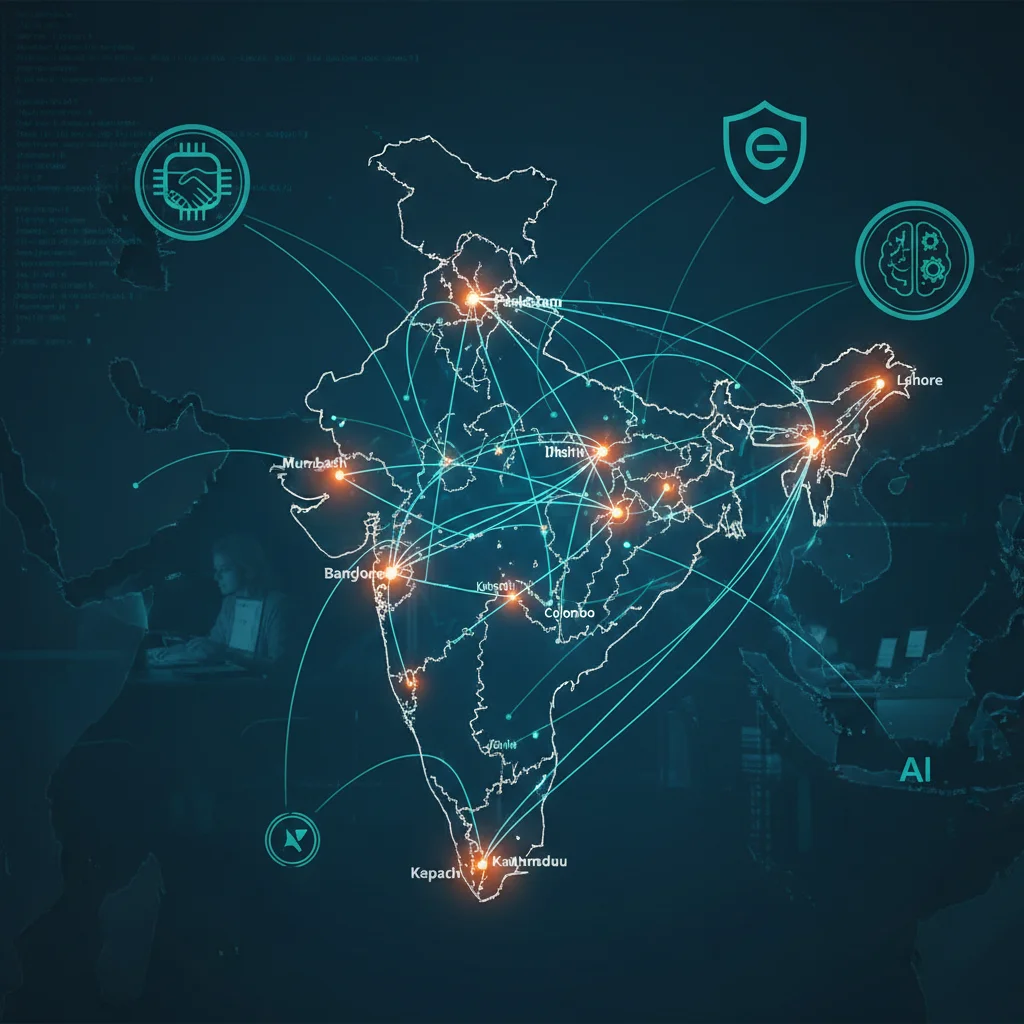
In 2025, Wild.Codes identified five South Asian nations—India, Bangladesh, Sri Lanka, Pakistan, and Nepal—as emerging tech hubs, a designation that shifts the conventional narrative away from India-centric outsourcing toward a more interconnected regional ecosystem. The selection is not arbitrary: each country presents distinct developer populations, market sizes, and digital infrastructure initiatives that, when viewed collectively, reveal a web of specialization and complementarity rather than pure competition.
This article audits the underlying forces—talent migration patterns, digital public goods, government policy, and industry specialization—that are driving this emergence. The core thesis is that South Asia is evolving from a collection of low-cost labor markets into a multi-tiered talent supply chain, where each node leverages unique advantages in digital identity, fintech, or niche services. The implications for global tech sourcing are structural, not transactional.
---
India: The Unrivaled Talent Engine and Digital Infrastructure Playbook
India’s developer ecosystem remains the largest in the region, with 5.8 million developers as of 2024 (Source: Wild.Codes). Language usage reflects a diversification toward modern stacks: Python at 31%, Java 22.16%, JavaScript 9.87%, C/C++ 8.12%, and C# 6.67%. The country’s top IT firms by market capitalization and employee headcount—TCS (₹15.30 lakh crore, ~614,795 employees), Infosys (₹8.04 lakh crore, ~317,240), HCL Tech (₹4.86 lakh crore, ~219,000), Wipro (₹3.00 lakh crore, ~234,054), and LTIMindtree (₹1.74 lakh crore, ~81,650)—represent a scale unmatched in the region (Source: Datamites/company filings).
The foundational advantage, however, is not merely headcount. India Stack—a set of special-purpose APIs covering digital identity (Aadhaar), payments (UPI), and document storage (DigiLocker)—has reduced transaction costs for startups and global service providers alike (Source: India Stack documentation). This digital public infrastructure creates a platform effect: startups can embed identity verification, e-signatures, and instant payments without building from scratch, accelerating time-to-market and lowering unit economics for fintech and e-governance applications.
Major tech events in early 2025—WordCamp Pune (February), India DevOps Show and Experts Live India 2025 in Bengaluru—signal a mature ecosystem capable of hosting international collaboration (Source: Wild.Codes). The strategic insight is that India’s scale and digital public goods generate a talent pipeline that neighboring hubs can leverage rather than merely compete against. Indian developers often take lead roles in distributed teams that include Bangladeshi or Nepali engineers, creating a de facto hierarchy of technical leadership.
---
Bangladesh: From Garments to Code – A $2 Billion Digital Services Market
Bangladesh’s digital services market reached $2 billion in 2024, supported by over 6,500 startups, 4,500 local IT companies, and more than 300,000 programmers (Source: Wild.Codes). Government-backed educational programs have integrated IT into secondary and tertiary curricula, rapidly expanding the pool of English-proficient young developers (Source: World Bank report, 2020–2025 progress).
The ecosystem is maturing beyond basic offshoring. The Regional Scrum Gathering 2025 in Bangladesh underscores growing Agile and DevOps maturity (Source: Wild.Codes). Bangladeshi firms now target mid-size projects where cost sensitivity is high but quality expectations are moderate—a niche between Indian high-end consulting and lower-cost African or Southeast Asian alternatives. The startup scene focuses on localized fintech and e-commerce, leveraging the country’s high mobile penetration and a young, unbanked population.
The deep insight: Bangladesh’s emergence is not a direct competitor to India but a tier-two supplier in a regional supply chain. For a European or North American company, a Bangladeshi development shop can handle front-end and mid-tier logic, while specialized architecture and data science remain with Indian partners. This layered pricing model is becoming the default in multinational sourcing strategies.
---
Sri Lanka: The National ID as a Digital Springboard
Sri Lanka hosts more than 80,000 developers, with firms such as Rushkar Technology Private Limited, Code District, and Simform providing local employment (Source: Wild.Codes). The country’s distinct advantage lies in its recent digital identity upgrades. In 2024, the Information and Communication Technology Agency (ICTA) launched a redesigned national ID system that is more accessible to vulnerable populations—including displaced persons and those without traditional documentation (Source: ICTA). This system, built on modern biometric and identity verification standards, directly reduces friction for digital service delivery in banking, health, and government.
Sri Lanka’s IT sector is comparatively small but highly specialized in software quality assurance, embedded systems, and legacy modernization—areas that require strong English skills and attention to detail. The national ID initiative positions the country as a testbed for inclusive digital public infrastructure, a model that development agencies and multilateral banks are increasingly funding across the Global South.
From a supply chain perspective, Sri Lanka functions as a quality-control node: its developers often work on testing and validation for products designed in India or Europe, leveraging time-zone overlap and lower billing rates than comparable Southeast Asian hubs.
---
Pakistan: A $31.2 Billion Market with Fintech and Industry 4.0 Ambitions
Pakistan’s IT service market is projected to reach $31.2 billion in 2025 (Source: Statista). The country has 256 startups in medical care and 334 in educational app development, indicating a strong orientation toward solving domestic infrastructure gaps through technology (Source: Wild.Codes). In 2024, the government updated its digital financial services framework to include precision agriculture and Industry 4.0 initiatives (Source: Wild.Codes/Government announcements).
The scale of Pakistan’s projected market—more than 15 times Bangladesh’s current digital services revenue—reflects its larger population and relatively deeper integration with Gulf and Middle Eastern capital. Pakistani fintech startups, in particular, have attracted significant venture funding for remittance, micro-lending, and digital insurance products aimed at the unbanked.
The strategic role in the regional supply chain is that of a high-volume, cost-competitive back-office and customer-support hub. However, the growing fintech sector is creating a parallel stream of higher-value product engineering talent, especially in API development and mobile payment integration. Pakistan’s specialization in medical and educational apps also positions it as a vertical-specific outsourcing destination, rather than a generalist competitor.
---
Nepal: The $400 Million Forecast and the Crowdfunding Niche
Nepal’s IT sector is expected to bring in $106 million in 2025, with a forecast of $400 million by 2029 (Source: Wild.Codes/GSMA estimates). The country has approximately 136 IT companies and about 50,000 technicians. Notably, 80% of these technicians are employed by American or European firms, often through remote contracting platforms (Source: Wild.Codes). This high proportion of remote employment is a structural characteristic: Nepal’s digital workers are deeply integrated into global teams, particularly in small-to-medium enterprises.
Nepal has also developed a niche in fintech startups focused on crowdfunding and loan lifecycle management (Source: Wild.Codes). These companies serve both domestic needs—where banking infrastructure is underdeveloped—and international clients seeking low-cost, high-reliability module development.
Nepal’s comparative advantage is agility. With a smaller ecosystem, Nepali firms can pivot faster and offer highly customized solutions. In the regional supply chain, Nepal acts as a “special operations” node: ideal for proof-of-concept projects, rapid prototyping, and maintenance of legacy codebases where Indian or Bangladeshi providers may be too large or bureaucratic.
---
Conclusion: The Interconnected Logic – From Cost Competition to Infrastructure-Led Specialization
The five South Asian hubs are not isolated competitors but nodes in a regional talent supply chain with distinct tiers:
- India provides scale, architectural leadership, and digital public goods that reduce entry barriers for all others.
- Bangladesh offers cost-effective mid-tier development and a growing startup ecosystem.
- Sri Lanka specializes in quality assurance and inclusive digital identity infrastructure.
- Pakistan supplies high-volume BPO, fintech product engineering, and vertical-specific solutions.
- Nepal delivers agile, small-scale custom development for remote-first teams.
The hidden logic is that the region is shifting from competing solely on labor cost to competing on digital infrastructure maturity. India Stack lowers the cost of building new services across the whole region—a non-Indian startup in Bangladesh or Nepal can integrate Indian digital identity APIs at near-zero cost. Sri Lanka’s new national ID and Pakistan’s fintech regulations create similar platform effects within their borders.
For global tech buyers, the implication is clear: sourcing from South Asia no longer means choosing one country. Multinational firms are increasingly constructing multi-country delivery models—design in India, develop in Bangladesh, test in Sri Lanka, maintain in Nepal—optimizing for cost, risk, and time zone coverage.
By 2029, when Nepal’s sector is projected to quadruple and Pakistan’s market may exceed $35 billion, the regional supply chain will be further hardened by cross-border digital public infrastructure and talent mobility. The five hubs are not just emerging—they are interlocking.