Beyond the Pump: How Rising Oil Prices Threaten India''s Stock Market Rally
A 15% surge in Brent crude prices poses a significant threat to India''s
Beyond the Pump: How Rising Oil Prices Threaten India's Stock Market Rally and Economic Stability
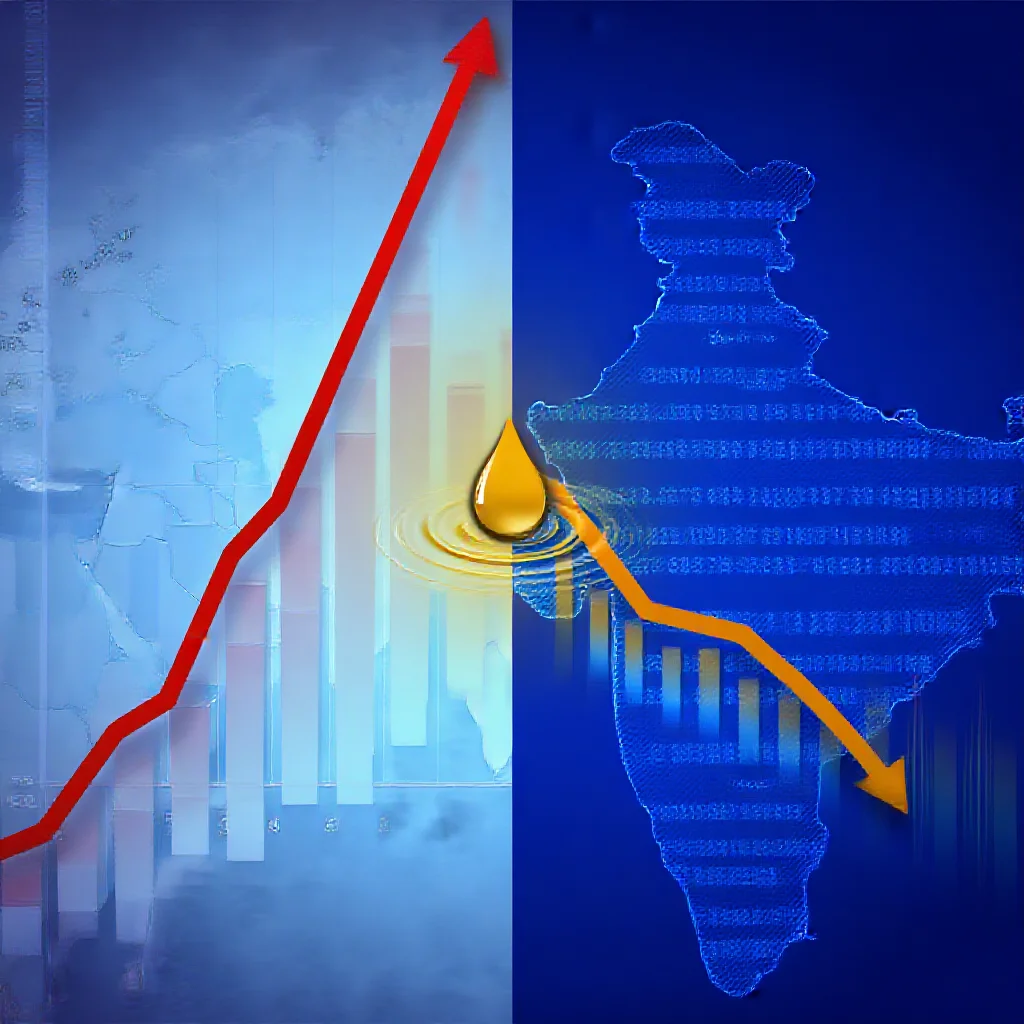
A 15% surge in Brent crude oil prices over the past month (Source 1: [Primary Data]) has introduced a significant macroeconomic variable into India’s financial landscape. This development poses a direct challenge to the resilience of the Indian stock market, which has largely discounted recent geopolitical and economic headwinds. The core vulnerability stems from a fundamental structural fact: India imports over 80% of its crude oil requirements (Source 2: [Primary Data]). This dependency transforms a global commodity price shift into a multi-channel shock for the domestic economy, threatening inflation management, external balances, and corporate profitability.
The Ticking Macro Bomb: Decoding India's 80% Oil Import Vulnerability
India’s economic growth narrative remains uniquely tethered to global oil price volatility. The nation’s status as the world’s third-largest oil importer creates an inescapable transmission mechanism for external shocks. The arithmetic of this vulnerability is precise and impactful. Analysis indicates that a $10 per barrel increase in the price of oil can widen India’s current account deficit by approximately 0.5% of GDP (Source 3: [Primary Data]). This represents a direct wealth transfer overseas, draining foreign exchange reserves and exerting pressure on the domestic currency.
The recent 15% climb in Brent crude prices (Source 1: [Primary Data]) therefore is not merely a headline figure but a quantifiable macroeconomic stressor. Every sustained uptick in the price benchmark translates into a higher import bill, setting in motion a complex chain of economic consequences that ultimately filter through to corporate earnings and equity valuations. The scale of this exposure makes the policies of the Organization of the Petroleum Exporting Countries (OPEC) and global geopolitical stability critical, albeit external, inputs into India’s financial stability.
The Triple Transmission Mechanism: From Pump Prices to Portfolio Pain
The impact of rising oil prices on equity markets is not linear but operates through three distinct, interlinked channels.
Channel 1: The Inflationary Firefight. Higher crude prices directly feed into domestic fuel and transportation costs, with a cascading effect on the prices of all transported goods. Estimates suggest such an increase can elevate headline inflation by 30-40 basis points (Source 4: [Primary Data]). This complicates the monetary policy calculus for the Reserve Bank of India (RBI). A hawkish pivot to contain inflation would raise discount rates, negatively impacting equity valuations. Conversely, prioritizing growth amid inflationary pressures risks eroding macroeconomic stability, a scenario also penalized by markets.
Channel 2: The Fiscal and External Squeeze. A widening current account deficit, as quantified by the 0.5% of GDP impact per $10/barrel rise (Source 3: [Primary Data]), pressures the rupee. A weaker currency, while beneficial for export-oriented sectors, further exacerbates the cost of oil imports, creating a feedback loop. On the fiscal front, the government faces a trilemma: absorb the price increase to shield consumers and increase subsidies (impacting fiscal deficit targets), pass it on to consumers (fueling inflation), or adjust excise duties (affecting revenue).
Channel 3: The Corporate Earnings Redistribution. This channel directly impacts stock-specific performance and sectoral rotations.
* Sectoral Losers: Industries with high logistical overheads (logistics, cement), those dependent on crude derivatives as key inputs (paints, plastics, chemicals), and consumer discretionary sectors facing demand destruction from higher fuel costs are acutely vulnerable. Automobile manufacturers, particularly in the volume-driven segments, face a dual threat of rising input costs and potential demand softening.
* Sectoral Winners: Upstream oil and gas companies (ONGC, Oil India) stand to gain from higher realizations. Refiners may see improved gross refining margins in a rising price environment, though marketing margins could be volatile. Export-oriented sectors (IT, pharmaceuticals) may benefit from a weaker rupee, provided global demand remains intact.
Beyond the Headline: The Hidden Sectoral Reconfiguration and Long-Term Risks
The immediate market reaction often focuses on headline inflation and index-level corrections. However, the deeper, more structural implications warrant analysis.
A sustained period of elevated oil prices acts as a silent supply-chain tax. The input cost inflation for downstream industries erodes pricing power and compresses margins beyond the direct impact of higher fuel and freight costs. This can trigger a broader de-rating of equities if earnings growth forecasts are systematically revised downward.
Furthermore, a high oil price environment presents a paradoxical opportunity: it could improve the economic viability of renewable energy alternatives and electric vehicles, potentially accelerating India’s strategic energy transition. This would initiate a long-term sectoral reconfiguration, benefiting green energy companies and related infrastructure plays at the expense of traditional hydrocarbon-linked sectors.
The paramount risk, however, is the stagflation specter—a combination of slowing economic growth due to cost-push pressures and stubbornly high inflation. This scenario represents the worst-case outcome for equity markets, as it would compel the RBI to maintain restrictive monetary policy even amid a growth slowdown, severely compressing valuation multiples. The sustainability of the current market rally hinges on whether the oil price increase is transient or marks the beginning of a new, higher equilibrium, and on the policy response it elicits from fiscal and monetary authorities.
In conclusion, the rise in Brent crude is a potent reminder of the external vulnerabilities embedded within India’s growth story. While the stock market may have initially discounted this risk, the triple transmission mechanism through inflation, external balances, and corporate earnings is now actively at play. The immediate future will be dictated by the duration and magnitude of the oil price shock, the RBI’s calibrated response, and the ensuing sectoral redistribution of profits. Investors must look beyond the pump price to assess the second-order effects on fiscal health, currency stability, and the emerging dichotomy between sectors positioned as structural winners and those facing a prolonged margin squeeze.