Emerging Markets at a Crossroads: Navigating Growth, Risk, and Transformation
Emerging markets remain pivotal to the global economy, driving growth through
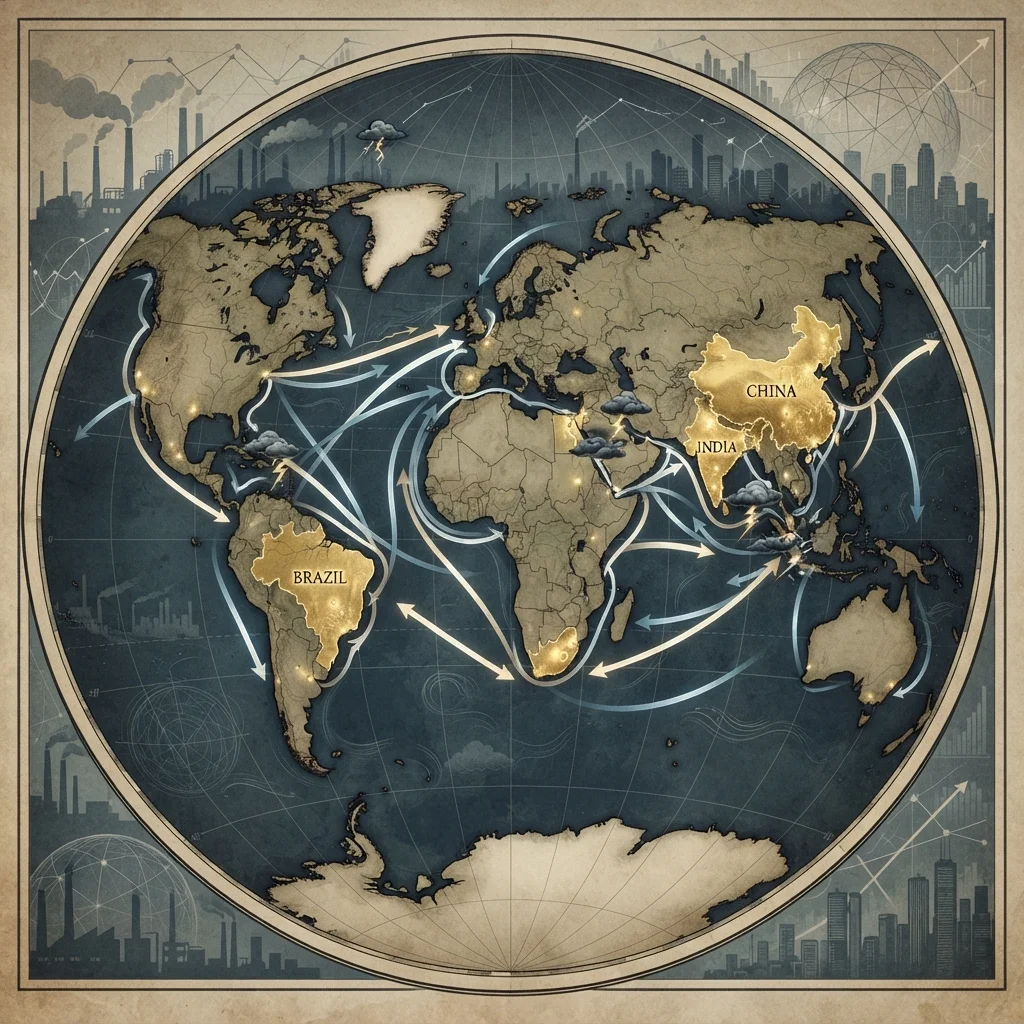
Emerging Markets at a Crossroads: Navigating Growth, Risk, and Transformation in 2026
Introduction: The Dual Nature of Emerging Markets
Emerging markets are economies in transition—moving from developing to developed status through rapid industrialization, urbanization, and deeper integration into global trade. They are not a monolithic bloc but a diverse set of nations sharing common traits: accelerating GDP growth, expanding middle classes, and increasing participation in international capital flows. China, India, Brazil, and South Africa—the core of the original BRICS grouping—rose to prominence in the late 20th century, collectively reshaping the global economic order.
The 2008 global financial crisis marked a turning point. While advanced economies stagnated, emerging markets powered the recovery. China’s massive stimulus and India’s resilient services sector helped pull the world out of recession. Yet the crisis also exposed their vulnerability: capital flight, commodity price crashes, and contagion effects revealed that growth could be fragile. By 2026, these economies account for approximately 45% of global GDP (purchasing power parity basis) and over 50% of global GDP growth (IMF, 2026 World Economic Outlook). They remain indispensable to multinational corporate strategies, but the landscape is now shadowed by geopolitical fragmentation, domestic structural risks, and a more contested multipolar order.
[IMAGE: A split visual: left side showing bustling factories and tech hubs; right side showing protest signs and currency fluctuation charts.]
Engines of Growth: Manufacturing, Services, and Commodities
Three distinct engines drive emerging market growth: manufacturing, services, and commodity exports. Each has its own geography and corporate footprint.
Manufacturing: China’s Unrivaled Role
China remains the world’s factory. With a manufacturing value added of approximately $4.5 trillion in 2025 (UNIDO, 2026), it accounts for nearly a third of global manufacturing output. Its integration into supply chains spans electronics, automobiles, textiles, and advanced machinery. Apple, for instance, derives roughly 20% of its total revenue from Greater China (Apple 2025 Annual Report), while multinationals like Tesla have built gigafactories in Shanghai to serve both local demand and export markets. However, rising labor costs and trade tensions are pushing some production to Vietnam, India, and Mexico—a recalibration that is reshaping global supply chains.
Services: India’s IT Revolution
India’s services sector, led by information technology, has transformed global business operations. The country’s IT and business process outsourcing industry generated $194 billion in revenue in fiscal 2025 (NASSCOM, 2026), serving clients from banking to healthcare. Companies like Accenture, IBM, and Microsoft rely heavily on Indian talent. More recently, India has emerged as a hub for global capability centers (GCCs), with over 1,600 GCCs employing 1.7 million people as of 2025 (EY India, 2026). This shift from back-office support to high-value innovation is deepening India’s strategic importance.
Commodities: Brazil’s Agricultural Dominance
Brazil anchors global food supply chains. It is the world’s largest exporter of soybeans, coffee, and beef, supplying 36% of the global soybean trade (USDA, 2026). The country’s agribusiness sector contributed over $250 billion to GDP in 2025. Multinationals like Coca-Cola, Nestlé, and Unilever source raw materials and sell finished goods to Brazil’s 215 million consumers. Unilever, for example, generates roughly 10% of its global sales from Latin America, with Brazil as the largest market (Unilever 2025 Annual Report).
[IMAGE: Infographic showing three pillars: a factory icon for China, a computer chip for India, and a crop field for Brazil, with revenue arrows pointing toward global brands like Apple, Accenture, and Unilever.]
The Hidden Fault Lines: Political Instability, Currency Risks, and Debt
The same dynamism that makes emerging markets attractive also exposes them to severe shocks. Three cases illustrate the fault lines.
Venezuela: Collapse by Overreliance
Venezuela’s economic implosion is a cautionary tale. Once a wealthy oil exporter, the country’s dependence on crude (over 95% of exports) combined with mismanagement, corruption, and sanctions led to a 75% GDP contraction between 2013 and 2024 (IMF, 2025). Hyperinflation reached an estimated 1,000,000% at its peak. The lesson: commodity dependence without institutional resilience can destroy an economy. Venezuela’s experience underscores the need for diversification and sound governance.
Turkey: The Currency and Debt Trap
Turkey’s lira lost over 80% of its value against the U.S. dollar from 2018 to 2026. High external debt—54% of GDP in 2025 (Turkish Treasury, 2026)—and persistent inflation (averaging 60% in 2024-25) eroded investor confidence. Unorthodox monetary policy, including interest rate cuts despite rising prices, amplified the crisis. Foreign investors pulled out, triggering a sudden stop in capital flows. Turkey’s case highlights how policy credibility is as important as economic fundamentals.
Common Structural Risks Across Markets
Beyond these extreme examples, many emerging markets share vulnerabilities:
- Political instability – Brazil experienced erratic policy shifts; South Africa faces governance and corruption challenges.
- Regulatory uncertainty – India’s retrospective tax disputes (though largely resolved) and Indonesia’s volatile mining regulations deterred investment.
- Infrastructure deficits – Power shortages in Nigeria and port congestion in Kenya raise costs.
- Commodity dependence – Chile (copper) and Nigeria (oil) remain exposed to price cycles.
These fault lines can trigger sudden capital flight. The IMF’s 2026 Global Financial Stability Report notes that emerging market bond spreads widened by 150 basis points on average during the 2024-25 tightening cycle, with the most vulnerable economies seeing outflows exceeding 5% of GDP in a single quarter.
[IMAGE: A cracked map of the world with red warning markers over Venezuela, Turkey, and other vulnerable economies, accompanied by falling currency symbols (lira, bolivar, real).]
From BRICS to a Multipolar World: Adaptation and Innovation
In response to these risks, governments, multinationals, and investors are adopting new strategies. The old BRICS narrative of a unified bloc of fast-growing economies has given way to a more fragmented, multipolar reality.
Diversification Beyond Commodities
Countries are actively reducing single-sector dependence. Saudi Arabia’s Vision 2030 is a prime example: it aims to cut oil’s share of GDP from 42% to 15% by 2030, investing in tourism, technology, and renewable energy. The UAE has similarly expanded into logistics, finance, and artificial intelligence. Brazil, under its 2024-2027 industrial policy, is promoting green manufacturing and bioeconomy clusters.
For multinationals, diversification means not only product lines but also supply chains. The “China+1” strategy—maintaining China operations while adding a secondary base in India, Vietnam, or Mexico—has become mainstream. Apple now assembles iPhones in India, with 14% of global iPhone production expected to come from India by 2027 (Counterpoint Research, 2026). Nike shifted some footwear production from China to Vietnam and Indonesia. This recalibration reduces political and tariff risk, though it adds complexity.
Local Partnerships and Joint Ventures
One of the most effective risk-mitigation tools is forming deep local partnerships. Walmart’s acquisition of a majority stake in India’s Flipkart gave it access to a fast-growing e-commerce market while navigating regulatory hurdles through local expertise. Similarly, Coca-Cola relies on bottling partners with deep knowledge of local markets, such as Coca-Cola HBC in Eastern Europe and Africa. The 2025 McKinsey survey of multinational CEOs found that 78% of respondents cited local partnerships as critical to success in emerging markets (McKinsey, 2026).
Hedging and Financial Innovation
Currency volatility remains a top concern. Multinationals now use a mix of operational hedges (local sourcing, revenue matching) and financial instruments (forward contracts, options). Some firms issue bonds in local currencies to align cash flows. The Mexican peso and Brazilian real have seen increased use in trade settlements as alternatives to the dollar in regional transactions. Meanwhile, central banks in India and South Africa have built up foreign exchange reserves (India’s reserves stood at $650 billion in early 2026) to buffer against capital flight.
The Rise of Domestic Champions
Another structural shift is the emergence of homegrown competitors that challenge multinational incumbents. In India, Reliance Industries has built a digital empire (Jio) that disrupted telecom and now competes with Google and Meta in advertising. In China, BYD overtook Tesla in global electric vehicle sales in 2025, with 3.4 million units sold worldwide (BYD 2025 Annual Report). These players are not merely local; they are expanding into other emerging markets and even developed economies. Multinationals must compete and collaborate simultaneously—a delicate balance.
[IMAGE: A world map with arrows showing supply chain diversification from China to India, Vietnam, and Mexico. Icons of factories, joint venture handshakes, and currency shields. A small graph showing rising domestic champion market share.]
The 2026 Landscape: Resilient but Wary
As of 2026, emerging markets present a complex picture. Growth is moderating. China’s GDP expanded 4.5% in 2025, down from 5.2% in 2024, as property sector woes and demographic aging weigh. India grew 6.8%, showing resilience but with inflation and urban unemployment concerns. Brazil’s 2.1% growth reflected agricultural strength but fiscal constraints. South Africa stagnated at 0.8% due to electricity shortages and policy uncertainty.
Yet the longer-term opportunities remain significant. The rising middle class in Southeast Asia, Africa, and Latin America—expected to reach 3.5 billion people by 2030 (Brookings Institution, 2025)—offers a consumer base that global brands cannot ignore. Digital adoption is accelerating: mobile internet penetration in emerging markets jumped from 45% in 2020 to 68% in 2025 (GSMA, 2026), opening pathways for fintech, e-commerce, and online education.
Multinationals that succeed in 2026 and beyond will need to navigate a more demanding environment. Key success factors include:
- Agility – ability to shift supply chains and go-to-market models quickly.
- Localization – product adaptation and talent development.
- Risk intelligence – real-time monitoring of political and currency risks.
- Sustainability – aligning with ESG expectations, which are increasingly mandated by regulators in the EU and home countries.
Conclusion: The Crossroads Ahead
Emerging markets stand at a crossroads. Their growth story is far from over, but the path is no longer a straight line. The tailwinds of cheap labor, commodity supercycles, and easy global capital have faded. In their place come headwinds of geopolitical rivalry, climate stress, and demographic divides.
The 2026 landscape reveals both resilience and hidden fault lines. Countries that invest in institutions, diversify economic bases, and foster innovation will continue to attract capital. Those that ignore structural reforms will face stagnation or crisis. For multinationals, the challenge is not whether to engage—emerging markets are too large and strategic to ignore—but how to engage prudently.
The dual nature of these economies—their capacity to generate tremendous returns alongside sudden shocks—requires a mindset of constant vigilance and adaptation. The next decade will test whether the lessons from Venezuela, Turkey, and other crises have been learned. If they have, emerging markets may yet steer toward sustained, inclusive growth. If not, the fault lines will continue to demand higher risk premiums, and the crossroads will remain a risky intersection rather than a gateway to prosperity.
[IMAGE: A globe half in sunlight, half in shadow. On the bright side: factories, green farms, and data streams. On the dark side: cracks, storm clouds, and currency signs falling. A compass in the center pointing multiple directions. No text.]