Beneath the $95 Ceiling: How Geopolitical De-escalation is Reshaping Oil''s
On April 16, Brent crude traded at $94.75 and WTI at $89.42, holding below
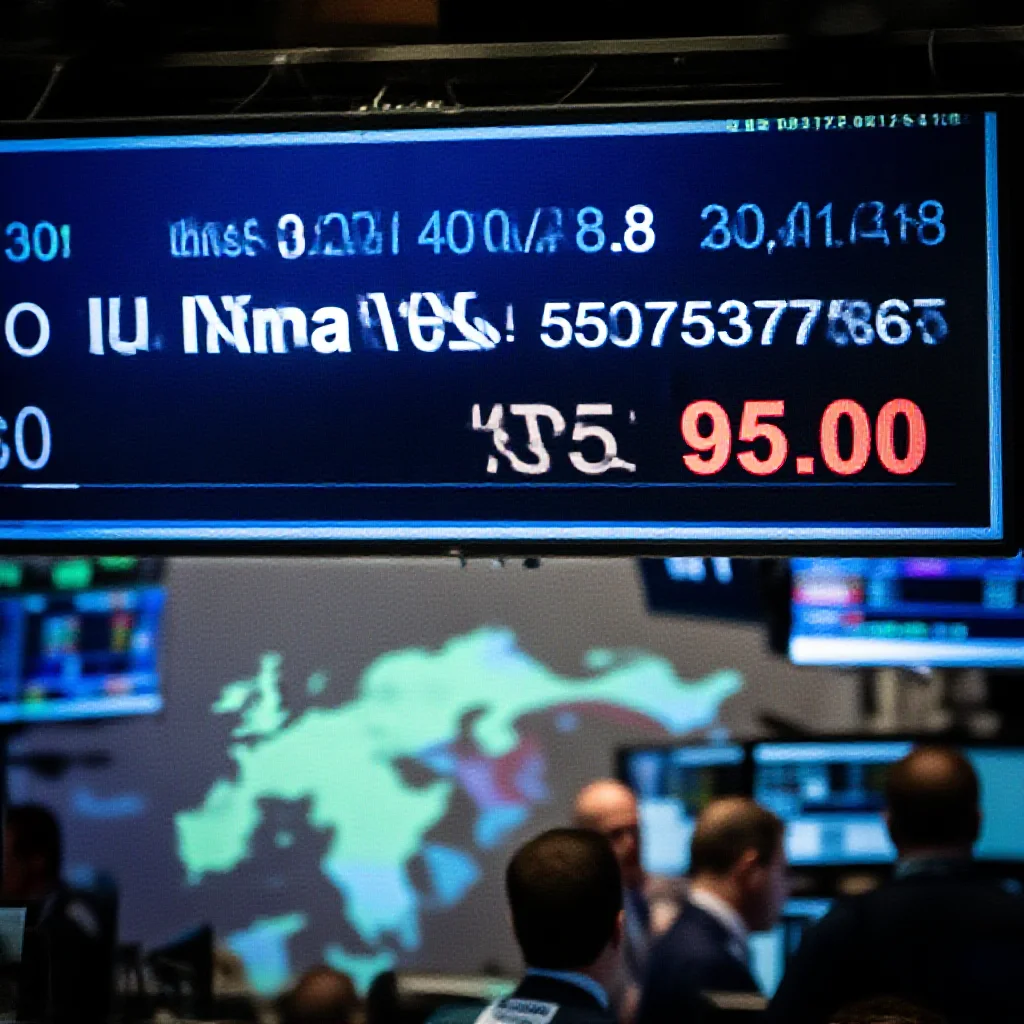
Beneath the $95 Ceiling: How Geopolitical De-escalation is Reshaping Oil's Risk Premium
On April 16, Brent crude futures traded at $94.75 per barrel, with West Texas Intermediate (WTI) at $89.42 per barrel (Source 1: [Primary Data]). This price action positioned both benchmarks firmly below the symbolic $95 threshold. This stability occurred against a backdrop of reported peace talks concerning Iran, a development within a region typically associated with supply disruption fears. The market's muted response signals a critical pivot: traders are initiating a fundamental recalibration of the geopolitical risk premium embedded in crude prices.
The $95 Threshold: A Barometer of Geopolitical Anxiety
The $95 per barrel level for Brent crude has operated as a key psychological and technical benchmark. It represents a ceiling where prices historically consolidate or retreat amid geopolitical tensions that stop short of actual supply interruption. The April 16 data point is evidence of this holding pattern in action. This price stability is not an indication of market calm, but rather the active discounting of worst-case scenarios. The trading pattern suggests a collective assessment that immediate, catastrophic supply shocks from the Middle East are becoming less probable.
Deconstructing the Risk Premium: From Fear to Calculated Discount
The geopolitical risk premium is the additional sum buyers are willing to pay for oil due to perceived threats of supply disruption. Its traditional role has been to inflate prices significantly during periods of Middle East unrest. The current market anomaly lies in the outsized impact of de-escalatory headlines, such as peace talks, despite ongoing regional volatility. The analysis indicates the market is conducting more than a reactive assessment of daily news. It is performing a slow, fundamental audit of long-term supply chain resilience. The perceived permanence of supply risk is diminishing, leading to a gradual erosion of this premium.
Beyond the Headline: The Slow Audit of Supply Chain Assumptions
The underlying economic logic driving this shift extends beyond immediate geopolitics. Prolonged periods of elevated prices have structurally altered the market. They have incentivized greater operational efficiency, accelerated strategic stockpiling by consuming nations, and solidified supply diversification through robust non-OPEC+ production, notably from the United States, Brazil, and Guyana. This makes the global system less reactive to single-point disruptions. This "slow analysis" represents a sector-wide deep audit of logistics, such as adaptation to Red Sea shipping challenges via alternative routes, the sufficiency of global inventory buffers, and the reliability of non-OPEC supply growth. It contrasts with "fast analysis," where daily headlines drive short-term volatility, by focusing on a reassessment of systemic vulnerability.
Evidence and Verification: Separating Signal from Noise
Verification of this recalibration is found in concurrent data from credible energy agencies. Reports from the International Energy Agency (IEA) and the U.S. Energy Information Administration (EIA) have consistently highlighted rising global inventories and steady supply growth from producers outside the OPEC+ alliance. This fundamental backdrop provides a cushion that absorbs geopolitical shocks. Furthermore, analysis of trading volume and open interest data from futures exchanges such as the CME and ICE would be required to confirm whether the price movement below $95 is supported by shifting positional dynamics, indicating a sustained change in sentiment rather than transient profit-taking.
Future Trajectories: Recalibration Over Reaction
The immediate future trajectory of crude oil prices will be dictated by the verification or falsification of the de-escalation narrative. A breakdown in reported peace efforts could see a rapid re-inflation of the risk premium. However, the market's demonstrated willingness to price in stability suggests the restoration of any premium may be more measured than in previous cycles. The longer-term implication is a market increasingly attuned to tangible supply-demand fundamentals—including OPEC+ production policy, global demand growth signals, and inventory draws—with a potentially lower baseline level of geopolitical fear permanently priced in. The $95 ceiling, therefore, stands not just as a price point, but as a gauge of the market's evolving risk calculus.