Navigating South Asia's Business Landscape: Key Trends Shaping Economic Growth and Investment
An analysis of major business and economic trends impacting South Asia, focusing on the role of AI, digital economy, sustainability, and investment in shaping regional development.
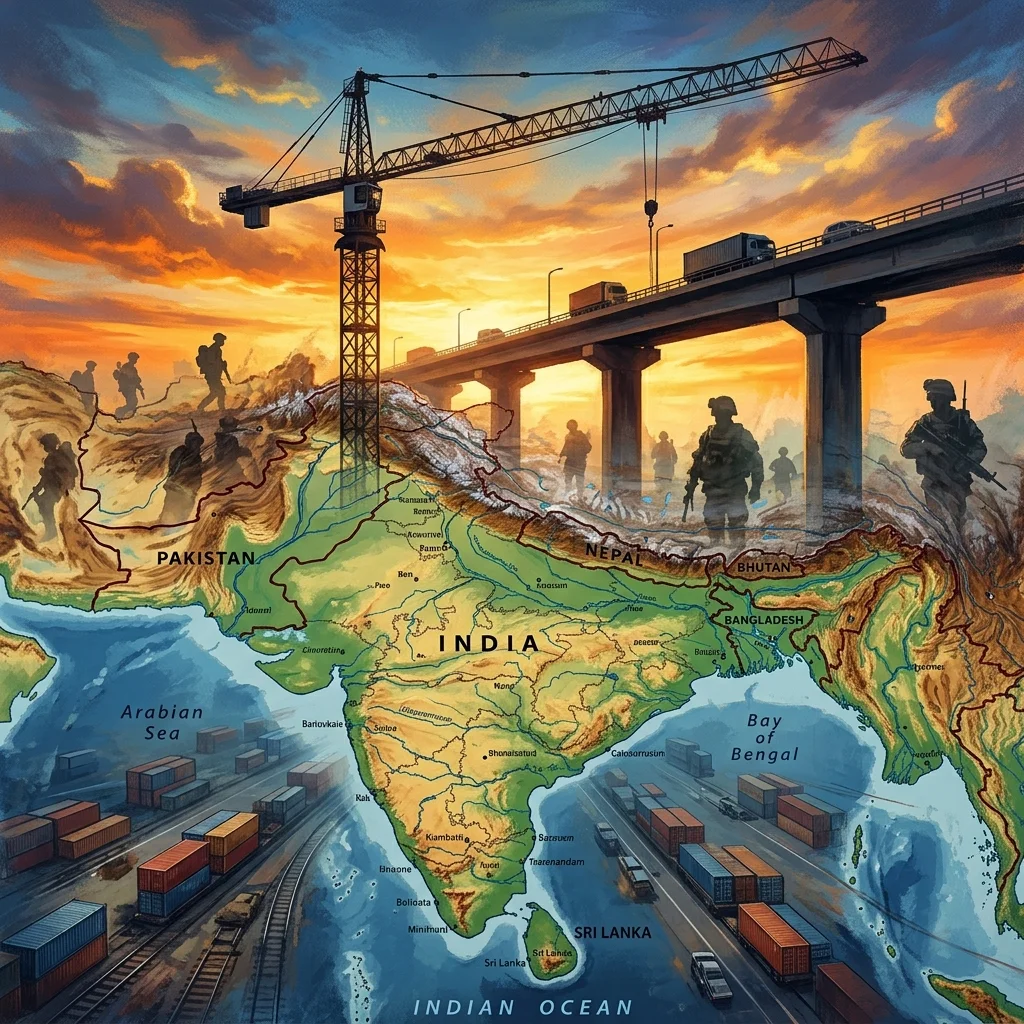
The business and economic environment across South Asia is undergoing significant shifts, driven by technological disruption, evolving consumer behavior, and growing global sustainability mandates. Understanding these underlying trends is crucial for strategic planning in investment, corporate strategy, and regional policy formulation.
One of the most prominent technological shifts is the rapid integration of Artificial Intelligence (AI). Generative AI tools are moving beyond theoretical applications, offering tangible capabilities in content creation, process automation, and product design across various sectors. For South Asian enterprises, the strategic implication lies in how quickly businesses can integrate these tools to enhance operational efficiency, personalize customer experiences, and develop novel services. This adoption is not merely about adopting new software; it is about fundamentally reshaping business strategy to leverage data-driven insights and foster new modes of industrial innovation.
Complementing the technological wave is the maturation of the digital economy. E-commerce penetration continues to expand, creating new avenues for cross-border commerce and market access for SMEs. However, the growth trajectory of this digital economy is intrinsically linked to the development of robust digital infrastructure—including reliable internet access, cloud computing capabilities, and robust cybersecurity frameworks. Investment in this digital backbone is a critical precursor to realizing the full potential of digital transformation across manufacturing, finance, and public services.
Furthermore, there is an increasingly pronounced focus on sustainability. Driven by both regulatory pressures and shifting consumer preferences, integrating sustainable practices into business models is becoming a strategic imperative rather than an optional add-on. This trend encompasses the move towards circular economy principles, the adoption of renewable energy sources to secure energy transition pathways, and embedding environmental, social, and governance (ESG) criteria into corporate governance. For regional economies, this necessitates strategic public-private partnerships to facilitate the necessary infrastructure and green financing required for this transition.
From a business strategy perspective, the emphasis is shifting towards building resilient ecosystems. This involves fostering strong brand partnerships, focusing on skills-based hiring to align talent with emerging digital needs, and cultivating online communities to build direct customer relationships. Success in this environment will increasingly depend on an organization's ability to manage talent development and foster an inclusive workplace culture that supports diverse skill sets.
In the realm of investment, the focus is increasingly on sectors poised for long-term growth, such as advanced manufacturing, digital infrastructure, and sustainable energy solutions. Foreign Direct Investment (FDI) is being attracted not just by labor costs, but by the potential for scalable technological adoption and integration into global supply chains. Policy interventions related to digital policy and regulatory frameworks are therefore key determinants of whether South Asia can effectively capture this investment and foster deep industrial development.
Regional cooperation, facilitated by platforms like BIMSTEC, remains a vital component in mitigating risks associated with fragmented domestic markets. Enhanced trade facilitation, the development of cross-border logistics corridors, and harmonizing standards are essential for unlocking the full potential of regional trade. The challenge for policymakers is to move beyond incremental improvements to establishing coherent frameworks that support seamless cross-border commerce and collective resilience against global economic shocks.
Ultimately, the outlook suggests a period defined by strategic adaptation. South Asia's future economic trajectory will be determined by the pace at which businesses and governments can effectively bridge the gap between technological potential and operational reality, ensuring that innovation translates into sustainable economic development and broad employment gains.