Beyond the Chatbot: How the U.S. Army''s TAC Deployment Signals a Fundamental
The U.S. Army's deployment of the Tactical AI Chatbot (TAC) to the 1st Infantry
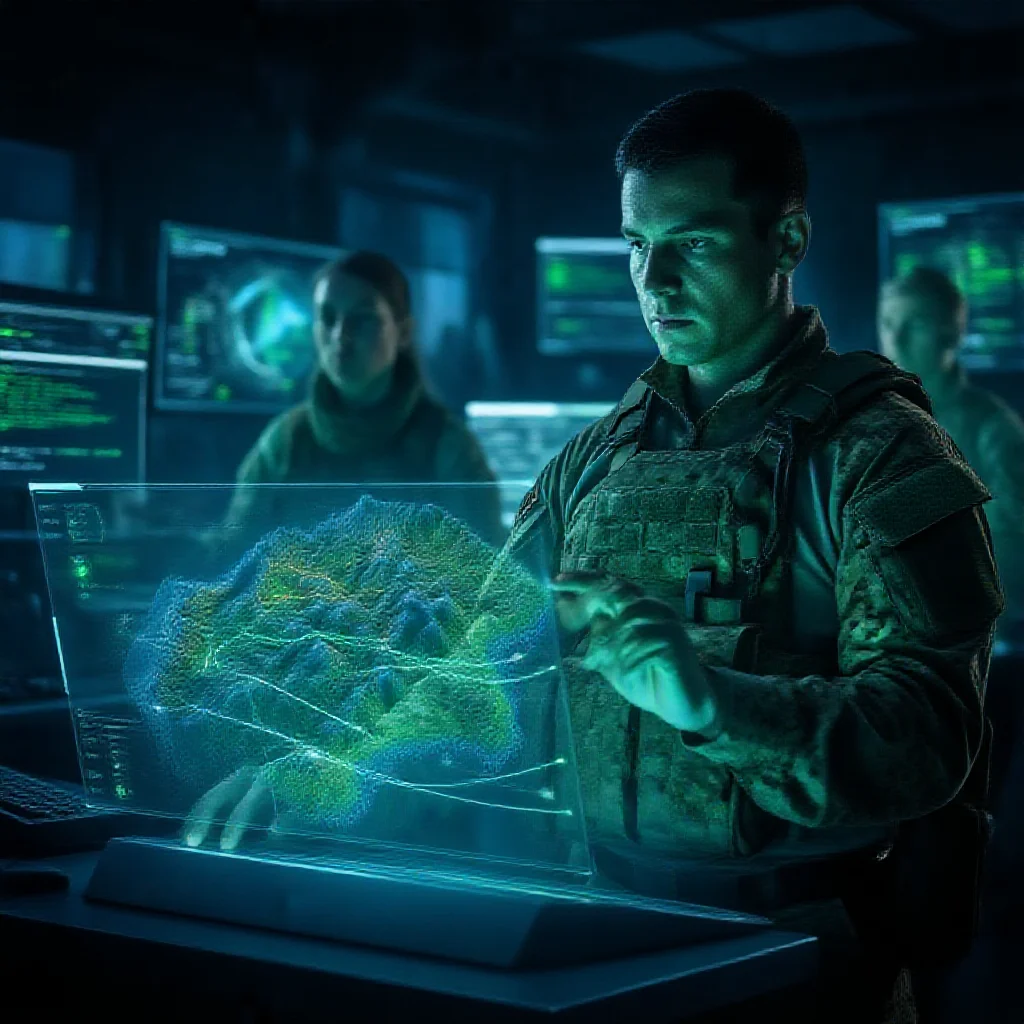
Beyond the Chatbot: How the U.S. Army's TAC Deployment Signals a Fundamental Shift in Military Command
An audit of structural change in modern warfare.
Introduction: The TAC Deployment – A Milestone Disguised as a Test
The United States Army has operationally deployed the Tactical AI Chatbot (TAC) to the 1st Infantry Division for battlefield data analysis and mission planning assistance (Source 1: [Primary Data]). This deployment is integrated into existing command and control (C2) infrastructure. The event is not a simple technology test. It represents the operationalization of a new cognitive layer for military operations. This analysis audits the deployment not as a news event, but as an inflection point with structural implications for military doctrine, decision-making hierarchies, and the industrial base of defense.
Deconstructing TAC: From Chatbot to Cognitive Engine
The nomenclature "chatbot" understates the system's function. Its stated capabilities are to "analyze battlefield data" and "assist in mission planning" (Source 1: [Primary Data]). The core development is the commodification of situational awareness. Artificial intelligence is transitioning from an analytical aid to the primary filter and synthesizer for data streams from satellites, drones, ground sensors, and signals intelligence.
The critical technical factor is TAC's integration into operational C2 systems. This creates a permanent AI feedback loop. The system's recommendations, based on ingested data, inform command decisions. The outcomes of those decisions then feed back into the theater of operations, generating new data. This loop allows for the continuous refinement of the underlying AI models based on real-world results. The long-term strategic asset generated is not merely a tool, but a proprietary, empirically-tuned model of tactical causality.
The Doctrine Dilemma: Reshaping the OODA Loop and Chain of Command
The integration of AI at this level directly compresses the Observe-Orient-Decide-Act (OODA) loop, the foundational model for military decision-making. AI can reduce the time required for the Observe (data collection) and Orient (analysis and synthesis) phases from hours to seconds. This acceleration forces a doctrinal dilemma. When an AI system provides a recommended course of action during the Decide phase, is its output to be treated as advisory input or as a de facto decision?
The compression of the OODA loop challenges traditional, hierarchical command structures. Decision-making authority may need to be pushed to lower echelons to leverage AI-generated speed, creating a more decentralized command model. Conversely, it could centralize analytical power at higher headquarters equipped with the most advanced AI systems. The doctrine governing this balance remains undefined.
This shift also alters the defense industrial supply chain. Strategic advantage is incrementally shifting from a sole focus on physical platforms (tanks, aircraft) to superiority in data collection, fusion algorithms, and processing speed. This creates a new market for tactical AI-as-a-service, continuous software updates, and robust, deployable computing infrastructure, redirecting contractor priorities and R&D investments.
The Human Factor: The Emerging 'AI-Teammate' Model and Ethical Verification
The TAC deployment is a step toward Manned-Unmanned Teaming (MUM-T) for command staff, establishing an "AI-as-a-Teammate" model. The paramount human factor challenge is the calibration of trust. Soldiers must be trained to neither dismiss AI recommendations outright nor to follow them with unquestioning automation bias. This requires developing new metrics for AI reliability and interfaces that communicate system confidence and reasoning traces.
A consequential, yet under-discussed, requirement is the function of ethical and tactical verification. An independent, parallel process must exist to audit AI-generated plans for adherence to the Laws of Armed Conflict and tactical soundness. This verification layer must operate at a speed commensurate with AI-driven planning cycles. The entity responsible for this verification—whether a human officer, a separate AI system, or a hybrid cell—represents a new critical function in the command structure.
Conclusion: The Strategic Race to Define AI-Enabled Combat
The deployment of TAC by the U.S. Army is a single node in a broader strategic competition. Multiple state actors are developing and fielding analogous systems. The race is no longer solely about who develops the technology first, but about which actor most effectively and stably integrates it into doctrine, training, and command culture.
The long-term trajectory points toward a bifurcation in military capability. One path leads to forces that successfully merge human judgment with machine speed and analysis, creating a deeply integrated human-AI command ecosystem. The other path leads to forces that either reject the integration, suffering a decision-speed deficit, or embrace it without robust verification, incurring significant ethical and tactical risk. The outcome will be determined by structural choices made today, far from the battlefield, in doctrine committees, training centers, and system architecture plans.