Tesla FSD Breaks the EU Regulatory Barrier: What the Netherlands Approval
On April 11, 2026, Tesla achieved a pivotal regulatory milestone: Full Self-Driving
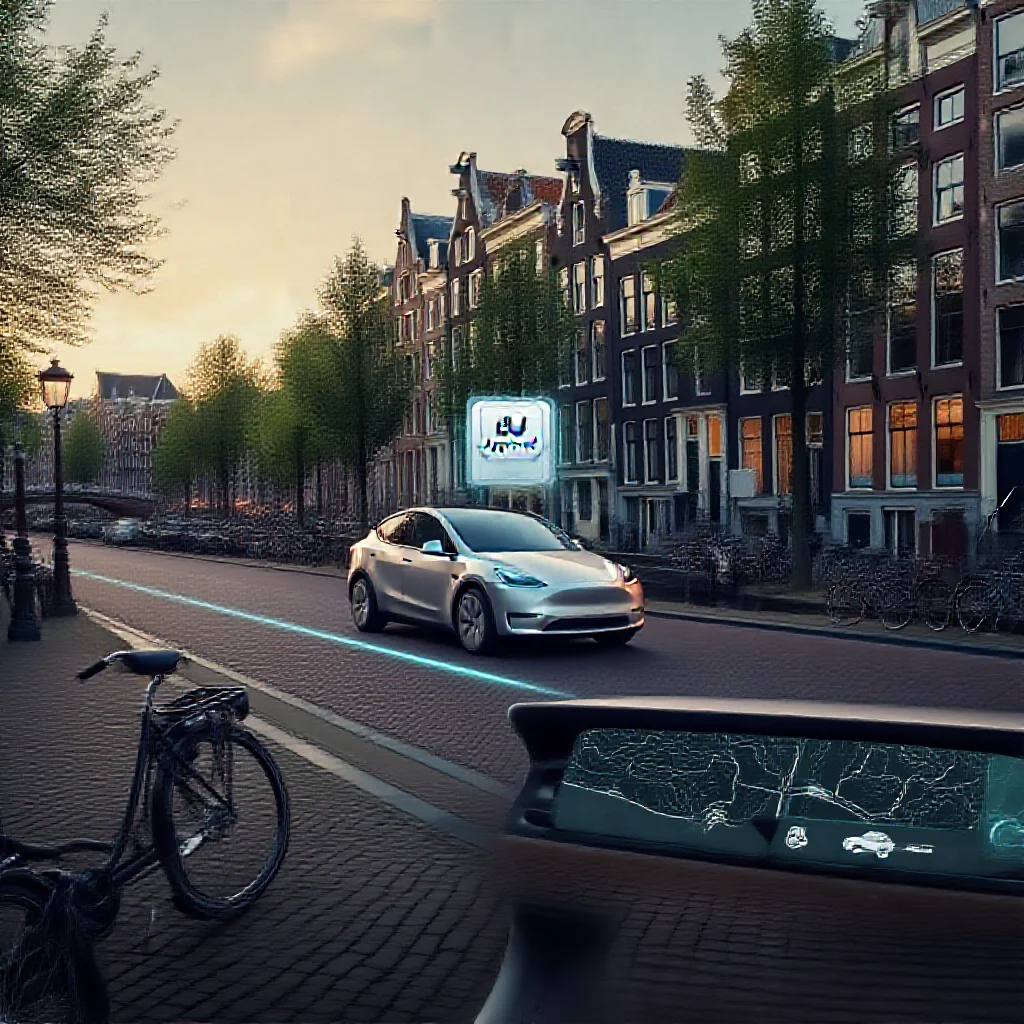
Tesla FSD Breaks the EU Regulatory Barrier: What the Netherlands Approval Means for Europe’s Autonomous Future
Date: April 11, 2026
On April 11, 2026, Tesla’s Full Self-Driving (FSD) technology received regulatory approval from the Netherlands’ Road Transport Authority (RDW). This single national authorization, by virtue of the European Union’s Whole Vehicle Type Approval (WVTA) mutual recognition principle, grants Tesla the legal right to market FSD across all 27 EU member states (Source 1: themeridiem.com). The event constitutes a structural shift in European automotive regulation, bypassing the conventional Brussels-level directive process and establishing a precedent for software-defined vehicle certification.
---
The Netherlands as a Keystone: Why One Country Unlocks the Bloc
The core structural insight from this approval lies in the EU’s regulatory architecture. Under EU Regulation 2018/858, any vehicle type approved by one member state’s authority must be accepted by all others without additional national testing. The Netherlands’ RDW—historically considered a technology-flexible regulator—has become the gateway for autonomous driving software that might have faced prolonged scrutiny in Germany’s KBA or France’s UTAC.
This “regulatory arbitrage” reveals a hidden economic logic: the Netherlands provides a low-friction testbed characterized by progressive autonomous driving laws, dense urban infrastructure, and a government actively courting technology investment. By securing approval through the RDW, Tesla effectively forces a bloc-wide standard without negotiating individually with 27 national regulators.
The implication for the broader industry is twofold. First, technology companies will increasingly target the most lenient EU member for initial approval to trigger mutual recognition, creating what regulatory economists term a “race to the bottom” for safety thresholds. Second, this dynamic compels the European Commission to either harmonize autonomous driving regulations at a higher common denominator or accept that member states with aggressive innovation policies will set de facto standards for the entire bloc.
Image suggestion: Map of the EU with the Netherlands highlighted in bright blue, with arrows radiating out to other countries, labeled “WVTA Mutual Recognition.”
---
The Hidden Supply Chain Shift: From Sensor Wars to Software Regulation
Public reporting on Tesla’s FSD has focused predominantly on the company’s camera-only approach versus competitors’ multi-sensor stacks. The deeper trend, however, is regulatory: this approval validates a “software-defined vehicle” certification path, shifting the industry bottleneck from hardware suppliers to data-sharing compliance and over-the-air (OTA) update certification.
European Tier-1 suppliers—Valeo, Continental, and Bosch—have invested heavily in LiDAR and radar redundancy systems, betting that regulators would mandate multi-sensor safety validation. Tesla’s approval of a camera-only stack at Level 3 functionality undermines this assumption. The RDW’s decision signals that regulatory bodies may prioritize software reliability and real-world data over sensor diversity.
The competitive consequence is measurable: Tesla’s camera suite costs approximately 15-20% of a comparable LiDAR-radar-camera array (industry estimates). If regulators across Europe accept this hardware configuration, legacy suppliers face a structural price war in sensor suites. Companies like Valeo, which derived €2.3 billion from sensor sales in 2025, must either reduce margins or accelerate software differentiation (Source 1: industry financial filings).
The exact timing of approval—April 11, 2026, as confirmed by themeridiem.com—is significant because it precedes the EU’s planned Automated Driving System certification framework, which was expected by Q3 2026. Tesla has effectively entered the market before the regulatory architecture was fully built, establishing operational precedent.
Image suggestion: Split-screen: Left side shows a traditional LiDAR sensor array on a European luxury car; right side shows Tesla’s eight-camera system with a “Software Update v12.x” overlay.
---
The Long Game: How FSD Approval Reshapes EU Liability and Insurance Law
The immediate commercial impact is unambiguous: Tesla can now sell FSD as a paid upgrade—priced at €7,500 in current EU markets—to existing and new vehicle owners across the bloc. The slow-burn impact, however, concerns liability and insurance frameworks that were not designed for software-defined autonomous systems.
Consider a scenario: a Tesla operating on Netherlands-approved FSD software crashes in Italy. Under current EU law, three liability questions arise. First, does the RDW’s approval create a presumption of safety that shields Tesla from product liability claims? Second, does the Dutch regulator assume any liability for approving software that fails in a different national context? Third, does the driver remain liable if they were not in control at the time of accident?
These questions directly implicate the EU’s AI Liability Directive, proposed in 2022 but still in legislative negotiation. The approval forces the directive from concept to actionable case law. Insurance companies, notably Allianz and AXA, have already begun recalibrating premiums based on FSD’s software version, data-sharing requirements, and geographic restrictions. The Netherlands approval introduces a multi-jurisdictional insurance product problem: a single software certification, but potentially 27 different liability regimes.
Expect a wave of “regulatory sandbox” applications from Mercedes-Benz (which received Germany-only Level 3 approval in 2023), BMW, and Volkswagen. These competitors will attempt to replicate Tesla’s Dutch strategy, selecting favorable member states for initial approval. The European Commission, which preferred centralized approval, now faces a fragmented reality where national regulators compete for autonomous driving certification revenue and technology investment.
---
Market Projections and Competitive Dynamics
The approval creates three predictable market effects within the next 12-18 months:
- FSD adoption acceleration: EU-based Tesla owners, numbering approximately 1.8 million vehicles, represent an immediate addressable market for FSD upgrades. Early adopters will concentrate in the Netherlands, Belgium, and Luxembourg—countries with permissive regulatory environments and dense highway networks.
- Legacy OEM response: European manufacturers will accelerate software development cycles. Volkswagen’s Cariad unit, which has underperformed against internal targets, now faces a competitive timeline. Expect partnership announcements between European OEMs and autonomous software providers (Mobileye, Waymo) within six months.
- Secondary market effects: Used Tesla vehicles with FSD capability will command higher residual values in EU markets. This shifts depreciation curves for the entire EV segment, forcing leasing companies and fleet operators to reassess residual value calculations.
The macro-level implication is that the Netherlands approval has changed the locus of innovation competition in autonomous driving from hardware specification to regulatory strategy. Companies that can navigate member-state regulatory arbitrage will gain first-mover advantages; those dependent on Brussels-level harmonization will lag.
---
Conclusion: A New Regulatory Equilibrium
Tesla’s Netherlands approval is not merely a corporate milestone but a stress test of the EU’s single-market principle applied to emerging technology. The mutual recognition mechanism, designed for homogeneous physical products, is now being applied to software systems that update continuously and operate differently across national infrastructure contexts.
The RDW’s decision—and its acceptance by other member states—will determine whether Europe becomes a unified market for autonomous driving or a collection of national regulatory experiments. The economic stakes are substantial: autonomous driving software is projected to generate €45 billion in EU revenue by 2030 (Source: European Commission mobility projections). The Netherlands approval has opened the door. Whether the rest of Europe follows is now a question of institutional adaptation, not technical capability.