Beyond the Headlines: How Pronto''s Copper Mine Deployment Reveals Kalanick''s
Pronto's deployment of autonomous haul trucks at a copper mine, its first
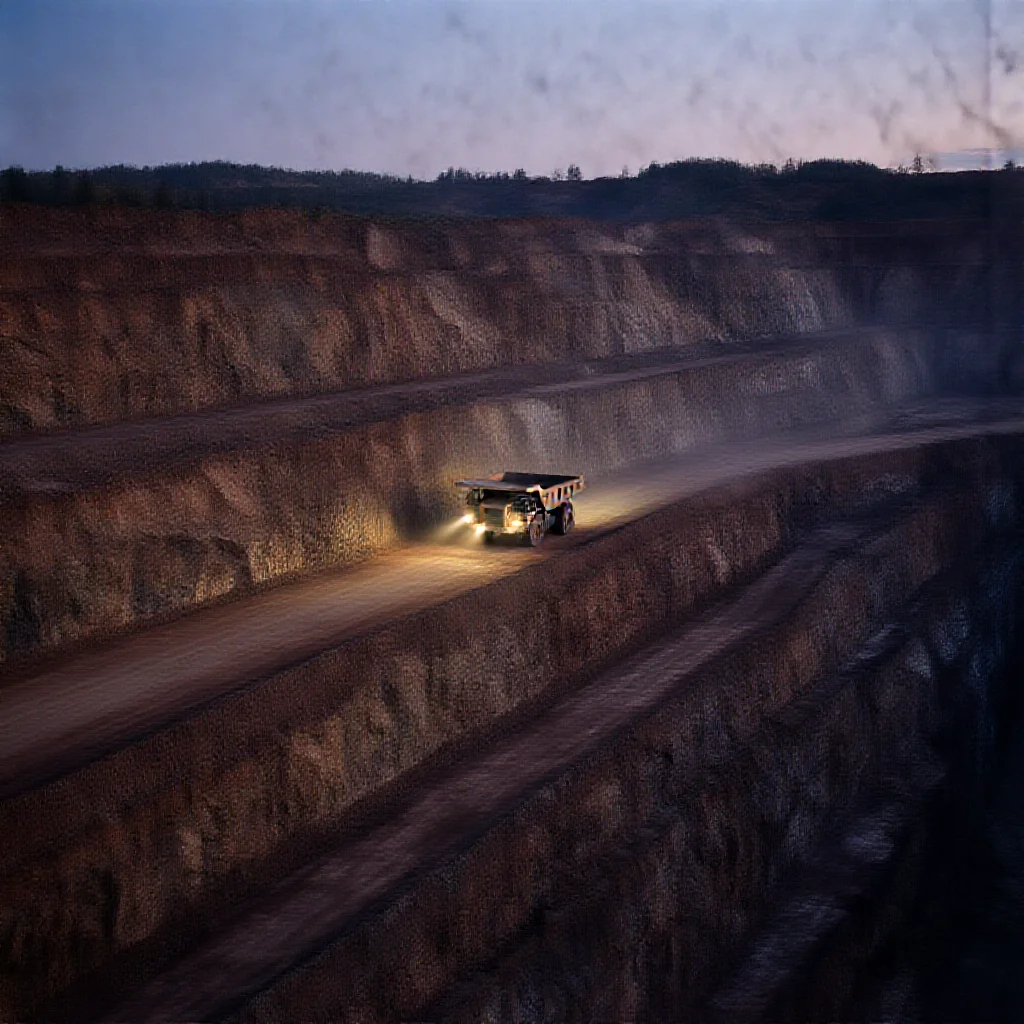
Beyond the Headlines: How Pronto's Copper Mine Deployment Reveals Kalanick's New Industrial Automation Playbook
Summary: Pronto's deployment of autonomous haul trucks at a copper mine, its first since acquisition by a Travis Kalanick-led entity, is more than a simple tech milestone. This analysis uncovers the strategic pivot from consumer-facing autonomy to high-value industrial applications, a move that validates a new economic logic in the self-driving sector. We examine how this deployment targets a critical bottleneck in the global copper supply chain, driven by the energy transition, and what it signals about Kalanick's long-term bet on automating foundational industries rather than public roads. This shift could redefine investment patterns and competitive dynamics in the broader autonomy landscape.
---
The Deployment: A Strategic Pivot Validated
On or before April 9, 2026, autonomous haul trucks began operating at a copper mine under the banner of Pronto (Source 1: [Primary Data]). This event marks the company's first operational deployment since its acquisition by an entity led by former Uber CEO Travis Kalanick (Source 1: [Primary Data]). The deployment is not an isolated test but a tangible validation of a deliberate corporate pivot toward industrial autonomous vehicles (Source 1: [Primary Data]).
The significance lies in the chosen domain. Unlike the highly publicized pursuits of robotaxis or last-mile delivery, mining presents a fundamentally different operational and economic paradigm. The environment is a controlled, private site, drastically reducing regulatory complexity and unpredictable variables inherent to public roads. The industry's pain points—persistent labor shortages, high operational costs, and stringent safety requirements—create immediate demand for automation with a clear return on investment. This deployment moves the company's strategy from theoretical press release to measurable field operation.
![A comparative infographic showing the key differences between public road autonomy and confined site industrial autonomy (e.g., regulatory complexity, operational design domain, economic model).]
Kalanick's Calculus: The Industrial Logic Overriding the Consumer Dream
The involvement of Travis Kalanick, a figure synonymous with disrupting consumer urban mobility, underscores a calculated strategic shift. The move signals a recognition that the economic logic of autonomy may be more compelling in industrial settings than in consumer-facing applications.
The calculus is rooted in asset economics. Mining operations run 24 hours a day, with multi-million dollar haul trucks representing significant capital expenditure. Autonomous operation maximizes asset utilization, eliminating shift changes and operator fatigue. Furthermore, the industry faces acute skilled labor shortages and inherent safety risks, providing powerful economic and human capital drivers for adoption. Profitability in this sector is derived from incremental efficiency gains and cost avoidance on a massive scale, a more direct and predictable path than the scaled network economics required for consumer autonomy. The acquisition of Pronto and its subsequent first deployment in mining is the executed first step of this industrial-focused strategy (Source 1: [Timeline Data]).
![A conceptual image of a chessboard, with pieces representing different sectors (transport, mining, logistics) and a hand moving a knight piece towards a mining icon.]
Copper as the Canary: Targeting the Energy Transition's Supply Chain Chokepoint
The selection of a copper mine is a strategic entry point, not a random industrial application. Copper is a fundamental material for electrification, integral to electric vehicles, renewable energy systems, and grid infrastructure. Global demand is projected to surge, creating a critical supply chain chokepoint for the energy transition.
Autonomous haulage directly addresses this bottleneck. By improving operational efficiency—through consistent cycle times, reduced fuel consumption via optimized routing, and minimized downtime—the technology can incrementally increase output from existing mines. Over the long term, the cost stability and productivity gains from automation could alter the economic calculus for developing new, often lower-grade, copper deposits. This positions autonomy not merely as a mining efficiency tool, but as a potential lever for expanding economically viable global copper reserves, a crucial factor for meeting decarbonization targets.
![A data visualization map showing global copper demand projections for EVs and renewables, overlayed with major mine locations.]
The Ripple Effect: Reshaping the Autonomous Vehicle Landscape
Pronto's deployment, under Kalanick's direction, may signal an emergent pattern within the autonomous vehicle sector. For startups facing the protracted timelines and immense capital requirements of public road autonomy, industrial applications offer a viable path to revenue and technological validation. This could catalyze a broader "industrial-first" trend, redirecting venture investment and engineering talent toward sectors like mining, agriculture, and logistics hubs.
This shift creates a new competitive axis. It places technology firms like Pronto in direct competition with traditional industrial equipment manufacturers who are also developing autonomous capabilities. The competitive dynamic will hinge on software agility versus deep domain integration and existing customer relationships. Furthermore, success in these high-value industrial niches could generate the sustained capital and proven technology stacks necessary to eventually re-approach broader mobility markets, but from a position of financial strength.
The deployment of autonomous haul trucks at a copper mine is a discrete operational event. Its broader implication is the validation of an alternative playbook for autonomy, one that prioritizes industrial economics over consumer scale, and targets the foundational supply chains of the global economy. The long-term impact will be measured in shifting investment flows, new competitive alliances, and the incremental but critical efficiency gains in the materials that build a decarbonized future.
---