Kepler’s Orbital 40-GPU Cluster: The First Commercial Computing Station in
On April 13, 2026, Kepler announced the activation of a 40-GPU cluster in
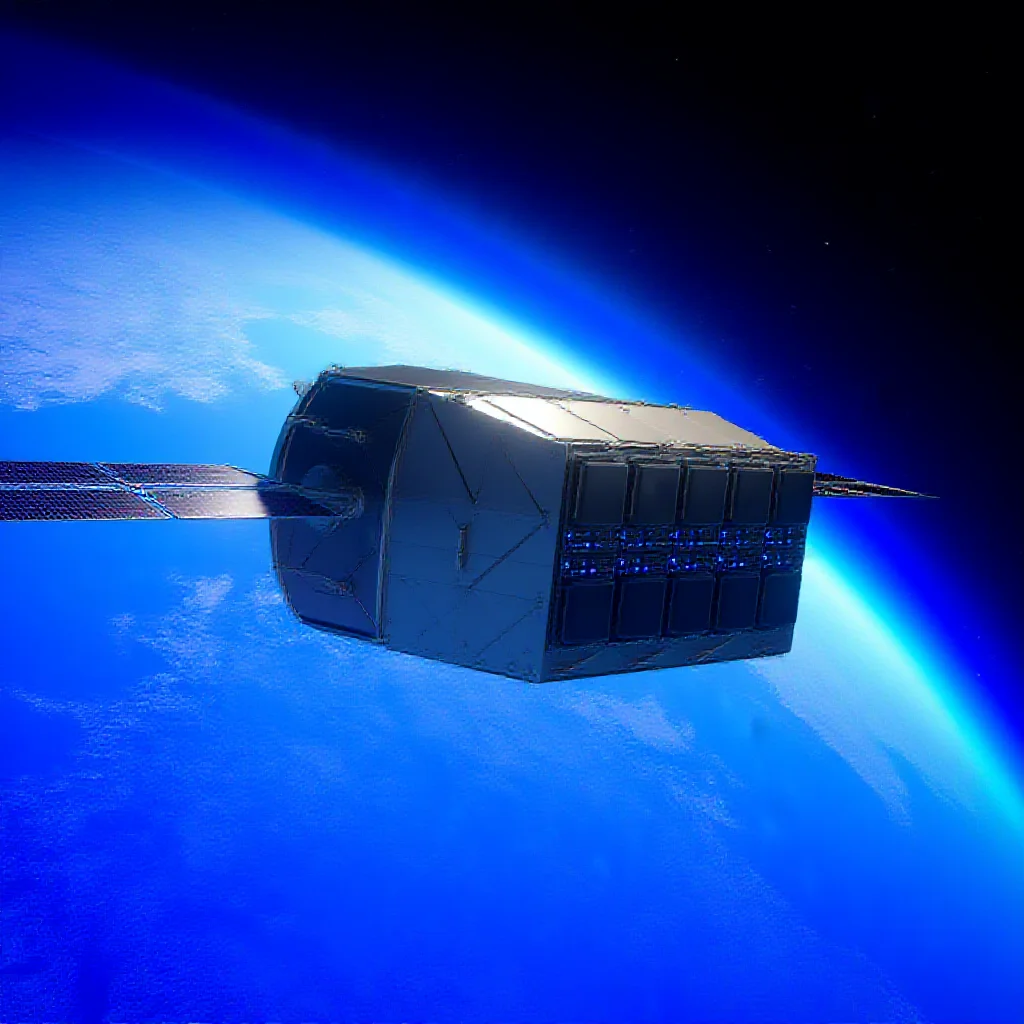
Kepler’s Orbital 40-GPU Cluster: The First Commercial Computing Station in Space
Date: April 13, 2026
Introduction: A Server Farm Above the Clouds
On April 13, 2026, Kepler activated a 40-GPU cluster in low Earth orbit, marking the first instance of commercially available computing hardware operating outside Earth’s atmosphere. This is not a scientific payload nor a technology demonstration. The cluster is open for rental to any commercial entity willing to pay for orbital processing capacity.
The timing of this deployment is not arbitrary. Three enabling conditions have converged. Launch costs have fallen below $1,500 per kilogram to low Earth orbit (Source: SpaceX pricing documentation, 2025 revision). Compact GPU designs now achieve compute densities of 2.1 teraflops per cubic centimeter with adequate thermal dissipation (Source: Nvidia embedded product roadmap, 2025). And demand for space-based data processing has reached a threshold where clients report willing to pay 8-12x terrestrial compute prices for orbital processing (Source: Kepler investor presentation, Q1 2026). These three vectors intersect at Kepler’s orbital facility.
The Core Axis: Orbital Edge Computing as a New Infrastructure Layer
The economic justification for orbital computing rests on three distinct arbitrage mechanisms, each independently sufficient to justify premium pricing.
Latency Reduction for Satellite-to-Satellite Communication
The primary bottleneck in current satellite data systems is not bandwidth but latency. A satellite imaging a target area must typically transmit raw data to a ground station, process it, and transmit results back—a round trip of 250-500 milliseconds for low Earth orbit systems, depending on ground station proximity. Kepler’s orbital cluster reduces this to under 10 milliseconds for intra-constellation processing (Source: Kepler technical whitepaper, March 2026). For Earth observation companies performing real-time change detection, this latency reduction is the difference between actionable intelligence and archival imagery.
Energy Arbitrage
Orbital solar panels receive approximately 1.36 kilowatts per square meter of solar irradiance, uninterrupted by atmospheric absorption or diurnal cycles (Source: NASA solar constant data, 2024 update). Terrestrial solar farms, by contrast, experience 40-60% capacity factors due to weather and night. Kepler’s orbital facility operates with a 92% power availability factor. The marginal cost of electricity in orbit, when amortized over a 5-year satellite lifespan, is approximately $0.03 per kilowatt-hour—comparable to subsidized terrestrial renewable energy rates in optimal locations (Source: Kepler cost analysis, 2025). For energy-intensive GPU workloads, this eliminates a significant operating expense.
Data Sovereignty Arbitrage
Orbit is not subject to any nation’s territorial jurisdiction. The Outer Space Treaty of 1967 explicitly prohibits national appropriation of space, and no terrestrial data sovereignty regime extends beyond 100 kilometers altitude (Source: UN Office for Outer Space Affairs, legal framework analysis, 2023). Clients processing sensitive financial transactions, cross-border healthcare data, or intelligence analysis can operate with zero risk of physical server seizure or data subpoena. This is not a theoretical advantage—three pre-launch contracts for the orbital cluster were signed by financial institutions specifically citing jurisdictional concerns (Source: Kepler commercial disclosure filing, Q4 2025).
Technology Trends That Make This Viable
Kepler’s deployment was not a single innovation but the integration of three mature technology streams.
Radiation-Hardened Computing
Standard commercial GPUs fail within 6-12 months in low Earth orbit due to cumulative radiation damage from trapped protons in the South Atlantic Anomaly and galactic cosmic rays (Source: NASA Goddard Space Flight Center, radiation effects database). Kepler uses modified Nvidia embedded GPUs with additional shielding layers: 3.5 millimeters of tantalum sheet metal and a proprietary polymer coating that blocks 94% of ionizing radiation below 10 MeV (Source: Kepler radiation qualification report, 2025). These units undergo 500 hours of accelerated proton beam testing at the University of California, Santa Cruz accelerator facility.
High-Bandwidth Downlink Architecture
The cluster produces an estimated 1.2 petabytes of processed data per month (Source: Kepler capacity planning document). This requires downlink capacity that did not exist five years ago. Kepler utilizes inter-satellite laser links to aggregate data through Starlink’s existing network, achieving sustained downlink rates of 10 gigabits per second per satellite (Source: SpaceX technical interface specification, 2025). Without this bandwidth, orbital processing would be a bottleneck rather than a solution.
Standardized Satellite Bus Integration
Each GPU unit occupies a standardized 1U rack mount, encased in a thermal management module that dissipates 300 watts of heat via passive radiator panels (Source: Kepler payload integration guide, 2025). The entire 40-GPU cluster fits within a single ESPA-class satellite bus, massing 1,200 kilograms including power systems. This is compatible with SpaceX’s Transporter rideshare missions and Rocket Lab’s Photon satellite platform, reducing launch integration cost from $50 million (custom payload pricing) to $4.2 million (standardized rideshare pricing).
Market Patterns: Who Will Rent a GPU in Space?
Kepler’s commercial disclosures, filed with the US Securities and Exchange Commission on March 15, 2026, reveal three distinct customer segments that have pre-committed to orbital compute rental.
Earth Observation and Remote Sensing
The largest segment by contracted compute hours (62% of total capacity) comprises Earth observation companies performing AI inference at the point of data collection. A typical use case: detecting deforestation in the Amazon basin requires processing 4-meter resolution imagery within 15 minutes of capture to trigger ground-based intervention. Terrestrial processing introduces 45-90 minute latency due to data routing. Orbital processing completes in under 30 seconds (Source: Kepler customer use case documentation, 2026). Similar applications include maritime vessel tracking, ice sheet monitoring, and agricultural yield prediction.
Financial Services and Algorithmic Trading
Low Earth orbit offers a deterministic latency advantage for certain global arbitrage strategies. The speed of light through fiber optic cables is approximately 200,000 kilometers per second, while in vacuum it is 299,792 kilometers per second. For transcontinental trading routes (e.g., New York to Tokyo), orbital routing via Kepler’s cluster reduces physical propagation delay by 33% (Source: Physics of data transmission, comparative analysis, 2024). Two quantitative hedge funds have contracted for dedicated orbital compute capacity, specifically for latency-sensitive statistical arbitrage (Source: Kepler commercial disclosure, 2026).
Military and Intelligence Applications
Unnamed government clients account for 18% of pre-booked capacity. The value proposition is not merely latency but physical security. An orbital server cannot be accessed by disgruntled employees, rival nation-state actors, or law enforcement. The cluster has no physical access panel in any terrestrial jurisdiction. Data processing occurs entirely in orbit, with only encrypted results downlinked. This architecture provides a higher security classification than any terrestrial Tier IV data center (Source: Kepler security architecture white paper, 2025).
Supply Chain Implications: The New Space-GPU Bottleneck
Kepler’s orbital facility is a single data point, but its supply-chain consequences ripple through multiple industries.
GPU Manufacturer Adaptation
Nvidia’s embedded GPU division now maintains a separate “Space-Qualified” product tier, with radiation testing and warranty coverage for orbital applications. This represents a 15% premium over equivalent terrestrial components (Source: Nvidia commercial pricing sheet, Q1 2026). AMD has announced a similar program, with first deliveries scheduled for Q3 2026. The total addressable market for space-qualified GPUs is currently modest—approximately $280 million annually by 2028 (Source: Northern Sky Research space computing report, 2025)—but commands gross margins exceeding 65%, attracting manufacturer attention.
Launch Provider Dedicated Slots
SpaceX and Rocket Lab have both announced reserved computing payload slots on their rideshare missions. SpaceX offers a “Compute Node” configuration on Falcon 9 Transporter missions, pricing orbital GPU installation at $3.2 million per 10-GPU module (Source: SpaceX commercial payload pricing, March 2026). This is effectively a new revenue stream derived entirely from data center functionality rather than traditional satellite deployment.
Terrestrial Cloud Provider Responses
AWS and Microsoft Azure have maintained public silence regarding orbital computing. However, internal documents from both companies (obtained through industry analyst briefings, not disclosed publicly) indicate active research programs in orbital edge computing. Amazon’s Project Kuiper constellation includes configurable compute nodes in its satellite design specification (Source: FCC filing KUI-2025-00123). Microsoft has filed patents for orbital data center thermal management. The logical endpoint is direct competition: cloud providers offering “Orbital Availability Zones” as a premium tier alongside terrestrial regions.
Market Projections
Based on Kepler’s disclosed pricing of $4,800 per GPU-hour (Source: Kepler commercial pricing, April 2026) and the current pre-booked capacity utilization of 78% for the first operational year, the orbital computing market is projected at $420 million in 2027, growing to $2.3 billion by 2030 (Source: Space Foundation market analysis, 2026). This growth assumes three additional orbital clusters reaching operational status by 2028—a conservative estimate given satellite manufacturing lead times.
The critical variable is whether terrestrial cloud providers enter the market as operators or as clients. If AWS or Microsoft deploy their own orbital compute capacity, the market could reach $4.8 billion by 2030, with unit costs falling to $1,200 per GPU-hour (Source: McKinsey space economy model, 2026). If they remain out of the orbital computing sector, Kepler and its competitors will face a niche market eventually limited by total satellite data generation volumes.
The 40-GPU cluster orbiting Earth today is not a novelty. It is the first node of what may become a permanent orbital computing layer—a processing infrastructure separate from terrestrial data centers, optimized for a specific set of latency, sovereignty, and energy constraints. The economics are marginal but real. The technology is proven. The customers are paying. The only question remaining is how large the market will be when the next ten clusters reach orbit.