The Great Divergence: How Protectionism and Tech Investment Are Reshaping
Global business dynamics are entering a paradoxical era: rising protectionist
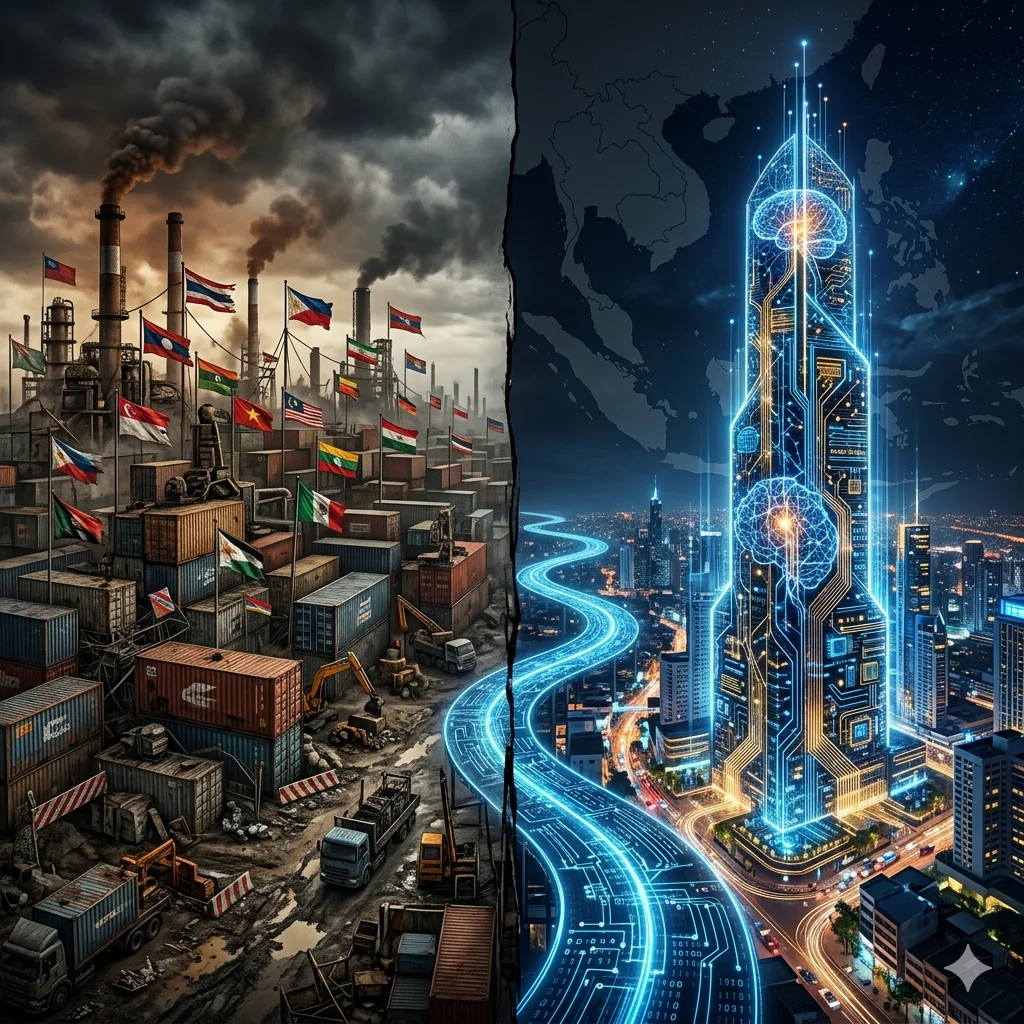
The Great Divergence: How Protectionism and Tech Investment Are Reshaping Global Business Dynamics
Introduction: The Fragmentation Paradox
In 2024, two seemingly contradictory forces are redefining global business. On one hand, protectionist policies are spreading at a pace not seen since the 1930s: tariffs on Chinese goods, "friend-shoring" mandates, and a wave of reshoring incentives from Washington to Brussels. On the other, the world’s two largest economies—the United States and China—now account for a staggering 58% of global research and development spending (39% and 19%, respectively), a record-high concentration that shows no signs of abating.
Are we witnessing a decoupling of supply chains from innovation? Or is this a new, more complex form of interdependence—one where physical production disperses while intellectual capital clusters? The answer matters for every executive, policymaker, and investor navigating the global business trends of 2025.
A recent Euromonitor survey adds urgency to the question: 40% of consumers worldwide identify artificial intelligence as the most impactful technology shaping their lives, outstripping renewable energy and biotechnology. Despite trade barriers, tech—and especially AI—remains the primary driver of business strategy. The fragmentation of production does not mean the end of globalization; it means globalization is being rewired.
[IMAGE: World map with red arrows indicating supply chain shifts from China to Southeast Asia and Mexico, and blue glowing nodes for R&D hotspots in Silicon Valley, Shenzhen, and Boston]
---
Trend 1: Protectionism Rewires the Supply Chain Map
The first visible shift is geographic. The US-China trade war, followed by the pandemic and the Ukraine conflict, has triggered a wave of tariff barriers and export controls. In response, multinational corporations are relocating manufacturing capacity to "safe" jurisdictions—a process often called friend-shoring.
Vietnam has emerged as a leading beneficiary. The country’s export growth averaged 10% annually from 2022 to 2024, with electronics, textiles, and machinery flowing to the US, Europe, and Japan. Samsung now produces half of its smartphones in Vietnam; Apple has moved a growing share of AirPod and MacBook assembly there. Similar patterns are visible in Mexico, India, and Thailand.
Yet the relocation is not merely about cost. A deeper logic is at work: protectionism fragments global supply chains into regional blocs. In each bloc, proximity to both the end market and to innovation hubs becomes the new competitive advantage. For instance, Mexican factories supplying the US market benefit from lower tariffs and shorter logistics times, but they also increasingly require access to advanced automation and digital tools developed in American R&D centers.
A counter-trend underscores this tension. Even as companies disperse production, they are pulling employees back into physical offices. JP Morgan, Amazon, and Boeing have all mandated near-full-time office attendance in 2024, arguing that innovation and collaboration suffer in fully remote environments. This reveals a fundamental duality: the desire for geographical control over manufacturing coexists with the need for concentrated, in-person innovation.
[IMAGE: Infographic showing Vietnam's export growth from 2019 to 2024 by quarter, with major trading partner flags (US, EU, Japan, South Korea) and percentage breakdowns]
---
Trend 2: Labor Shortages, Remote Work Tensions, and Automation Acceleration
The fragmentation of production has collided with a severe labor shortage in advanced economies, particularly in STEM fields. The US faces a projected shortfall of 1.2 million engineers and computer scientists by 2026; Europe’s digital skills gap is even wider. This scarcity is pushing firms to invest in automation not just as a productivity enhancement, but as a strategic hedge against an unreliable workforce.
Robotics installations in North America hit a record high in 2023, and AI-powered software tools—from generative design to predictive maintenance—are being adopted fastest in industries with the most acute talent gaps: semiconductors, advanced manufacturing, and life sciences. The linkage between labor pain and tech adoption is direct and measurable.
At the same time, the remote work battle is intensifying. High-profile mandates from financial and technology giants clash with employee demands for flexibility, creating a binary split in many organizations. The pattern reveals a new organizational logic: in-person work is being reserved for high-innovation, high-collaboration roles (R&D, strategy, product design), while routine tasks—including many manufacturing processes—are increasingly automated or moved to lower-cost regions that can still be managed remotely.
This tension is not merely a human resources issue; it is reshaping capital allocation. Companies facing the choice between a costly return-to-office campaign in San Francisco and an automation investment in a Vietnamese factory are increasingly choosing the latter. The result is a geographic and occupational divergence: innovation hubs in the US and China become denser and more expensive, while emerging manufacturing bases in Southeast Asia and Mexico absorb capital-intensive automation.
[IMAGE: Split image: left side shows empty office cubicles with a "Return to Office Mandatory" sign and a clock; right side shows a robotic arm working alongside a human worker wearing a VR headset, with data dashboards in the background]
---
Trend 3: US-China Innovation Arms Race – The R&D Supercluster
The most consequential trend is the concentration of advanced R&D in just two countries. The US spends roughly $800 billion annually on research and development (39% of the global total), while China has surged to nearly $500 billion (19%). Together, they dwarf the rest of the world: the next largest spender, Japan, accounts for only 7%.
This innovation arms race is focused on a narrow set of technologies that define both economic competitiveness and national security: artificial intelligence, semiconductors, quantum computing, and advanced biotech. The Chinese government has poured billions into domestic chip fabrication through initiatives like the "Big Fund," while the US CHIPS Act allocates $52 billion to revive semiconductor manufacturing and R&D. The result is a technological "supercluster"—a self-reinforcing ecosystem where talent, capital, and intellectual property concentrate in a few metro areas: Silicon Valley, Boston, Seattle, Shenzhen, Beijing, Shanghai.
The hidden logic is paradoxical yet powerful. As manufacturing relocates to Southeast Asia, India, and Mexico, the demand for advanced automation, AI-driven supply chain software, and next-generation semiconductor components actually rises. Emerging manufacturing bases cannot function without the sophisticated machines, sensors, and algorithms developed in US and Chinese R&D labs. This creates a new dependency: the physical dispersion of production accelerates the value of the innovation core.
Euromonitor’s survey data reinforces this: 40% of consumers say AI is the most impactful technology, and 68% of business leaders in a parallel survey rank AI as the top strategic priority for 2025. The demand for AI-powered solutions—from predictive inventory management to autonomous quality control—is surging precisely in the factories relocating from China to Vietnam or Mexico.
[IMAGE: Two pie charts side by side showing global R&D spending share (US 39%, China 19%, Japan 7%, Germany 5%, others 30%); below, a bar chart of AI-related patent filings by country (China and US far ahead)]
---
Conclusion: The New Interdependence
The five intertwined trends—protectionism, supply chain relocation, labor shortages, remote work tensions, and the US-China R&D supercluster—are not separate phenomena. They form a coherent system with a single underlying logic: the fragmentation of physical production is accelerating the concentration of innovation, creating a new form of global interdependence.
Companies that succeed in 2025 and beyond will be those that can navigate both sides of this divergence. They will need to manage geopolitical risk by diversifying manufacturing across regional blocs—a strategy that requires deep local knowledge and strong government relationships. At the same time, they must invest aggressively in automation and AI to offset labor shortages and to stay connected to the innovation hubs that control the most advanced technologies.
The great divergence is not a retreat from globalization. It is a reconfiguration. The old model of frictionless global supply chains and concentrated R&D in the West is giving way to a more complex architecture: regional production clusters tightly linked to a bi-polar innovation system. For businesses, the winners will be those that understand this new geography of value—and that learn to operate simultaneously in the world of physical factories and the world of digital intelligence.
[IMAGE: A dramatic split-world visualization: on the left, a chaotic maze of shipping containers and factory smokestacks clashing with national flags; on the right, glowing neural networks and semiconductor circuits forming a sleek skyscraper. A winding river of data links the two halves, with a faint map of Southeast Asia in the background. High-contrast lighting, cinematic style.]