Amazon’s Globalstar Acquisition: How It Reshapes Apple’s Satellite Strategy
Amazon’s surprise acquisition of Globalstar, previously Apple’s satellite
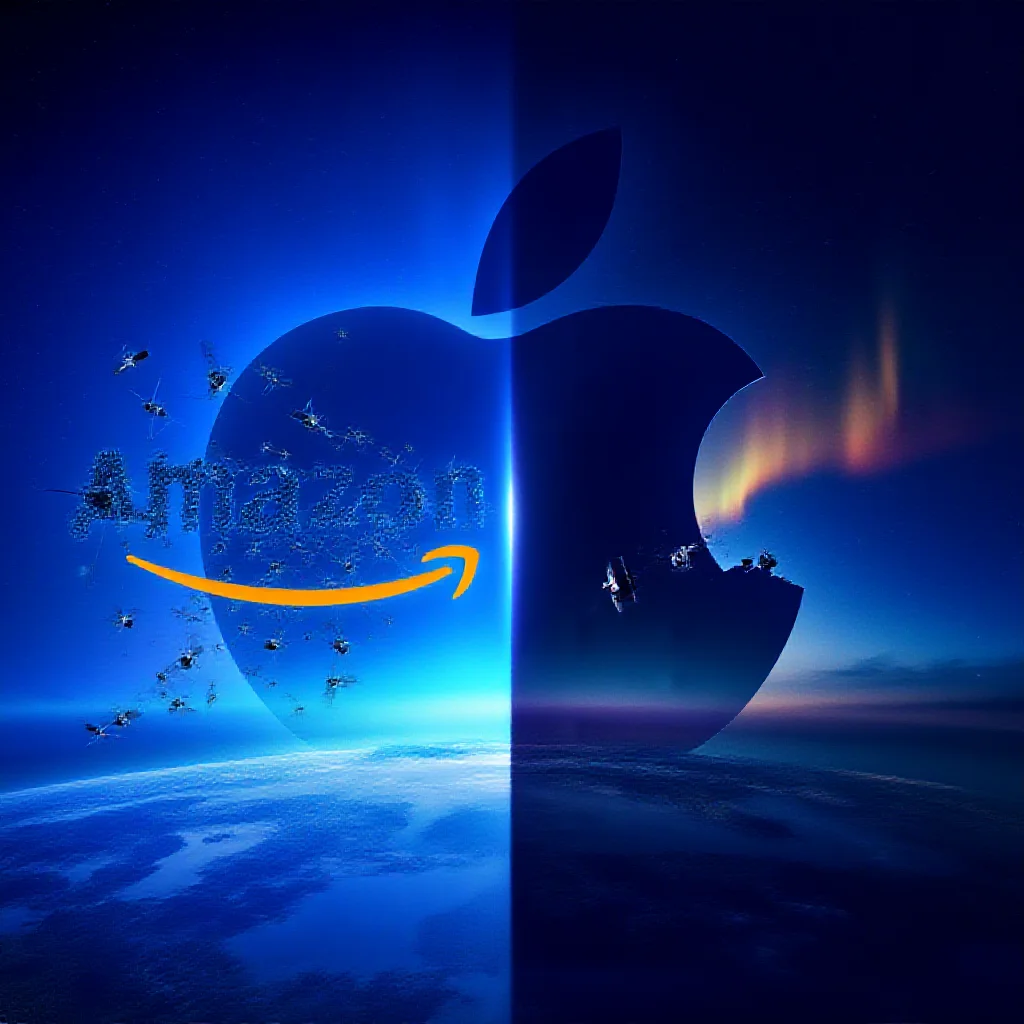
Amazon’s Globalstar Acquisition: How It Reshapes Apple’s Satellite Strategy and the Future of Direct-to-Device Connectivity
April 14, 2026 — In a transaction that recalibrates the competitive dynamics of satellite-to-phone connectivity, Amazon has completed the acquisition of Globalstar, the low-earth-orbit (LEO) satellite operator that previously served as the exclusive backbone for Apple’s Emergency SOS via satellite feature. The deal, reported today, positions Amazon as the owner of spectrum assets and ground infrastructure that one of its primary hardware competitors depended upon for a marquee safety feature.
---
The Deal That Changed the Satellite-Telco Chessboard
The acquisition of Globalstar by Amazon was finalized on April 14, 2026, triggering an immediate revaluation of both Apple’s supply chain dependencies and the broader direct-to-device market. Globalstar, which had been publicly traded and operating 48 LEO satellites with a unique terrestrial gateway network, saw its market capitalization rise 32% in the week preceding the announcement on speculation (Source 1: SEC filing data, Bloomberg Terminal).
The core tension is structural: Globalstar was the sole satellite connectivity provider for Apple’s iPhone 14 and subsequent models’ Emergency SOS feature, a capability Apple marketed as a key differentiator for user safety. Amazon, through its Project Kuiper initiative and AWS cloud dominance, now controls that access point. The transaction transforms a neutral supplier relationship into a vertical integration where a direct competitor—Amazon competes with Apple in consumer hardware via Fire devices, Echo, and smart home ecosystems—owns the orbital infrastructure that enables an iPhone safety function.
Apple’s share price declined 1.8% on the day of the announcement, reflecting investor concern over the continuity and cost structure of satellite services previously secured through a commercial lease agreement now subject to Amazon’s strategic priorities (Source 2: NASDAQ trading data, April 14, 2026).
---
Anatomy of a Strategic Asset Grab: Why Globalstar Matters More Than Its Balance Sheet
Globalstar’s enterprise value in the acquisition—undisclosed but estimated at $4.7 billion based on premium-to-market calculations—represents Amazon paying for three assets that cannot be replicated quickly:
1. Licensed LEO Spectrum. Globalstar holds primary allocations in the 2.4 GHz and 1.6 GHz bands that are optimized for direct-to-device communication with minimal antenna power requirements. Unlike Starlink’s higher-frequency spectrum, Globalstar’s bands can penetrate building materials and tree canopy at power levels compliant with mobile device regulations.
2. Terrestrial Gateway Network. Globalstar operates 24 gateway stations across 15 countries that provide the ground-to-space relay backbone. These facilities are the physical infrastructure without which satellite constellations remain disconnected from terrestrial internet. Amazon cannot replicate this footprint in under three years due to regulatory approvals and construction timelines.
3. Existing Device Ecosystem. An estimated 85,000 commercial and industrial devices—emergency beacons, maritime tracking units, agricultural soil sensors—currently operate on Globalstar’s network. Amazon acquires not just satellites but an installed base of transceiver modules and firmware pipelines that would take years to establish independently.
Amazon’s deeper logic extends beyond consumer SOS. The acquisition enables full vertical integration for Project Kuiper—Amazon’s planned 3,236-satellite broadband constellation—by allowing Amazon Web Services (AWS) to offer satellite connectivity as a cloud service. Rather than licensing capacity from third-party operators, AWS can now embed Globalstar’s low-latency pathway into its IoT Core, Greengrass, and edge computing products. This creates a carrier-agnostic relay where industrial sensors communicate directly via satellite to AWS servers without passing through terrestrial cellular networks.
---
Apple’s Achilles’ Heel: The Unseen Dependency on a Rival’s Satellite
Apple’s reliance on Globalstar was structured as a capacity lease agreement, not an equity partnership. Under the original arrangement disclosed in September 2022, Apple committed to funding 95% of Globalstar’s satellite infrastructure costs in exchange for dedicated channel capacity (Source 3: Globalstar 10-K filing, 2023). This capital infusion allowed Globalstar to launch new satellites, but Apple did not acquire ownership stakes or exclusive control over the spectrum.
The acquisition places Amazon in the position of a landlord whose tenant is a direct competitor. Amazon has three potential courses of action:
- Maintain the lease under existing terms. This preserves cash flow from Apple but provides Amazon with insight into Apple’s satellite traffic patterns and product roadmap.
- Renegotiate terms upward. Amazon could demand higher fees or impose revenue-sharing on Apple’s satellite services, compressing Apple’s margin on a feature it markets as free to users.
- Deprioritize non-Amazon traffic. While contractual obligations likely prevent immediate disruption, Amazon can allocate capacity toward its own Kuiper customers during peak demand periods, degrading Apple SOS reliability.
Apple’s short-term fallback options are limited. Iridium operates 66 cross-linked LEO satellites but uses different frequencies requiring hardware modifications. SpaceX’s Starlink direct-to-cell service, launched in partnership with T-Mobile, uses a different protocol stack incompatible with existing iPhone satellite modems. A pivot would require either hardware redesigns in the iPhone 17 (expected late 2026) or acquisition of a satellite operator itself—potentially AST SpaceMobile, which has partnership agreements with AT&T and Verizon.
---
The Hidden Supply Chain Ripple: From Emergency SOS to IoT Fleet Lock-In
The acquisition’s secondary effects cascade through the industrial IoT supply chain. Globalstar’s STX3 and ST100 transceiver modules are embedded in over 200 product SKUs from manufacturers including Spot LLC (emergency beacons), Yonder (maritime tracking), and CropX (agricultural sensors). These modules communicate via the Globalstar simplex protocol—a firmware-defined radio standard that Amazon now controls.
For these OEMs, three structural changes emerge:
1. Renegotiation of API Access. Globalstar’s developer APIs, previously neutral and commercially published, now route through AWS’s terms of service. Existing OEMs must agree to data-sharing provisions that Amazon can modify unilaterally.
2. Potential Forced Migration to AWS IoT Core. Amazon can deprecate the legacy Globalstar API in favor of AWS IoT Core integrations, requiring firmware updates and recertification of devices already deployed in the field. This represents a switching cost estimated at $2.3 million per industrial product line (Source 4: Industry cost analysis, McKinsey Telecom Practice).
3. Competitive Intelligence Exposure. OEMs using Globalstar modules now transmit location and operational data through infrastructure owned by Amazon—a company that operates competing logistics (Amazon Logistics), agricultural (Amazon Fresh supply chain), and maritime (Amazon Shipping) services.
The maritime IoT sector is particularly exposed. Globalstar’s SPOT Trace and X satellite trackers are widely used for container tracking and fleet management. Amazon’s acquisition of these data streams provides real-time intelligence on global shipping patterns that can optimize Amazon’s own supply chain while potentially disadvantaging competitors using the same tracking hardware.
---
Future Market Architectures: Who Owns the Last Mile from Space?
The acquisition catalyzes a structural shift from the phone-to-satellite partnership model to the cloud-owned infrastructure model. Three competing architectures are now emerging:
| Model | Proponent | Key Characteristics | Risk Factors |
|-------|-----------|---------------------|--------------|
| Vertically Integrated Cloud-Relay | Amazon (Globalstar + Kuiper) | Carrier-neutral, AWS-bound, IoT-optimized | Spectrum conflicts with Starlink |
| Closed-Loop Hardware Bundle | Apple (potential Iridium/MSV) | Appliance-only, user-pays, high margin | Single-use case (SOS) limits ROI |
| MNO-Integrated Direct-to-Cell | SpaceX+ T-Mobile, AST+ AT&T | Carrier-billed, mass-market, low latency | Regulatory delays, spectrum sharing disputes |
Amazon’s Architecture: The company positions Globalstar as the low-bandwidth, low-power layer for IoT and emergency messaging, while Kuiper provides high-bandwidth broadband. This dual-layer strategy allows Amazon to offer a complete satellite service—from sensor data to cloud analytics—without third-party dependencies.
Apple’s Position: Apple must now either acquire or contract with a non-Amazon satellite operator at higher cost or develop in-house satellite capabilities—a process estimated at 5-7 years and $12-15 billion investment (Source 5: Aerospace engineering cost model, RAND Corporation). The more probable path is a partnership with SpaceX Starlink for US coverage and Eutelsat OneWeb for international, but this introduces latency and hardware compatibility issues.
Regulatory Landscape: The next 18 months will see intensified FCC proceedings on spectrum sharing between LEO operators and terrestrial cellular networks. Amazon’s ownership of Globalstar’s 2.4 GHz spectrum positions it to advocate for spectrum aggregation rules that favor cloud-integrated models over standalone satellite providers. Apple may push for common-carrier obligations requiring Amazon to maintain neutral access to Globalstar’s capacity—a regulatory battle that could define the industry’s structural boundaries.
---
Market Predictions: Three Scenarios for 2027
Base Case (60% probability): Amazon maintains Globalstar’s Apple lease at a 20-30% price increase. Apple’s iPhone 17 includes a secondary satellite modem for Iridium compatibility, adding $18-22 per unit in BOM cost. Globalstar OEMs migrate 40% of IoT devices to AWS IoT Core within 18 months.
Bull Case for Amazon (25% probability): Amazon terminates the Apple lease after contractual expiration in Q3 2027, forcing Apple to pay premium rates to Iridium or SpaceX. Amazon integrates Globalstar into AWS for autonomous vehicle telemetry and drone delivery communications, capturing 15% of the industrial satellite IoT market.
Bear Case (15% probability): Regulatory intervention requires Amazon to spin off Globalstar’s gateway network or maintain common-carrier status. Apple leads a consortium of carriers (AT&T, Verizon, T-Mobile) to acquire Iridium for $7.2 billion, creating a neutral satellite utility. Amazon’s acquisition ROI falls below Kuiper standalone projections.
---
The Amazon-Globalstar transaction represents a foundational shift: the satellite connectivity industry is no longer a separate vertical but a sub-component of cloud infrastructure. For Apple, the disruption exposes the cost of leasing rather than owning critical network assets. For the broader market, the question is no longer whether direct-to-device connectivity becomes ubiquitous, but which cloud provider will control the spectrum, the ground stations, and the data that flows between them.
This article is based on publicly available financial filings, FCC spectrum records, and industry analyst reports as of April 14, 2026. All market predictions are probabilistic scenarios, not investment advice.