Beyond the Logo: The Strategic Calculus Behind UltraTech Cement''s Brand Consolidation
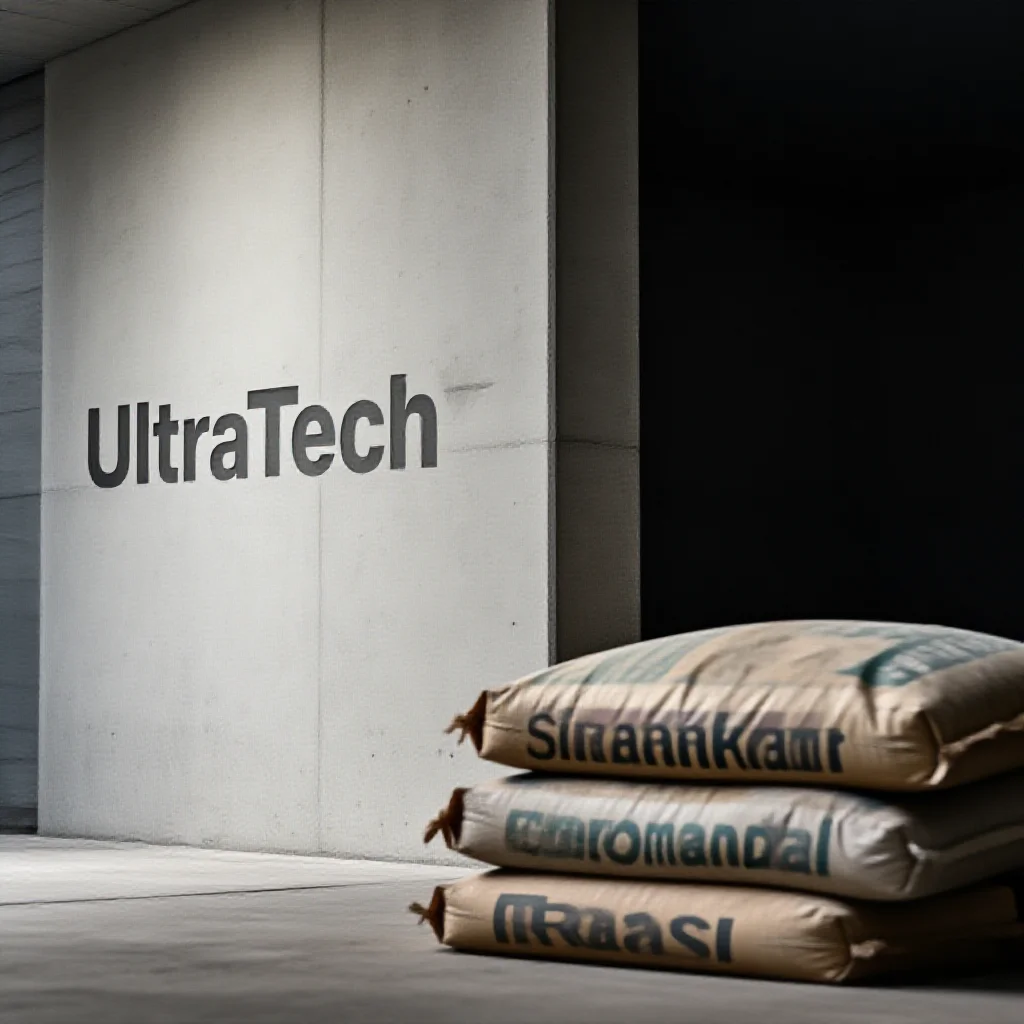
UltraTech Cement's decision to phase out the Sankar, Coromandel, and Raasi
Beyond the Logo: The Strategic Calculus Behind UltraTech Cement's Brand Consolidation
Introduction: The End of an Acquisition Era
In April 2026, UltraTech Cement announced the phase-out of three regional cement brands: Sankar, Coromandel, and Raasi (Source 1: [Primary Data]). The stated objective is the creation of a unified brand identity. This move represents the final operational step in digesting an acquisition made over two decades prior, when these brands were absorbed as part of the Jaypee Group's cement business in 2004 (Source 1: [Primary Data]). The phase-out is scheduled for completion within the next two quarters (Source 1: [Primary Data]). The central strategic question is not the act of consolidation itself, but its timing. After 22 years of portfolio management, the decision signals a definitive shift from acquisition-led growth to a strategy of efficiency-driven dominance through monolithic brand power.
The Hidden Economics: From Marketing Multiplicity to Monolithic Efficiency
The economic rationale for retiring multiple regional brands in a commoditized industry is rooted in cost structure simplification. Maintaining distinct brands—Sankar, Coromandel, Raasi, and the master UltraTech brand—incurs duplicated expenditures across marketing campaigns, sales team structures, and promotional activities. In an industry where product differentiation is minimal and purchase decisions are heavily influenced by price, availability, and trade relationships, sustaining multiple brand identities represents a significant and arguably redundant overhead.
Consolidation under the single UltraTech banner enables the realization of substantial economies of scale. Marketing budgets can be concentrated, amplifying share-of-voice in a competitive landscape. Sales and distribution logistics can be streamlined, reducing complexity in routing, inventory management, and retailer engagement. The move transforms a historically complex, acquisition-derived portfolio into a leaner, more focused operational entity. The cost savings extracted from this simplification can be redirected toward capacity expansion, supply chain fortification, or competitive pricing strategies, directly impacting margin resilience.
Strategic Timing: Why Phase-Out Happens in 2026
The announcement's timing is a critical component of its strategic logic. The period post-2025 coincides with robust projections for infrastructure and construction spending in India. Executing a rebranding during a phase of strong market demand minimizes potential disruption; channel partners and end-users are more likely to accept a transition when material flow is consistent and business activity is high.
The two-quarter implementation timeline is notably aggressive. This suggests that UltraTech has engaged in meticulous supply chain planning, likely allowing inventories of the retiring brands to dwindle naturally, thereby avoiding costly write-offs or distressed sales. Furthermore, this consolidation can be interpreted as a preemptive competitive maneuver. The Indian cement sector is witnessing consolidation, notably with the Adani Group's acquisition of Ambuja Cements and ACC. By fully integrating its own portfolio ahead of potential market-wide shifts, UltraTech Cement is positioning its monolithic brand for clearer competitive contrast and operational agility against other large, streamlined entities.
The Regional Ripple Effect: Beyond a Unified Logo
The dissolution of Sankar, Coromandel, and Raasi will have tangible effects beyond corporate branding documents. These brands have cultivated regional distribution networks and retailer loyalties over decades. The transition risks temporary friction as these established relationships are migrated to the UltraTech identity. The company's ability to seamlessly integrate regional sales forces and assure channel partners of consistent supply and support will be a key determinant of the move's smoothness.
The strategic opportunity, however, is significant. In the South and East, where Raasi, Coromandel, and Sankar held sway, UltraTech may gain enhanced pricing power and market share visibility under a single, heavily promoted national brand. The long-term supply chain implications are profound. A unified brand allows for the rationalization of production scheduling across plants, optimization of logistics networks, and centralized procurement. This transforms the operational model from a federation of acquired units into a single, integrated command structure capable of responding with greater speed and efficiency to market fluctuations.
Conclusion: A Pivot with Sector-Wide Implications
UltraTech Cement's brand consolidation is not a cosmetic rebranding exercise. It is a deliberate pivot from a growth strategy defined by acquisition to one dominated by integration and efficiency. The phase-out of the Jaypee-acquired brands closes a historical chapter and opens a new one focused on margin optimization and supply chain mastery.
The implications extend beyond UltraTech. This move establishes a template for the industry, highlighting the economic advantages of brand unity in a commoditized space. It is likely to pressure other multi-brand cement conglomerates to evaluate their own portfolio complexities. The coming quarters will reveal the executional efficacy of UltraTech's transition, but the strategic direction is clear: the future of scale in the Indian cement industry will be won not only by capacity but by the operational leanness and brand clarity of its largest players.