Beyond the Chokepoint: The Hidden Supply Chain Fallout of a Strait of Hormuz
Nomura estimates that a blockade of the Strait of Hormuz could put 2.3 million
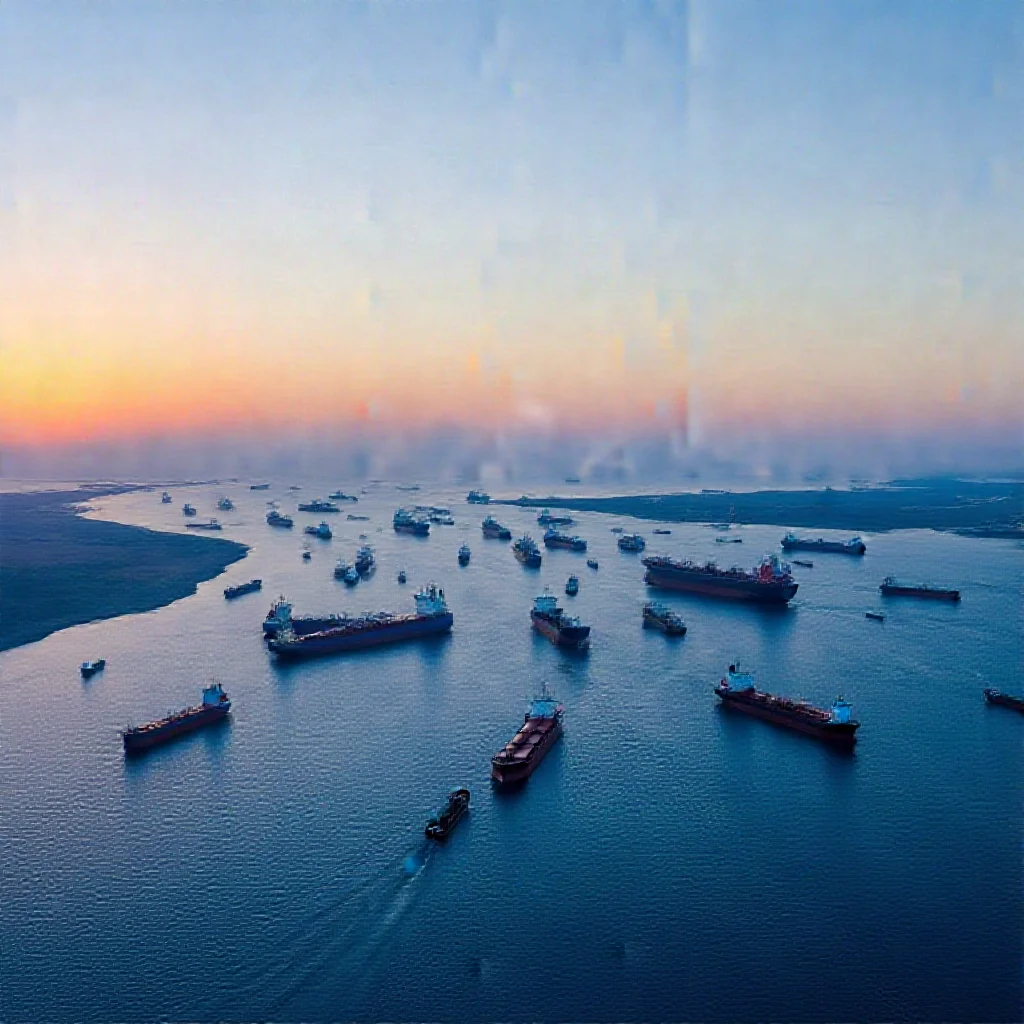
Beyond the Chokepoint: The Hidden Supply Chain Fallout of a Strait of Hormuz Blockade
Introduction: The 2.3 mbpd Question Beyond the Headline
On April 14, 2026, Nomura released a quantitative assessment that placed a specific figure on a longstanding geopolitical contingency: a blockade of the Strait of Hormuz could place 2.3 million barrels per day (mbpd) of oil supply at immediate risk (Source: Business Standard, April 14, 2026). This figure represents approximately 2.3% of global daily oil consumption, a volume significant enough to trigger cascading effects across interconnected energy infrastructure.
The conventional media response to such a scenario follows a predictable trajectory: spot prices for Brent and WTI would spike within hours, emergency strategic petroleum reserve releases would be announced, and diplomatic channels would activate. These are first-order effects, measurable in days. The less examined dimension concerns what occurs in weeks two through fifty-two—the period when refinery supply chains, configured over decades to process specific crude grades transiting Hormuz, confront a feedstock mismatch that no price signal can immediately resolve.
The thesis advanced here is that the primary risk from a Hormuz blockade is not volumetric shortage but qualitative disruption: the misalignment between the crude grades that Asian refining complexes are physically engineered to process and the available alternatives. This mismatch cannot be corrected through financial markets alone; it requires physical reconfiguration of distillation units, catalyst systems, and downstream processing trains—a process measured in months, not hours.
The Hidden Logic: Why 2.3 mbpd Is a System-Level Threat, Not Just a Supply Gap
The Strait of Hormuz handles approximately 20 million barrels per day of crude oil and petroleum products, representing roughly 20% of global seaborne oil trade. The 2.3 mbpd figure from Nomura likely reflects not a random sampling of these volumes but a specific subset: heavy sour crude grades originating from Iraq (Basrah Heavy), Kuwait (Kuwait Export Crude), and the United Arab Emirates (Upper Zakum, Murban).
These grades share two critical characteristics. First, they possess high sulfur content (typically 2-3% by weight) and high density (API gravity in the low 30s to high 20s). Second, they constitute the primary feedstock for complex refineries in Asia, particularly in China, India, South Korea, and Japan, where hydrocracking and coking units have been installed specifically to process these cheaper, lower-quality crudes into high-value transportation fuels.
The systemic risk emerges from a basic industrial engineering constraint: refineries are not interchangeable input processors. A refinery configured for heavy sour crude cannot simply substitute light sweet crude from West Africa or the U.S. Gulf Coast without significant throughput reduction, catalyst poisoning, and yield degradation. The International Energy Agency has documented that refineries forced to switch crude slates can lose 15-30% of operational capacity during the transition period (Source: IEA Medium-Term Oil Market Report, historical data).
Nomura's 2.3 mbpd figure must therefore be understood not as a simple volumetric subtraction from global supply, but as a qualitative constraint on what can actually be processed. Alternative heavy sour crudes exist—Venezuela's Merey grade, Canada's Western Canadian Select—but their supply chains are logistically constrained. Venezuela's production has declined to approximately 0.8 mbpd, while Canadian heavy crude faces pipeline and rail capacity limits that cap incremental exports to tidewater at approximately 0.5-0.7 mbpd over a 6-12 month horizon. The arithmetic suggests that replacing 2.3 mbpd of Hormuz-sourced heavy sour crude with equivalent grades from non-Middle Eastern sources is physically infeasible within any reasonable timeframe.
Slow Analysis: The Structural Shift No One Is Tracking – Tanker Insurance and Re-routing
The rapid-response analytical framework focuses on price spikes and emergency releases. The slower, more structurally consequential dimension involves the re-pricing of maritime risk across the entire Persian Gulf basin.
A blockade of the Strait of Hormuz, even if temporary, would trigger an immediate re-rating of war risk insurance premiums for all vessels operating in the Persian Gulf, Arabian Sea, and Gulf of Oman. Historical precedent from the 2019 tanker attacks near Fujairah demonstrates that insurance premiums for a single Very Large Crude Carrier (VLCC) voyage through the region can increase from approximately $50,000 to over $500,000 per transit (Source: Baltic and International Maritime Council, 2019 market data). A full blockade scenario would likely produce multiples of this increase.
This insurance repricing creates a persistent cost floor that extends well beyond the blockade's duration. Shipping companies, facing uncertain liability exposure, may impose permanent routing changes. The operational logic is straightforward: if the Strait remains a high-risk zone even after formal hostilities cease, charterers will demand discounts on Persian Gulf crude to compensate for elevated shipping costs, effectively reducing netbacks to Gulf producers by more than the nominal insurance premium.
Nomura's 2.3 mbpd figure, when analyzed through this lens, becomes a floor rather than a ceiling for the total supply impact. Even if the blockade lasts only one week, the subsequent 6-12 months of elevated insurance costs could effectively remove additional barrels from the market as marginal cargoes become uneconomical to ship. The net effect may exceed 2.3 mbpd by a margin that depends on the duration of the risk premium.
The structural response to this risk is already visible in infrastructure planning. Saudi Arabia's East-West pipeline (Petroline) has a capacity of 5 mbpd connecting the Eastern Province oil fields to Red Sea export terminals, bypassing the Strait entirely. The UAE's Abu Dhabi Crude Oil Pipeline (ADCOP) connects Habshan to Fujairah on the Indian Ocean coast, with 1.5 mbpd capacity. These bypass routes provide partial mitigation, but they are not designed to handle the full volume that would be disrupted. Nomura's analysis implicitly acknowledges this gap: the 2.3 mbpd at risk represents volumes that cannot be easily rerouted through existing alternative infrastructure.
Evidence-Grounded Projection: The Refinery Feedstock Crisis Timeline
The following timeline projects the sequence of effects based on the 2.3 mbpd disruption, assuming a two-week blockade followed by partial restoration of flow:
| Timeframe | Observable Effect | Mechanism |
|-----------|-------------------|-----------|
| Days 1-3 | Spot crude price surge 15-25% | Immediate supply uncertainty premium |
| Days 4-7 | Asian refinery run cuts of 5-10% | Feedstock grade mismatch begins |
| Weeks 2-4 | Urgent spot purchases of non-Middle Eastern heavy sour crudes | Premiums on Venezuelan, Canadian grades rise 30-40% |
| Months 2-4 | Refinery configuration changes initiated | Catalyst system swaps, unit re-tuning |
| Months 4-8 | Gradual restoration of throughput | 70-85% of normal capacity achievable |
| Months 8-12 | Structural changes to procurement contracts | Long-term diversifiction away from single-source chokepoint |
The critical inflection point occurs in weeks 2-4, when the physical constraints of refinery configuration become binding. At this stage, Asian refiners face a choice: accept lower throughput (reducing product output), blend available light sweet crudes with existing heavy crude inventories (a finite buffer), or pay substantial premiums for non-Hormuz heavy sour grades. Each option carries economic costs that propagate through downstream product markets.
Nomura's analytical framework, while focused on the 2.3 mbpd supply risk, implicitly validates this timeline. The figure is not a static number but a dynamic constraint that shifts based on the duration of the disruption and the availability of substitute grades. A blockade lasting more than 10-14 days would exhaust the floating storage and pipeline buffer capacity, converting the qualitative mismatch into a quantitative supply shortfall that price alone cannot resolve.
Conclusion: The Post-Blockade Supply Chain Architecture
The Strait of Hormuz blockade scenario, quantified at 2.3 mbpd by Nomura, reveals a structural vulnerability that extends beyond headline price spikes. The core finding is that the global oil supply chain has become qualitatively brittle—dependent not just on volume but on specific crude grade characteristics that cannot be easily substituted.
The market implications are measurable. First, the risk premium embedded in Persian Gulf crude grades will likely remain elevated even after the immediate crisis resolves, reflecting the insurance and logistics repricing described above. Second, Asian refiners will accelerate long-term contracting for non-Hormuz heavy sour crudes, potentially increasing demand for Canadian, Venezuelan, and Brazilian grades at the expense of Middle Eastern suppliers. Third, investment in alternative pipeline infrastructure and storage capacity in Oman, Fujairah, and the Red Sea will see accelerated capital allocation.
Nomura's 2.3 mbpd figure serves as a calibration point for this structural shift. The figure is not a prediction of what will be lost, but a measure of what is at risk—and by extension, a measure of the cost required to build resilience against such a scenario. The hidden supply chain fallout, measured in months of refinery reconfiguration and years of insurance repricing, will likely exceed the visible impact measured in the first week of crisis.