Paytm''s Majority Indian Ownership: A Strategic Shift or Regulatory Response?
The recent crossing of the 50% threshold for domestic shareholding in One
Paytm's Majority Indian Ownership: A Strategic Shift or Regulatory Response?
Beyond the 50.3% Headline: Decoding the Ownership Tipping Point
A recent regulatory filing has marked a symbolic and substantive shift for One 97 Communications Ltd, the parent entity of Paytm. As of March 31, 2026, domestic shareholding in the fintech pioneer crossed a critical threshold to reach 50.3%, rendering the company majority Indian-owned. The corresponding foreign shareholding now stands at 49.7% (Source 1: [Primary Data - Stock Exchange Filing]). This inflection point moves beyond a mere statistical change. It represents a fundamental realignment in the capital structure of one of India's most prominent digital payment platforms. The crossing of this majority line prompts a dual-track analysis: is it a reactive adjustment to a tightening regulatory environment or a proactive strategic pivot with long-term commercial objectives?
The Dual-Track Analysis: Fast-Moving Catalyst vs. Slow-Burning Strategy
A fast-analysis of timeliness suggests a correlation with the evolving regulatory discourse in India concerning data sovereignty, financial control, and the governance of systemically important fintech entities. Regulatory bodies have increasingly emphasized the localization of financial data and the desirability of domestic control over critical digital payment infrastructure. A shift in ownership structure can be interpreted as a pre-emptive alignment with these policy directions, potentially mitigating future regulatory friction.
Conversely, a slow, deep-audit of industry strategy reveals a potential long-term commercial calculus. By positioning itself as a champion of "Indian-owned" digital infrastructure, Paytm may be seeking a distinct competitive and reputational advantage. This strategic posture can influence access to government-linked projects, partnerships with public sector banks, and trust among a segment of consumers and enterprises sensitive to data nationality. The economic logic is clear: in a sector handling sensitive financial data, ownership structure is increasingly intertwined with market access and public trust.
The Unseen Ripple Effect: Capital, Competition, and Control
The shift in ownership carries significant implications for Paytm's operational and strategic frontiers. A primary consideration is the impact on the company's cost of capital and future fundraising avenues. The composition of the investor base influences expectations; domestic institutional capital may apply different governance lenses or have varying return thresholds compared to foreign portfolio investors. This could reshape capital allocation strategies and long-term investment plans.
The competitive landscape is also subject to recalibration. Paytm's primary rivals, such as PhonePe and Google Pay, operate with significant foreign ownership or control. A majority-domestic ownership structure provides Paytm with a distinct narrative in the eyes of regulators and potentially, a segment of the consumer base, framing competition along the axis of data and financial sovereignty. Furthermore, this shift can alter the underlying "supply chain" of influence, affecting priorities in vendor selection, banking partnerships, and strategic decision-making, potentially favoring domestic ecosystem players.
Verification and Forward Trajectory: What the Data Doesn't Show
While the headline figure of 50.3% is definitive, its substantive meaning requires qualification through scrutiny of the domestic pool's composition. The strategic and governance implications differ markedly if this pool is dominated by diversified domestic mutual funds and insurance companies versus concentrated promoter entities or retail investors. A comparative analysis with ownership patterns in other Indian fintech or technology firms would provide necessary context to assess whether Paytm's move is an outlier or part of a broader sectoral trend.
Looking forward, the central question is whether this represents a stable new equilibrium or a stepping stone toward even higher domestic ownership. The trajectory will signal the company's balancing act between domestic alignment and global ambition. It will also influence scenarios for future mergers, acquisitions, and international expansion, as the priorities of a majority-domestic shareholder base may diverge from those of a foreign-majority one. The market will monitor subsequent shareholding patterns for evidence of a sustained strategic direction versus transient portfolio adjustments by foreign institutional investors.
---
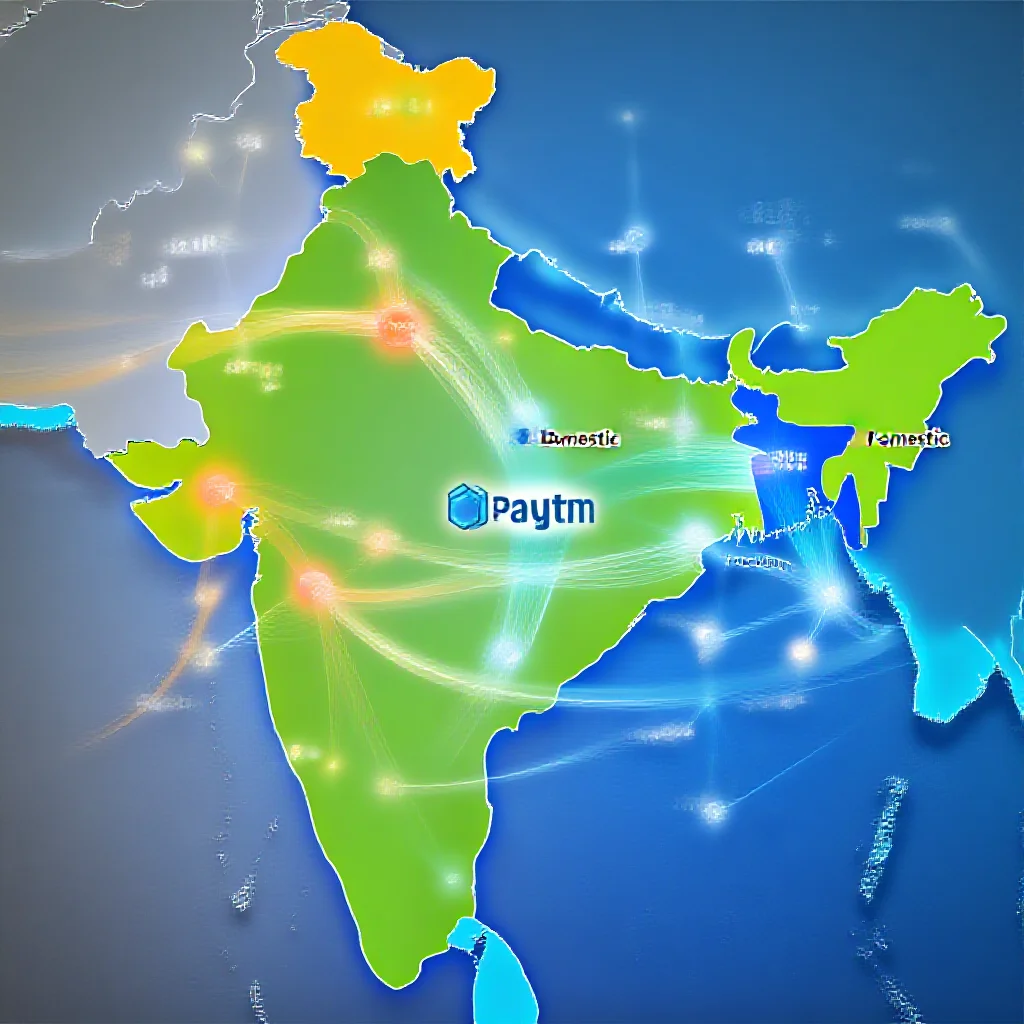
Cover Image Concept: A conceptual, digitally-rendered image showing a translucent map of India overlaid with glowing, interconnected nodes and data streams. One half of the image is colored in hues of saffron and green, with nodes labeled 'Domestic', flowing into a central 'Paytm' logo. The other half, in cooler blue tones with 'Foreign' labels, shows a slightly diminished flow. The style is modern, clean, and symbolic, with a focus on data visualization aesthetics.