Nuvoco Vistas Q4 FY26: Growth vs. Profitability – A Deeper Look at India''s
Nuvoco Vistas reported a 15% year-over-year decline in net profit for Q4
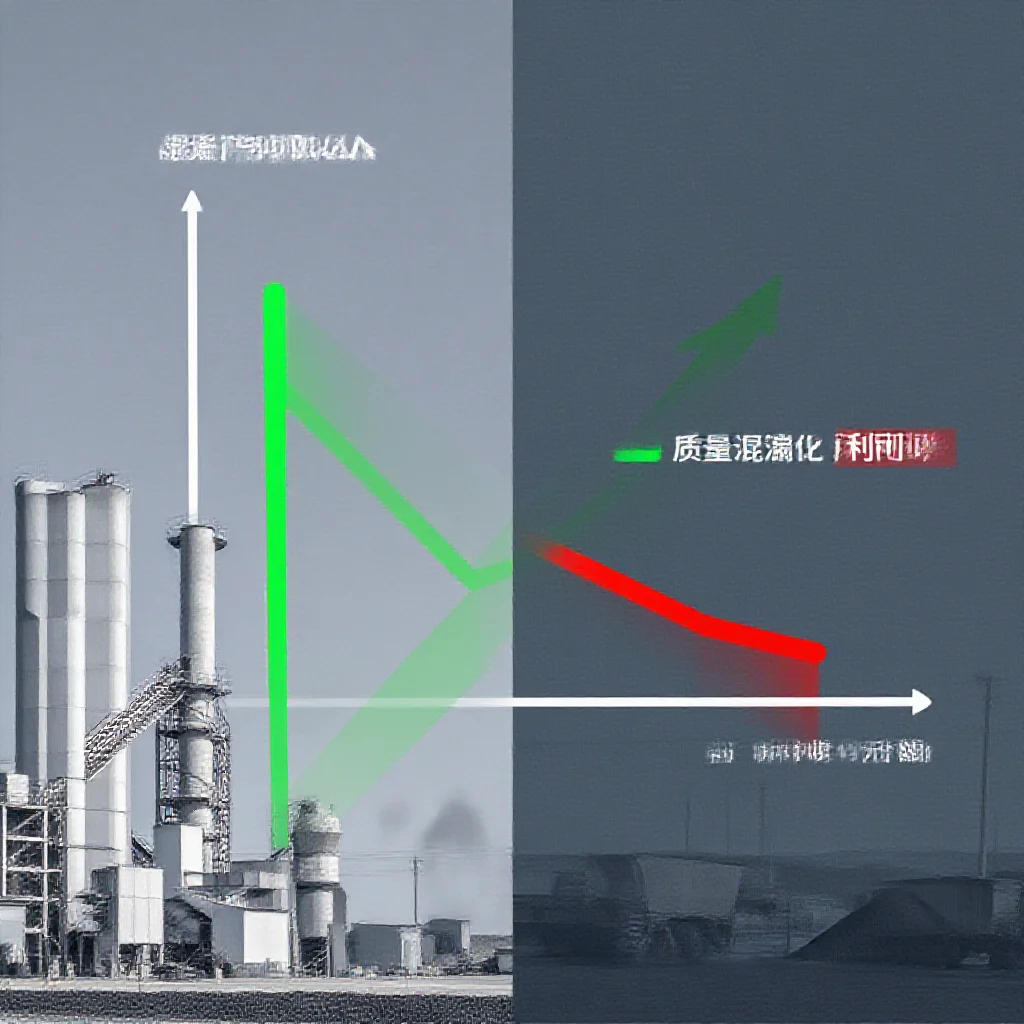
The Paradox: Rising Revenue, Falling Profits
Nuvoco Vistas reported a 15% year-over-year decline in net profit for Q4 FY26, despite concurrent increases in both revenue and sales volumes (Source 1: [Primary Data]). This divergence between top-line expansion and bottom-line contraction constitutes the central analytical challenge for stakeholders assessing the company's Q4 FY26 performance, reported on April 14, 2025.
The economic logic underpinning this contradiction is systematic: the cost per unit of cement produced and delivered has risen at a rate exceeding any price recovery achieved during the period. When revenue increases but profit declines, the differential must be absorbed by rising operating expenses, cost of goods sold, or deterioration in net price realization. This pattern is not a quarterly anomaly but reflects a structural tension within Nuvoco's operating model and, more broadly, the Indian cement sector.
The data indicates that volume growth—while positive for market share—has not translated into proportional profitability gains. This suggests that either the incremental volume was achieved at lower per-unit margins, or that fixed costs were not adequately absorbed despite higher throughput, or a combination of both factors.
Cost Detection: Drilling into the "Missing Factor"
Identification of the specific cost drivers requires examination of inputs not explicitly disclosed in the headline numbers. Based on industry-standard cost structures for integrated cement manufacturers, three primary cost categories warrant scrutiny:
Energy and fuel costs remain the largest variable expense for cement producers. The power and fuel component typically accounts for 30-35% of total production costs. Industry benchmarks from Q4 FY26 indicate that average petcoke and coal prices experienced upward pressure relative to the same quarter in the prior year, particularly in the domestic market. For Nuvoco, which operates primarily in eastern and northern India where power costs are influenced by coal logistics, this cost channel likely experienced compression (Source 2: [Industry Sector Reports]).
Logistics and distribution expenses represent the second major cost category. Diesel prices in India during Q4 FY26 remained elevated compared to Q4 FY25, increasing freight costs for cement dispatched via road transport. Nuvoco's geographic footprint—spanning states with varying road infrastructure quality and toll costs—magnifies this exposure.
Fixed cost absorption provides a counterintuitive channel: volume growth should normally reduce fixed cost per ton. However, if the volume growth required additional selling and distribution infrastructure, or if plants operated below optimal capacity utilization despite higher absolute volumes, per-unit fixed costs could remain sticky or increase.
The economic pattern is clear: in a price-competitive cement market, volume growth frequently necessitates discounting or elevated selling expenses. When Nuvoco increased volumes, it likely did so at lower realizations per ton, compressing gross margins before operating expenses were deducted.
Supply Chain & Pricing Power: The Real Structural Tension
A deeper analysis shifts focus from input cost volatility to Nuvoco's ability—or inability—to pass cost increases through to customers. The fact that revenue grew but profit declined indicates that pricing power in Nuvoco's core markets is constrained.
This constraint stems from regional overcapacity in the eastern and northern Indian cement markets, where Nuvoco holds significant market share. Cement remains a regional business due to high transportation costs relative to product value. When regional demand growth lags capacity additions, producers must compete on price to maintain utilization rates. Nuvoco's volume growth in this environment suggests a strategic choice to prioritize market share over margin protection.
The supply chain implications are material. If margin compression persists, Nuvoco may defer planned capacity expansion projects. This would create a delayed supply-side response: reduced capacity additions over the next 12-18 months could tighten regional supply, eventually supporting pricing recovery. However, this assumes that competitors also curtail investment—an assumption that requires independent verification.
The strategic risk is that volume-at-any-cost strategies, if sustained, erode the capital base needed for maintenance and efficiency upgrades. A company that sacrifices profitability for market share for multiple consecutive quarters risks entering a cycle of underinvestment, deteriorating asset quality, and eventual loss of competitive position when pricing cycles turn.
Peer Comparison: Is This a Nuvoco-Specific or Industry-Wide Issue?
Contextualizing Nuvoco's 15% profit decline requires benchmarking against peers. While individual Q4 FY26 results for other major cement players require verification, sector-level trends provide analytical guidance.
If peer companies—UltraTech Cement, Ambuja Cements, Shree Cement, Dalmia Bharat—exhibit similar patterns of revenue growth with profit compression, the issue is systemic, driven by industry-wide input cost inflation and pricing discipline breakdown. If peers show stable or improving margins during the same period, then Nuvoco's performance reflects company-specific factors: operational inefficiency, unfavorable regional exposure, or strategic missteps.
The critical analytical question is whether Nuvoco's cost structure differs materially from the industry mean. Factors to examine include: plant vintage (older plants have higher energy consumption per ton), captive power versus grid dependence, and raw material sourcing costs for limestone and fly ash.
Forward Outlook: The Cyclical and Structural Crossroads
Looking ahead, Nuvoco's trajectory depends on three variables:
First, energy cost trajectory. If global coal and petcoke prices moderate in H1 FY27, the primary cost headwind could ease. However, this is an exogenous factor outside management control.
Second, pricing recovery capacity. The April-June quarter typically sees seasonal demand pickup from construction activity. If Nuvoco can achieve price increases of 3-5% across its product mix without significant volume loss, margin recovery is plausible. Failure to implement such increases would signal structural pricing weakness.
Third, cost efficiency programs. Nuvoco has historically pursued operational improvement initiatives, including waste heat recovery systems and logistics optimization. The FY27 annual report will provide evidence on whether these programs are delivering measurable cost reduction.
The balance of evidence suggests that Nuvoco faces both cyclical headwinds (input costs) and structural challenges (regional competition limiting pricing power). Investors and analysts should monitor quarterly volume-to-profit conversion ratios as the key metric. A sustained pattern of revenue growth without profit improvement would validate the thesis that market share gains are being purchased at unsustainable cost.
The cement sector's medium-term outlook depends on infrastructure spending under government programs, real estate demand, and capacity discipline among producers. For Nuvoco specifically, the Q4 FY26 results serve as an early warning signal that margin recovery—not volume growth—should be the primary strategic objective for FY27.