Beyond the Headlines: How a Distant Conflict Could Push Millions of Indians
A recent UNDP report models the cascading economic shockwaves a hypothetical
Beyond the Headlines: How a Distant Conflict Could Push Millions of Indians into Poverty
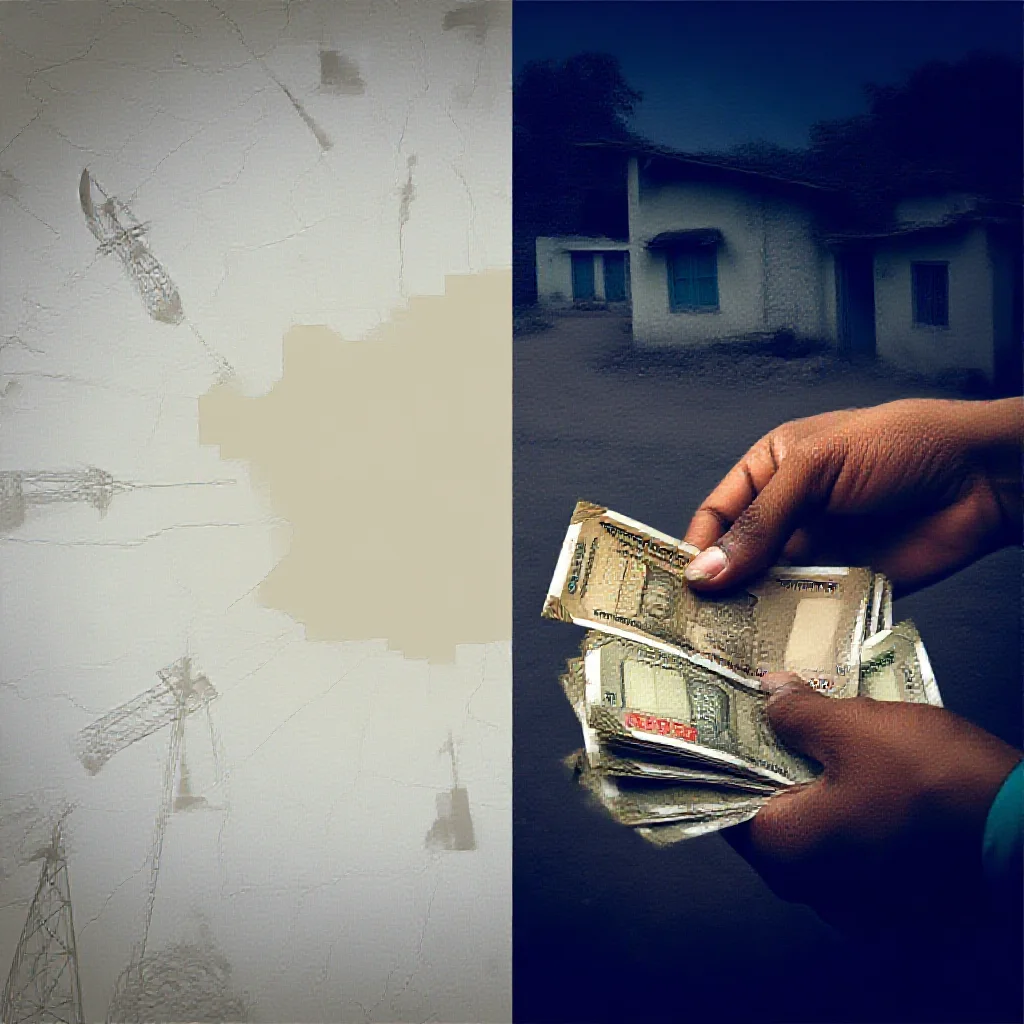
A recent modeling exercise by the United Nations Development Programme (UNDP) presents a stark assessment of global economic fragility. The analysis examines the cascading consequences of a hypothetical, severe conflict in Iran, projecting significant human cost far beyond the immediate region. For India, the model indicates a potential increase in poverty, with an additional 2.5 million individuals at risk of falling below the poverty line under a high-impact scenario (Source 1: UNDP Report). This projection moves the discussion from abstract geopolitical risk to tangible national economic security.
The UNDP Report: Decoding the Hypothetical Shockwave
The UNDP analysis functions as a risk assessment tool rather than a prediction. It constructs two core scenarios to model potential supply disruptions in a key oil-producing region. The ‘low’ scenario assumes a 10% increase in oil prices, while the ‘high’ scenario models a 50% price spike (Source 2: UNDP Report). The global aggregates from the high scenario are substantial, estimating up to $1.7 trillion in economic loss and a potential increase of 95 million in the global poverty headcount (Source 3: UNDP Report). The specific projection for India—2.5 million new poor in the high scenario—emerges as a critical data point, framing external energy shocks as a direct threat to domestic developmental gains.
The Hidden Transmission Belt: From Oil Prices to Indian Kitchens
The economic logic connecting Persian Gulf geopolitics to Indian household budgets is non-linear but potent. The primary transmission axis begins with conflict-induced oil supply disruption, leading to a global price spike. For India, which imports over 80% of its crude oil requirements, this constitutes a direct terms-of-trade shock. The impact extends beyond retail fuel prices. Oil is a fundamental input for fertilizer production and the transportation network. A sustained price increase therefore turbocharges costs across agriculture, manufacturing, and logistics.
These cost-push pressures cascade into broader inflation, particularly for food and essential commodities, which constitute the largest expenditure share for low-income households. The resultant reduction in real income disproportionately affects the poorest. Concurrently, the government faces a fiscal dilemma: expanding subsidies to cushion the impact strains the budget and macroeconomic stability, while austerity risks amplifying the humanitarian cost.
India's Unique Vulnerability: A Perfect Storm of Dependence and Demography
India’s economic structure amplifies its exposure to such external shocks. The primary vulnerability is its high dependence on imported energy. This dependence makes the economy a direct price-taker in global oil markets. Demographically, a significant population segment resides just above the official poverty line. This cohort acts as a ‘poverty shock absorber’ with limited resilience, meaning even moderate inflationary pressures can trigger reversals in poverty metrics.
Sectoral exposure is acute. Agriculture relies on diesel for irrigation pumps, the informal transport sector is sensitive to fuel costs, and small-scale industries operate on thin margins vulnerable to input price inflation. A critical long-term question is the resilience of post-pandemic poverty recovery gains. A sharp external shock could undermine recent progress, revealing the fragility inherent in an economic structure heavily exposed to volatile global energy markets.
From Scenario to Strategy: Rethinking Resilience Beyond the Crisis
The UNDP scenario analysis necessitates a strategic shift from crisis mitigation to building structural buffers. The core imperative is reducing vulnerability to oil price volatility. This translates into accelerating the strategic petroleum reserve program, diversifying energy import sources, and most critically, doubling down on the domestic transition to renewable energy and electric mobility to decrease oil intensity in the long term.
Strengthening social protection systems is equally vital. Direct Benefit Transfer (DBT) mechanisms for food and fuel subsidies, if robust and well-targeted, can provide a more efficient fiscal shock absorber than broad price controls. Furthermore, poverty measurement and monitoring systems require enhancement to enable rapid identification and response to emerging pockets of distress caused by external economic shocks. The integration of such climate and geopolitical risk assessments into national economic planning is no longer optional but a core component of strategic foresight.
Market and Industry Predictions: Persistent geopolitical risk in the Persian Gulf region will maintain a premium on global oil prices, keeping input cost pressures elevated for Indian industries. Sectors with high logistical or fertilizer dependencies, such as agriculture, FMCG, and chemicals, will face continued margin pressures. This environment will likely accelerate corporate and government investment in energy efficiency and alternative energy solutions. Financial markets may increasingly price in a ‘geopolitical risk premium’ for assets in economies with high external energy dependence, potentially affecting investment flows and currency stability. The scenario underscores a broader trend: national economic resilience is becoming a quantifiable metric directly linked to energy security and social protection architecture.