Beyond the Forecast: Decoding the Economic and Agricultural Implications of
The India Meteorological Department's (IMD) forecast for a 'below-normal
Beyond the Forecast: Decoding the Economic and Agricultural Implications of IMD's 2026 Below-Normal Monsoon Prediction
Introduction: The Significance of a Shift in Forecast
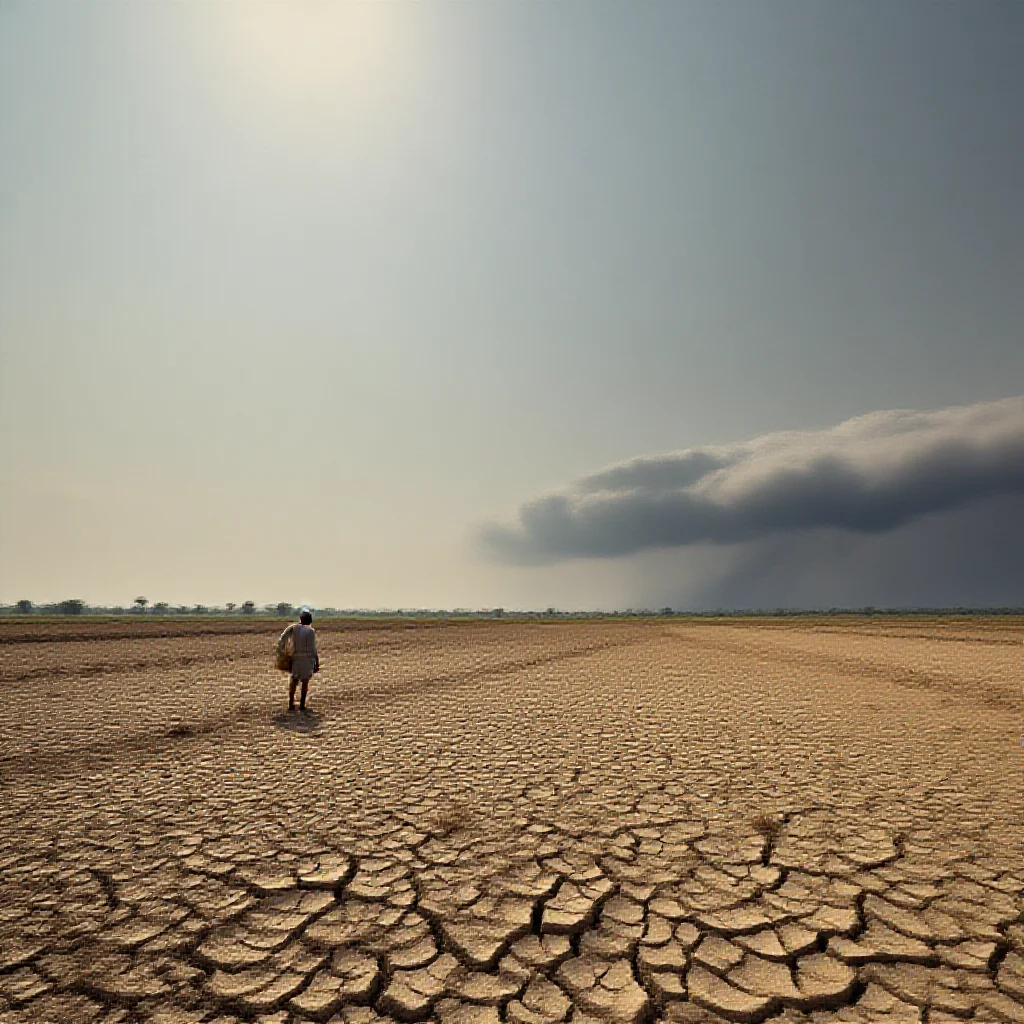
The India Meteorological Department (IMD) has forecast a ‘below-normal’ southwest monsoon for the 2026 season (Source 1: [Primary Data]). This prediction marks a notable departure, representing the first such forecast in a three-year period, with the last instance occurring in 2023 (Source 1: [Primary Data]). While a single seasonal forecast is not deterministic, its issuance after a multi-year gap serves as a critical data point for systemic analysis. The core question it raises extends beyond rainfall totals: what vulnerabilities in India’s economic and agricultural architecture does this forecast expose? This analysis posits that the 2026 prediction is less a weather bulletin and more a stress test for supply chain resilience, water security frameworks, and long-term climate adaptation strategies.
The Data Point in Context: A 'Slow Analysis' of Monsoon Trends
This forecast is a subject for "slow analysis"—a study of long-term risk rather than immediate news. The declaration for 2026 must be contextualized within broader climatological patterns. Scientific assessments, including those from the Intergovernmental Panel on Climate Change (IPCC), project an increase in the variability of the Indian monsoon, characterized by more intense wet spells and a higher probability of deficit years. The gap between the 2023 and 2026 below-normal forecasts is not merely an interval of normalcy but a period that underscores the increasing frequency of climatic shocks. The trend analysis suggests a transition from stable, predictable cycles to a regime of heightened volatility, where the economic planning horizon must shorten and incorporate greater buffers.
!A graph showing IMD monsoon forecast accuracy trends over the past decade.
The Ripple Effect: Unpacking the Economic Logic of a Weak Monsoon
The economic logic of a below-normal monsoon operates through direct and cascading channels within the supply chain. The initial impact is on the agricultural input ecosystem. Anticipation of poor rainfall can depress farmer sentiment, leading to reduced demand for seeds, fertilizers, and credit, thereby affecting upstream agribusiness revenues (Source 2: [NITI Aayog/Agriculture Ministry Reports]).
The primary effect is on kharif crop output, particularly water-intensive staples like rice, sugarcane, and pulses. A production shortfall triggers a sequence of consequences: depleted reservoir levels affect rabi sowing, tightened market supplies elevate food prices, and diminished farm incomes contract rural disposable income. Historical data consistently shows a correlation between monsoon deficits and food inflation, a key driver of headline inflation monitored by the Reserve Bank of India (Source 3: [RBI Bulletin Analysis]).
The ramifications extend beyond agriculture. Hydropower generation, which contributes a significant portion of India's renewable energy mix, faces immediate shortfalls, increasing reliance on thermal power and impacting energy markets. Inland water transport and groundwater recharge are impaired, stressing urban water supply systems and industrial operations. The cumulative effect is a potential drag on GDP growth, primarily transmitted through the twin channels of inflation and weakened rural consumption demand for consumer goods and services.
Evidence and Verification: Sourcing the Analysis
The projected impacts are not hypothetical but are grounded in empirical evidence from previous deficit cycles. The 2023 below-normal monsoon year, for instance, offers a recent case study. It was followed by pressures on rice production, leading to export restrictions, and contributed to persistent core inflation challenges. Peer-reviewed studies on monsoon economics have established robust linkages between rainfall deviation, agricultural GDP, and broader economic performance.
Policy documents from NITI Aayog on water management and reports from the Ministry of Agriculture on crop diversification further validate the identified vulnerabilities. The analysis of inflation dynamics is corroborated by time-series data in official RBI publications, which track the pass-through from monsoon performance to the Consumer Price Index.
!A collage of logos from credible sources like IMD, NITI Aayog, and World Bank reports.
Beyond Crisis: Strategic Implications and Adaptation Pathways
The strategic implication of the 2026 forecast is the imperative to shift from reactive crisis management to proactive risk mitigation. For policy planning, it reinforces the necessity of accelerating investments in micro-irrigation, watershed management, and drought-resistant crop varieties. The performance and penetration of crop insurance schemes, such as the Pradhan Mantri Fawaid Bima Yojana (PMFBY), will be critically tested as a financial resilience tool.
From a business continuity perspective, sectors from FMCG to automotive must factor in monsoon-driven rural demand volatility into their inventory and sales strategies. The forecast underscores the commercial and strategic value of technology adoption. Artificial Intelligence and Machine Learning (AI/ML) models for granular weather prediction, precision agriculture for input optimization, and efficient supply chain logistics for food storage and distribution become essential components of adaptation.
The 2026 forecast, therefore, serves as a scheduled drill. It provides a multi-year lead time for stakeholders across the value chain—farmers, policymakers, corporations, and financial institutions—to pressure-test their assumptions, fortify their buffers, and invest in systems that enhance resilience against an increasingly variable climate.
Neutral Market and Industry Predictions
Based on the forecast and historical precedent, several neutral predictions can be inferred for market and industry behavior in the lead-up to and aftermath of the 2026 monsoon season.
* Commodity Markets: Futures markets for agricultural commodities, particularly rice, pulses, and edible oils, are likely to see increased volatility and speculative activity as the season approaches. This may prompt earlier-than-usual government interventions in the form of buffer stock releases or trade policy adjustments.
* Input Sector: Companies in the agrochemical and seed sectors may experience regional demand shifts, with potential growth in areas focused on drought-tolerant traits and water-saving technologies, even if overall volume growth is muted.
* Rural-Facing Industries: The two-wheeler, tractor, and consumer durables sectors are likely to adopt a cautious outlook for rural sales in the latter half of 2026 and early 2027, potentially affecting inventory planning and promotional expenditures.
* Energy Sector: Utilities and power planners are predicted to increase their reliance on coal-based and solar power generation as a hedge against reduced hydropower output, influencing fuel procurement strategies.
* Financial Services: Banks and non-banking financial companies (NBFCs) with significant agricultural loan portfolios may proactively strengthen their risk assessment models and monitoring of weather-dependent exposures in affected regions.