Fuel-Driven Wholesale Inflation Hits 41-Month High: Unpacking the Hidden Supply
India's March wholesale inflation surged to 3.88%, the highest in 41 months,
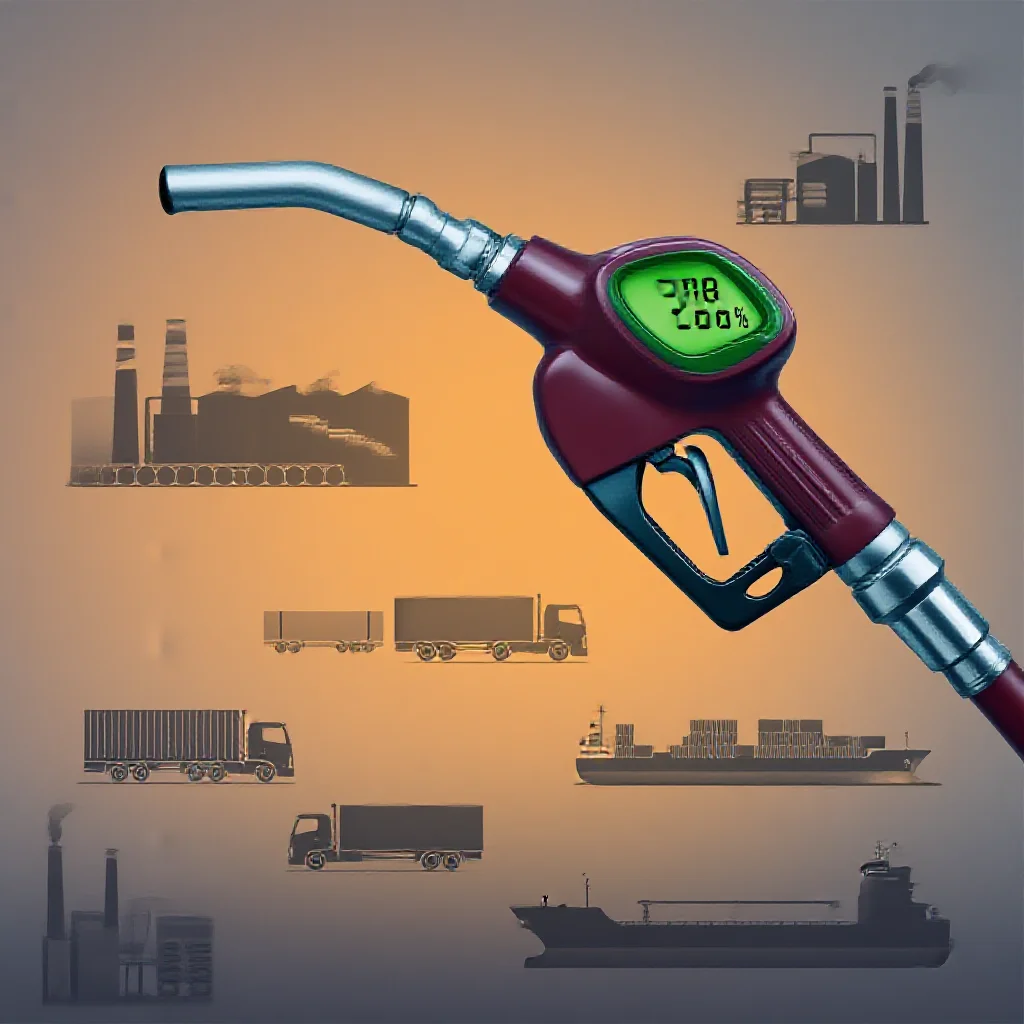
Fuel-Driven Wholesale Inflation Hits 41-Month High: Unpacking the Hidden Supply Chain Pressures in India
March 2023 wholesale inflation surged to 3.88%, the highest reading in 41 months, with fuel prices acting as the primary accelerant. Beyond the headline figure, structural shifts in logistics, manufacturing margins, and inventory strategies are underway—with implications that extend far beyond the monthly data release.
---
The Record Spike in Context: What 3.88% Really Means
India’s Wholesale Price Index (WPI) for March 2023 registered 3.88%, marking the steepest increase since before the pandemic-era supply chain disruptions of 2020 (Source: Business Standard, primary data release). This figure represents a departure from the moderating trend observed in late 2022, when global commodity prices began cooling.
Fuel prices constitute the dominant contributor to this acceleration. However, the headline number obscures significant divergence between core inflation (manufactured products) and non-core components (food and fuel). The fuel and power index—which directly influences transportation and production costs across the economy—has exhibited volatility that precedes the current spike by several months.
The 41-month timeframe is statistically significant: it captures the period from the pre-pandemic supply crunch through the post-recovery demand surge, and now into a phase where input cost pressures are once again compressing industrial profit margins. Unlike the 2020-2021 inflation driven primarily by demand-supply mismatches, the current cycle is structurally rooted in input cost pass-through mechanisms.
---
Fuel as a Hidden Tax on Logistics: Disrupting the Last Mile and First Mile
Fuel costs account for 40% to 60% of total transport operating expenses in India, depending on vehicle type and route length. A sustained increase in diesel and petrol prices directly elevates freight rates, which cascade through three critical sectors: perishable goods (fruits, vegetables, dairy), construction materials (cement, steel, aggregates), and e-commerce logistics.
The surcharge mechanism: Trucking associations in India typically impose fuel surcharges on spot freight contracts when diesel prices cross predetermined thresholds. Data from logistics industry sources indicates that current diesel prices—hovering near ₹90 per liter in major metropolitan hubs—have triggered surcharge clauses in approximately 70% of spot contracts since January 2023. The delayed pass-through, estimated at 15-30 days, creates a window of margin compression for small logistics operators who cannot renegotiate fixed-rate contracts mid-cycle.
Structural adaptation: Two long-term shifts are emerging in response to fuel cost volatility. First, fleet electrification timelines have accelerated among third-party logistics providers operating last-mile delivery networks. Companies such as Delhivery and Ecom Express have announced pilot programs for electric cargo vans in tier-1 cities, with a target of 30% electric fleet penetration by 2025. Second, rail freight adoption is increasing for bulk commodities: the Ministry of Railways reported a 12% year-on-year increase in containerized freight volumes in Q1 2023, partially attributable to companies seeking fuel cost predictability.
The implication for supply chain strategists: fuel cost inflation is no longer a cyclical variable but a structural cost component that requires permanent hedging mechanisms.
---
Manufacturing Under Duress: Margin Squeeze and Inventory Hoarding
Industries with direct fuel intensity—chemicals, ceramics, fertilizers, and glass manufacturing—face immediate cost pressures. For each 10% increase in fuel prices, these sectors experience an estimated 3-5% rise in production costs, based on input-output models used by industrial economists.
The embedded fuel cost: For non-fuel-intensive industries, fuel is embedded in raw material prices through transportation. A cement manufacturer in Rajasthan, for example, faces fuel costs not only in its kiln operations but also in the limestone supply from mines located 50-200 kilometers away. Steel manufacturers purchasing iron ore from Odisha or Karnataka similarly absorb freight costs that have risen 15-20% year-on-year.
Inventory strategy shift: Producers are increasing safety stock levels as a hedge against further fuel price hikes. This behavior—documented in purchasing managers’ index (PMI) sub-indices for inventory levels—raises working capital requirements by an estimated 8-12% for mid-sized manufacturers. The storage costs associated with larger inventories add approximately 1-2% to total landed cost per unit.
A useful analytical lens: fuel inflation functions as a stealth input tax—difficult to isolate in cost accounting but pervasive across all supply chain tiers. Unlike explicit taxes, this cost is not transparent to end consumers until producers exhaust their ability to absorb margins.
---
The Delayed Pass-Through to Consumers: Why Retail Inflation May Not Follow Immediately
The divergence between WPI and Consumer Price Index (CPI) has widened historically during periods of fuel cost escalation. This is by design: WPI measures producer prices, while CPI includes services, housing, and consumption subsidies. When fuel prices rise, governments can cushion consumer impact through excise duty reductions—a tool used in November 2021 and November 2022, when the central government cut excise duties on petrol and diesel by ₹8 and ₹6 per liter respectively.
The lag mechanism: Producer price increases take 2-3 months to fully transmit to retail prices, contingent on three variables:
- Market structure: Concentrated industries (cement, steel) pass through costs faster than fragmented ones (packaged foods, textiles).
- Inventory duration: Products with longer shelf lives allow producers to delay price adjustments.
- Government intervention: Any reduction in fuel excise duties would delay the pass-through by absorbing the cost at the wholesale level.
Forward indicator: The CPI data for April and May 2023 will serve as the critical test. If the WPI-CPI gap narrows significantly—meaning wholesale increases are being passed to consumers—the Reserve Bank of India may face renewed pressure to maintain its current interest rate stance. Conversely, if the gap widens, it signals that producers are absorbing costs, which would compress corporate earnings but delay retail inflation.
Analysts should monitor two triggers: any announcement regarding fuel excise duty revision in the upcoming policy review cycle, and the trajectory of global crude oil prices, which remain the exogenous variable driving domestic fuel costs.
---
Outlook: Structural Adjustments Underway
The 3.88% March wholesale inflation reading is not a one-off anomaly but a symptom of deeper supply chain recalibration. Three predictable outcomes are likely over the next 12-18 months:
- Logistics network redesign: Companies will localize distribution networks—reducing hub distances and increasing warehouse density—to minimize fuel-dependent long-haul transportation.
- Contract renegotiation: Fixed-price logistics contracts will decline in favor of indexed contracts tied to fuel price benchmarks, transferring volatility to shippers rather than carriers.
- Working capital optimization: Inventory carrying costs will become a strategic variable, with firms balancing the hedge value of safety stock against the capital cost of storage.
For policymakers, the data signals that fuel price stability—or alternative energy subsidies—will remain a critical lever for industrial competitiveness. For industry strategists, the 41-month high is a confirmation that fuel cost risk management must be elevated from a tactical procurement issue to a board-level supply chain parameter.
The March data is a snapshot. The structural shifts it reveals will persist through subsequent quarters.